
Why Foxes Matter in Sheep Country Around Merriwa
Merriwa sits in the western Upper Hunter, on the Golden Highway between Mudgee and Scone, and it has been sheep country for generations. The Merriwa district, in the words of the Upper Hunter Shire Council, “was originally known for its quality wool and fat lambs”, with broadacre grain and beef growing more recently. The town has run its Festival of the Fleeces every June long weekend since 1990, drawing more than 7,000 visitors to a celebration of the merino and the region’s wool tradition, complete with a running of the sheep down the main street. Wool and prime lambs are part of the identity here.
That heritage is exactly why foxes matter. The European red fox is Australia’s most widespread introduced predator, and on lambing country it is a quiet, recurring tax on the lamb drop. A precise point worth making: at the whole-of-shire level the modern Upper Hunter economy is led by coal, horse studs, and beef, and the sheep and wool strength is concentrated in the western pocket around Merriwa rather than across the entire shire. That is where the fox and the lamb meet, and where targeted control makes the clearest difference.
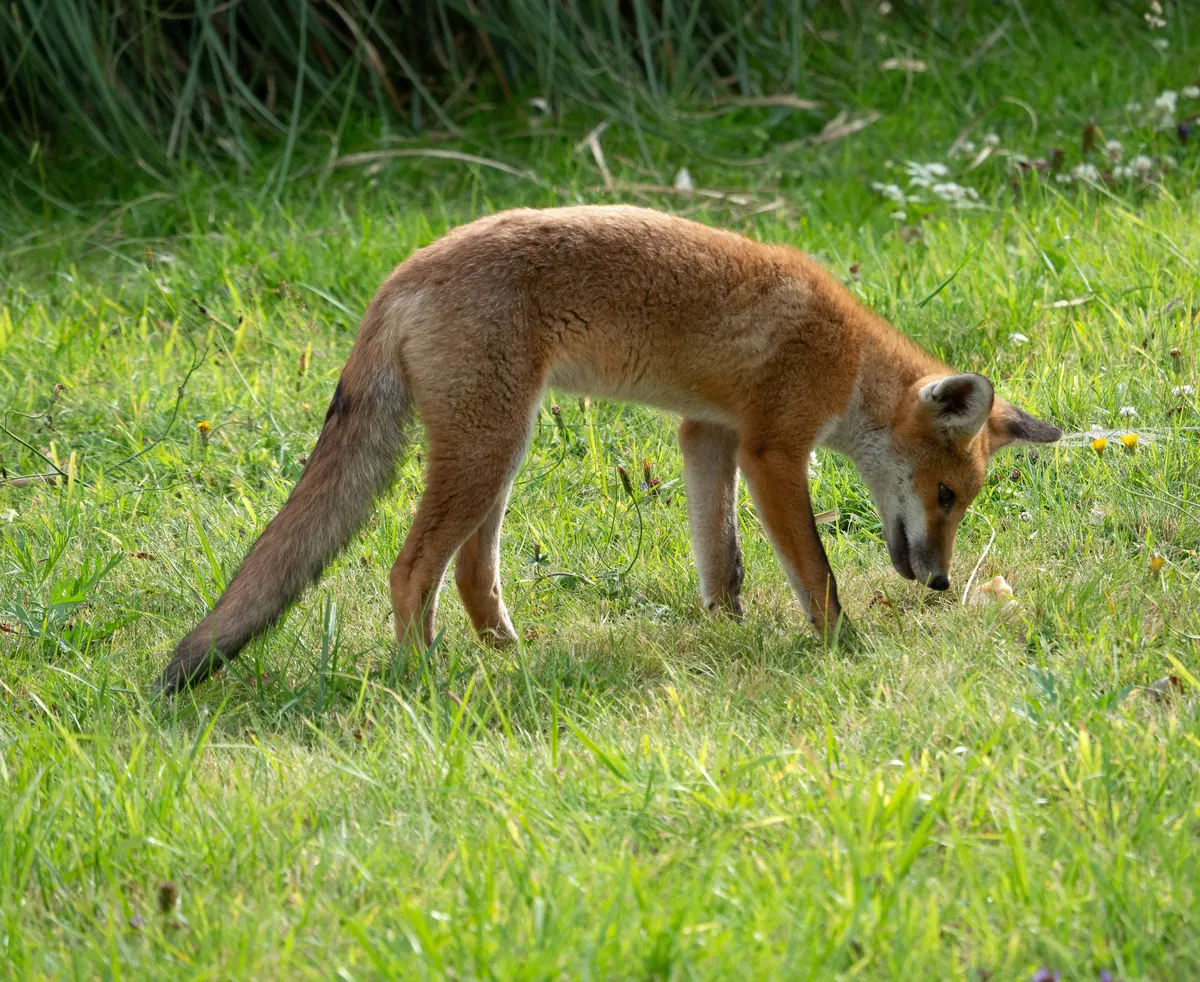
What Fox Predation Costs a Lamb Drop
The losses are real, and most of them are never seen. A fox takes a newborn lamb overnight and by morning there is little to find, so a disappointing marking percentage gets blamed on the season or ewe condition when a share of the gap is foxes working the lambing paddock in the dark.
Research puts average fox predation at around 7 percent of the lamb drop, more typically 2 to 5 percent, and up to 30 percent in badly affected flocks, with the worst losses near timber, creek lines, and rocky harbour. On 1,000 ewes marking 1,200 lambs, even a modest rate is dozens of lambs a year.
The upside is that fox predation is one of the most controllable losses on a property, and the evidence for that is regional. In central west NSW, which is the pastoral country adjacent to the western Upper Hunter and a fair comparison for Merriwa, landholders taking part in Central West Local Land Services group fox baiting have reported lamb marking rising by around 10 percent. A NSW DPI study of about 1,000 producers, roughly 1,400 flocks and 700,000 lambing ewes, found that coordinated fox baiting twice a year lifted lamb marking by more than 20 percent, with the benefit greatest when the immediate neighbour also baited before lambing. Those figures are central west NSW, not Upper Hunter data, but the timing logic and the coordination lesson carry straight across.
Timing Fox Control to the Upper Hunter Lambing Calendar
Fox control before lambing works. Fox control during lambing is damage limitation. The goal is to drive fox numbers down in the weeks before lambs hit the ground, so the vulnerable window opens with as few foxes as possible in the area.
The standard NSW calendar is a single annual lambing in August, late winter into early spring, and mixed-farming districts run both autumn and spring systems. Autumn and early lambers carry the highest fox exposure. For a spring lamb drop from August to October, the priority window is autumn and early winter, which is also when Hunter Local Land Services runs its coordinated baiting and when dispersing juvenile foxes, which have never encountered a bait, are easiest to control. Our spring lambing fox control in the Upper Hunter guide sets out a mid-winter plan for an August to October drop.
| Season | What the foxes are doing | Fox control priority for a spring lamb drop |
|---|---|---|
| Autumn (Mar to May) | Juveniles dispersing, food scarcer, foxes hungrier | Coordinated baiting through the Hunter Local Land Services programme |
| Late winter (Jun to Jul) | Breeding adults, cubs in dens from August | Baiting and den work in the lead-up to lambing |
| Spring (Aug to Oct) | Fox families around dens, overlapping lambing | Targeted control near lambing paddocks, backed by monitoring |
| Summer (Nov to Feb) | Cubs dispersing, pressure spread across country | Monitoring to plan the next autumn programme |
How We Work with the Hunter Local Land Services Programme
The single most important fact about fox control is that it only works when it is sustained and coordinated, because foxes range widely and reinvade vacant ground within weeks. That is why we position our work alongside the district programme, not against it.
Hunter Local Land Services is the coordinating body for Merriwa and the Upper Hunter, and it runs 1080 baiting across private properties, State Forests, Crown Land, and travelling stock routes each autumn, explicitly including Merriwa among the targeted districts. The Feral Fighters model asks neighbours to bait a larger area at the same time so foxes cannot simply move back in from next door, and taking part requires AQF3 or VPIT accreditation, or working under someone who holds it. Free pest animal baits are available through Hunter Local Land Services from 1 April to 30 June 2026 for approved properties.
As an accredited operator, Feral Up fits into that picture as the professional who supports and supplements the coordinated effort: assessing your property, monitoring pressure, delivering targeted integrated control, and reporting on the outcome. Joining the free Local Land Services programme is usually the cheapest and most effective way to bait, and our role is to add the assessment, monitoring, and precision the coordinated programme is not built to provide. Our guide on autumn wild dog and fox baiting explains how the Hunter programme runs, and our coordinated neighbour pest control guide covers how to get a group going.
Data and Reporting: Seeing the Difference
The differentiator we bring to Upper Hunter fox control is that you can see it working. Every programme is built on monitoring and written reporting, not just a night in the paddock.
- Trail cameras with AI detection at the creek crossings, fence gaps, and pads where foxes actually travel, so you know which country the foxes are using before anyone acts.
- Periodic thermal drone surveys to find foxes and other pressure spread across the whole block, flown when the contrast between a warm animal and cool ground is greatest.
- Written reports after every operation, covering what we found, the methods used, the ground covered, and a recommendation for the next phase, structured so you can measure it against your marking percentage and keep it as biosecurity duty evidence.
For an owner who is not always on the property, that reporting can stand on its own as an absentee-owner monitoring retainer, keeping eyes on an Upper Hunter block year-round without a control operation attached.
Our Integrated Approach on Upper Hunter Country
We do not sell a single method. We assess your country and your lambing calendar, then design a fox control programme that fits: coordinated baiting as the backbone where it suits, targeted control close to lambing, den work in season, and monitoring so the effect is measurable. Where it makes sense we coordinate with your neighbours and the Hunter Local Land Services programme to treat the whole area at once, because that is what holds fox numbers down through the seasons that matter. Wild dogs share the same timbered-range country in the Upper Hunter, so where both predators are a problem we plan the two together. See our full fox control service and wild dog control pages for the detail.
This page goes deep on the Upper Hunter sheep-country picture. For the whole-region view across pigs, deer, and the other pests of the valley, see our Hunter Valley feral animal control page, and for the peri-urban, poultry, and hobby-block side of the fox problem near Newcastle, see our Lower Hunter fox control page.
Pricing
Fox control programmes start from $500 per visit, with pre-lambing seasonal packages available. Baiting programmes are priced on property size, the number of bait stations, and programme duration, and pre-lambing packages covering the critical late-winter window offer the best value for sheep producers. Multi-property programmes coordinated with neighbours reduce the cost per landholder and deliver better results. The monitoring and reporting layer is quoted to how much visibility you want on your country. See our full fox control pricing for the breakdown.
Protecting a lamb drop around Merriwa or anywhere in the Upper Hunter? Contact Feral Up for a free property assessment. We will read your country, time the programme to your lambing window, and send you the reports that show the difference.