The Feral Pig Problem in NSW
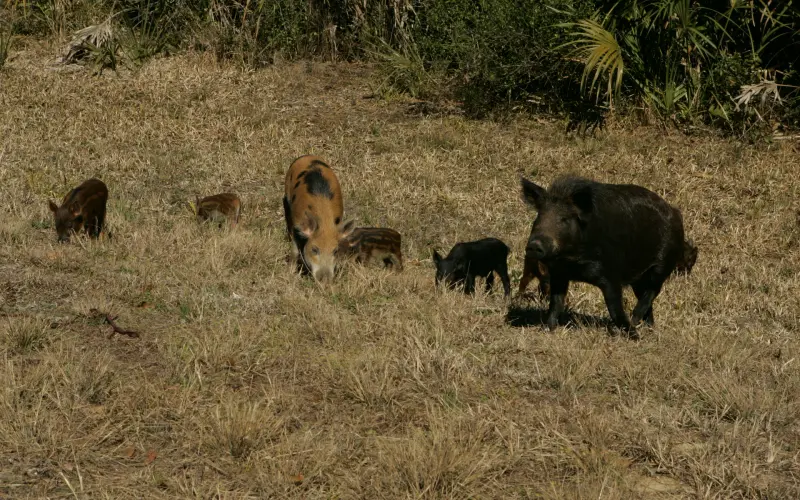
Feral pigs are one of Australia’s most destructive pest animals, and their impact on NSW agriculture is severe. According to ABARES (Australian Bureau of Agricultural and Resource Economics and Sciences), feral pigs cause an estimated $156 million in agricultural damage and control costs nationally each year, with NSW bearing a significant share of that cost. The national feral pig population is estimated at 24 million animals, and it’s growing.
In NSW, the worst-affected regions include the North West plains, Northern Tablelands, Hunter Valley, and North Coast hinterland. Pigs thrive in a range of habitats, from river flats and irrigated cropland to timbered ranges and coastal scrub. Wherever there’s water and feed, pigs will move in.
What damage do feral pigs cause?
The damage feral pigs inflict on farming operations is wide-ranging and relentless:
- Crop destruction: Pigs root through cereal, grain sorghum, maize, and vegetable crops. A single mob can destroy hectares of standing crop in one night. They target crops at their most vulnerable, during germination and just before harvest.
- Pasture degradation: Rooting behaviour tears up improved pastures, exposing soil to erosion and weed invasion. Wallowing around dams and water points contaminates stock water and damages dam walls.
- Livestock predation: Feral pigs actively prey on newborn lambs and kid goats during lambing and kidding. Documented predation rates vary, but losses of 5 to 15% of lambs in affected paddocks are common in parts of the Northern Tablelands.
- Disease transmission: Pigs carry leptospirosis, brucellosis, sparganosis, and a range of parasites. They’re also considered a critical vector for exotic disease incursions such as foot-and-mouth disease and African swine fever, diseases that would devastate Australia’s livestock export industry.
- Water contamination: Pigs wallow in and defecate around dams, troughs, and creek systems. This degrades water quality for stock and can spread disease across properties.
Seasonal patterns
Feral pig activity in NSW follows seasonal food and water availability. During autumn and winter, natural food declines and pigs concentrate around reliable water sources, improved pastures, and grain stubbles, making them easier to target. In spring, sows farrow in dense cover, producing 4 to 10 piglets per litter. Sows can produce two litters per year, and piglets reach breeding age at just 6 to 8 months. This extraordinary reproductive rate means populations can bounce back within 12 to 18 months if control is not sustained. Research from the Invasive Animals CRC confirms that at least 70% annual removal is needed to suppress population growth.
How We Control Feral Pigs
Effective feral pig control requires multiple methods applied in the right sequence. No single technique works in isolation, and the order matters. PestSmart’s national best practice guidelines are clear: baiting and trapping should always come before ground shooting, because shooting disrupts normal pig behaviour and can cause temporary dispersal to neighbouring properties. Shooting is most effective as a follow-up method after initial population reduction through baiting or trapping.
Ground Shooting
Ground shooting is our primary control method for feral pigs across NSW. Our licensed operators use thermal imaging and night-vision optics to locate and shoot pigs during their most active periods: dusk, night, and dawn. Thermal scopes allow us to detect pigs through vegetation and in conditions where conventional spotlighting is less effective.
We operate from vehicles on open country and on foot in timbered and broken terrain. All shooting follows national standard operating procedures (NATSOP PIG003) for humane destruction. We use rifles of at least .243 calibre performance with hollow-point or soft-nosed ammunition (minimum 80 grain) and telescopic sights. Shot placement follows established protocols: temporal shots (midway between eye and ear base) are preferred for larger pigs, particularly adult boars whose thickened cartilaginous shoulder shield can interfere with frontal chest shots. Every animal is confirmed dead before targeting the next. If lactating sows are taken, dependent piglets are located and humanely destroyed. All operators hold current NSW firearms licences and AHCPMG304 humane destruction certification.
Ground shooting is most effective when combined with knowledge of pig movement patterns, feeding areas, and harbourage points on your property. We scout properties before operations commence to identify the best approach.
Baiting Programs
Baiting is a cost-effective way to reduce feral pig numbers across large areas, particularly when coordinated across multiple properties. We work with Local Land Services (LLS) to deliver approved baiting programmes using:
- 1080 (sodium fluoroacetate): The most widely used pig bait in NSW. Applied in free-feed stations that pigs are conditioned to visit before toxic baits are deployed. 1080 is naturally occurring in some Australian native plants, and livestock such as cattle, sheep, and horses have a higher natural tolerance, but it is lethal to dogs and cats, so strict protocols apply.
- HOGGONE (sodium nitrite): Registered in December 2019, sodium nitrite works because feral pigs have a unique susceptibility: they lack a protective enzyme present in other species. Sodium nitrite converts haemoglobin to methaemoglobin, which cannot carry oxygen in the blood. Pigs succumb within one to three hours of ingestion, with carcasses typically found within 200 metres of bait stations. Because most non-target species possess the protective enzyme pigs lack, sodium nitrite poses significantly lower risk to other animals. It is classified as an S6 poison, meaning landholders can access it without specialist training when used in approved delivery systems like the HogHopper or Bait Box.
All baiting is conducted under NSW DPI Pesticides Act requirements with appropriate signage, record-keeping, and non-target risk management. Landholders may also be able to access free or subsidised 1080 baits and grain through their Local Land Services (LLS) office as part of NSW Government funded pest control programmes. We coordinate with LLS to help you take advantage of these programmes where available.
Trapping
Trapping is effective for capturing whole mobs of pigs, particularly around water points and established feeding areas. We use:
- Panel/corral traps: Large enclosures that capture entire sounders (family groups) at once. Traps are set over free-feed stations and monitored remotely using trail cameras. This method is particularly useful near infrastructure where shooting is not practical.
- Silo traps: Purpose-built cylindrical traps for smaller mobs.
Trapped pigs are dispatched humanely on-site by licensed operators.
Thermal Drone Surveillance
For large, heavily timbered, or inaccessible properties, we deploy thermal drone surveys to locate pig populations before ground operations begin. Thermal drones detect body heat signatures through canopy and scrub, giving us accurate population estimates and identifying harbourage areas, movement corridors, and water points that pigs are using.
Drone surveys save time and money by directing ground teams to the right locations rather than searching blindly across large properties.
Our Integrated Pest Management Approach
One-off shoots might knock pig numbers down temporarily, but without a sustained, integrated approach, populations recover within months. Our IPM programmes follow a structured five-step process:
-
Property Assessment: We inspect your property to map pig activity: rooting, wallows, tracks, damage areas, water points, and harbourage. We talk to you about the history of pig problems, seasonal patterns, and what’s been tried before.
-
Program Design: Based on the assessment, we design a control programme that combines the right methods for your property. This might include a coordinated baiting programme with neighbours followed by intensive ground shooting, or drone surveys followed by targeted trapping operations.
-
Implementation: Our licensed operators carry out the control programme on agreed dates. We work around your farming operations (lambing, cropping, mustering) to minimise disruption.
-
Monitoring: After initial control operations, we monitor pig activity using trail cameras and follow-up inspections. This tells us whether pig numbers are rebounding and whether additional control is needed.
-
Reporting: You receive a detailed report after each operation, including pig numbers removed, methods used, areas covered, and recommendations for the next phase. These reports support your property biosecurity records and can be used for insurance or LLS reporting.
Where We Operate
Our feral pig control services cover the key affected regions across NSW:
- Hunter Valley: river flats, vineyards, and cropping country
- Northern Tablelands: grazing and mixed farming country
- North West NSW: broadacre cropping and pastoral regions
- Central West NSW: mixed farming and irrigated areas
- North Coast NSW: hinterland grazing and macadamia orchards
We operate across properties of all sizes, from small holdings to large pastoral stations. Multi-property programmes with neighbouring landholders deliver the best results and reduce per-property costs.
Pricing
Feral pig control starts from $500 per visit for single properties, with seasonal and annual programme options available. The cost depends on property size, terrain, pig density, and the control methods used. Thermal drone surveys, baiting programmes, and trapping operations are quoted separately based on scope.
Multi-property programmes and coordinated neighbourhood shoots offer reduced per-property rates. Seasonal packages covering the peak autumn-winter period provide the best value for ongoing control.
Contact us for a free property assessment and quote.
Take Action on Feral Pigs
Feral pigs won’t manage themselves, and every season you wait, the population grows. Whether you’re dealing with crop damage, lamb losses, or water contamination, our team can design a control programme that fits your property and your budget.
Get a free property assessment today, call us or fill out our online form, and we’ll be in touch to discuss your feral pig problem and how we can help.