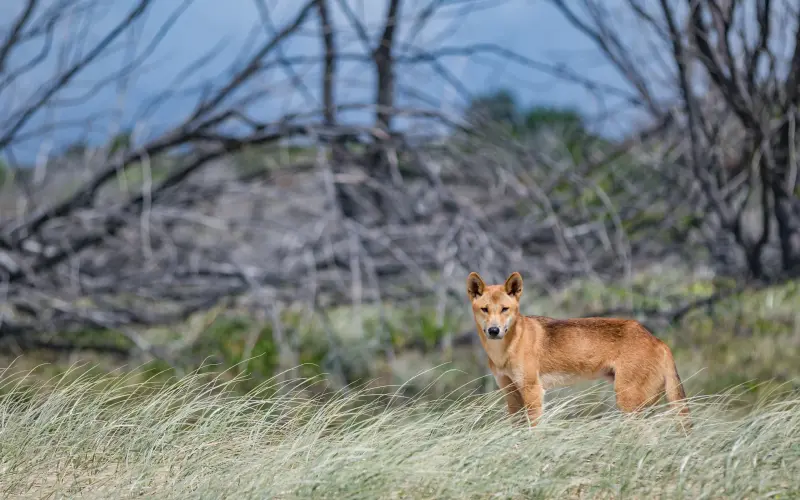
The Wild Dog Problem in NSW
Wild dogs are among the most emotionally and financially devastating pest animals affecting NSW livestock producers. According to ABARES, wild dogs cause an estimated $89 million in damage to Australian livestock annually, with sheep and goat producers bearing the heaviest losses.
The Northern Tablelands, North West NSW, and the ranges of the Great Dividing Range are the worst-affected regions in the state. In these areas, wild dog predation is not just a financial problem, it’s a crisis that drives producers out of sheep and goat production entirely, forcing them to switch to cattle or abandon grazing altogether.
What damage do wild dogs cause?
Wild dog attacks on livestock are brutal and indiscriminate:
- Sheep predation: Wild dogs attack sheep by biting the hindquarters, flanks, and throat. Unlike foxes, which typically kill one or two lambs, wild dogs often attack multiple animals in a single raid, sometimes mauling dozens of sheep without feeding. Wounded animals that survive the initial attack often die from infection, shock, or flystrike in the following days.
- Calf losses: Wild dogs prey on newborn calves, targeting them during the first days of life. In some regions of the Northern Tablelands, calf losses to wild dogs have been documented at 5 to 10% of the drop.
- Goat predation: Goat herds are particularly vulnerable to wild dog attack, with kids and nannies taken at high rates in affected areas.
- Stress and reduced productivity: Even when dogs don’t kill stock, their presence causes chronic stress in sheep flocks. Stressed sheep lose weight, reduce feed intake, and mob up tightly, leading to reduced conception rates, lower wool quality, and increased susceptibility to disease and flystrike.
- Disease transmission: Wild dogs harbour and transmit at least seven significant diseases: distemper, hepatitis, hydatids, mange, Neospora caninum, parvovirus, and sheep measles (Taenia ovis). Neospora caninum is particularly costly for cattle producers, as it causes abortions and can lead to offal condemnation at abattoirs. Hydatid tapeworm (Echinococcus granulosus) is transmissible to humans through accidental ingestion of eggs in the environment, causing fluid-filled cysts on vital organs. Sheep measles causes meat condemnation at processing.
- Emotional toll on farmers: The emotional impact of wild dog attacks on farming families is severe and often underestimated. Walking into a paddock to find sheep mauled, sometimes still alive, takes a real toll. The stress of repeated attacks, waking at night to barking dogs, finding fresh kills morning after morning, contributes to anxiety, depression, and feelings of helplessness. This is not just an economic problem.
Why wild dogs are worse than foxes
Foxes are a serious pest, but wild dogs operate on a different level entirely. A fox will typically take one lamb or one chicken per visit, killing to eat. Wild dogs develop surplus killing behaviour: once a dog or pack gets a taste for attacking livestock, they kill far beyond what they need to feed. A single wild dog can maul 20 or more sheep in one night, leaving most of them uneaten. Some dogs return night after night, treating a sheep paddock like a hunting ground rather than a food source.
This behaviour makes wild dogs far more destructive per animal than foxes. One fox in your lambing paddock might cost you a few lambs over a season. One wild dog can cost you dozens of sheep in a single week.
Wild dogs are also far harder to control than foxes. Foxes are opportunistic and relatively predictable. They take baits readily, respond well to spotlight shooting, and can be reduced to low numbers with a well-timed programme. Wild dogs are intelligent, cautious, and learn quickly. A dog that sees or smells a trap, encounters a bait station, or survives a shooting attempt becomes educated and far more difficult to target. Bait-shy dogs can persist in an area for months, continuing to attack livestock while avoiding every control method thrown at them.
This wariness is why wild dog control demands a multi-method, sustained approach. A single baiting round that would knock fox numbers back significantly may barely dent a wild dog population if the dogs have learned to avoid baits. Trapping, shooting, canid pest ejectors, and repeated baiting programmes must work together over time.
Why coordinated control matters
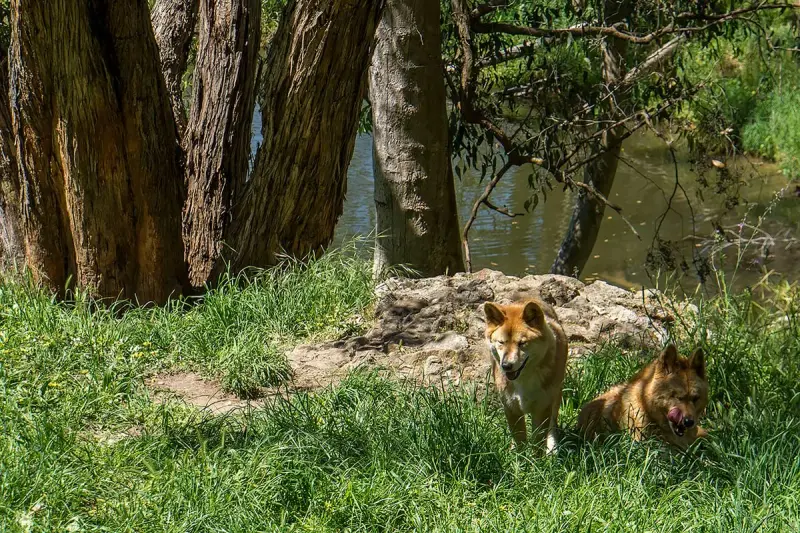
Wild dogs have large home ranges. A single dog or pack may cover 50 to 100 square kilometres. This means that controlling dogs on one property alone has limited long-term effect, because new dogs move in from surrounding uncontrolled areas. Research consistently shows that landscape-scale, coordinated control across multiple properties delivers far better results than isolated individual efforts.
This is why Local Land Services (LLS) coordinates wild dog management plans across regions, and why we work alongside LLS programmes in all our operating areas.
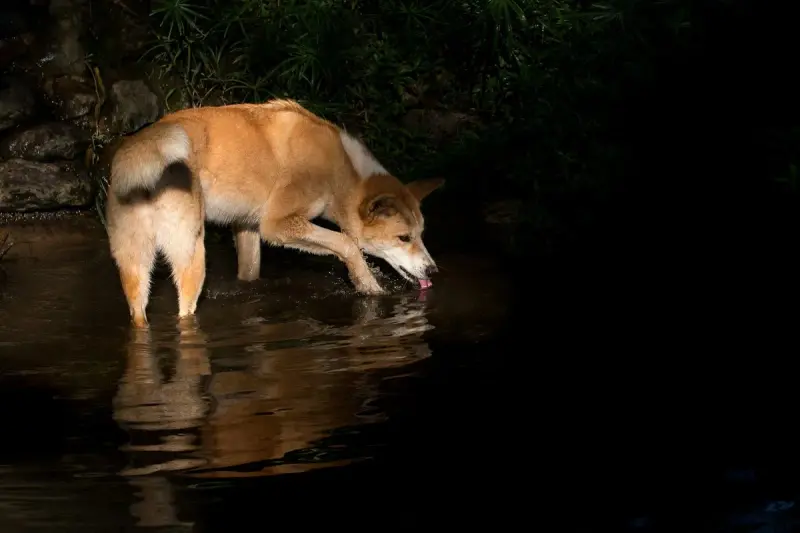
How We Control Wild Dogs
Effective wild dog control requires a combination of methods applied across the landscape. No single method is sufficient on its own.
1080 Baiting
1080 (sodium fluoroacetate) baiting is the most cost-effective method for landscape-scale wild dog control, and it’s the backbone of LLS wild dog management programmes across NSW. Our baiting follows the established LLS protocols:
- Bait preparation: Dried meat or manufactured baits injected with 1080 at approved dosage rates. Baits are prepared under licence and according to NSW DPI specifications.
- Bait placement: Baits are laid along wild dog movement corridors: ridge lines, creek crossings, fence lines, and established dog pads. Placement is guided by tracking, scat analysis, and local knowledge of dog movement patterns.
- Signage and notification: All baiting is conducted with mandatory signage at property entry points and along boundaries. Neighbouring landholders are notified in advance so they can restrain dogs and livestock guardian animals.
- Timing: Baiting is most effective when coordinated across multiple properties simultaneously, typically in autumn (before the breeding season) and spring (targeting dispersing juveniles).
PAPP (para-aminopropiophenone) is a newer wild dog toxin assessed by PestSmart as more humane than 1080. It has a significant advantage: there is an antidote (methylene blue) that can save non-target animals such as working dogs if administered quickly. PAPP baits are available through LLS programmes and can be used alongside 1080 in integrated programmes.
Important baiting detail: baits should be spaced at least 500 metres apart to prevent a single animal eating more than one (1080 must be metabolised before symptoms appear, so a dog can eat multiple baits before feeling effects). Radio-collared wild dogs have been documented eating baits up to eight weeks after the baits were laid, despite being in the area the entire time, so patience is essential. If fox densities are high in your area, foxes can completely undermine a wild dog baiting programme by removing and caching baits laid for dogs. In these situations, fox control should be conducted before or alongside wild dog baiting.
Canid Pest Ejectors (CPEs)
Canid Pest Ejectors are small spring-loaded devices hammered into the soil, leaving only a bait head exposed at ground level. When a dog pulls the bait head upward, a measured dose of 1080 or PAPP is ejected directly into its mouth. PestSmart describes them as “like a permanent one-shot bait station, but the bait can’t be shifted, making it safer to use around working dogs.” CPEs are checked monthly rather than daily, providing continuous low-maintenance control. Research from the peri-urban wild dog guide found that CPEs placed at track intersections had 1.5 times higher encounter probability than those placed along straight sections.
Trapping
Professional trapping is a targeted method for removing individual wild dogs, particularly those that are bait-shy or causing damage in areas where baiting is not practical. Our operators use:
- Soft-jaw (padded leg-hold) traps: These are the standard trap for wild dog control in NSW. Soft-jaw traps minimise injury to the captured animal and allow non-target captures (such as working dogs or native wildlife) to be released unharmed. Traps are checked at least daily as required by the Prevention of Cruelty to Animals Act.
- Strategic placement: Traps are set on established dog pads, at fence crossings, along creek lines, and at scent-marking posts. Effective trap placement requires experience and knowledge of wild dog behaviour. It’s as much art as science.
- Lure and attractants: Traps are enhanced with species-specific lures and attractants to draw dogs to the trap site.
Trapping is labour-intensive but highly effective for removing specific problem animals.
Ground Shooting
Shooting is used to target wild dogs during spotlight and thermal operations, particularly in areas where dogs are active around livestock paddocks. Our operators use thermal imaging to detect dogs in darkness and vegetation, and appropriate calibres for humane dispatch. Shooting is most effective as a complement to baiting and trapping rather than as a standalone method, because wild dogs are highly wary and difficult to approach within shooting range.
Exclusion and Cluster Fencing
Predator-exclusion fencing (commonly called cluster fencing) is a long-term solution for protecting livestock from wild dog predation. These fences use netting wire to ground level with an apron or buried section to prevent dogs digging under. Cluster fencing programmes, where groups of neighbouring properties are fenced as a single unit, have been highly successful in parts of Queensland and are being adopted in NSW.
While fencing is a capital-intensive investment, LLS offers subsidies for cluster fencing in priority wild dog management areas. We can advise on fencing options and connect you with LLS programmes in your region.
Our Integrated Pest Management Approach
Wild dog control is most effective when it’s coordinated, sustained, and uses multiple methods. Our IPM programmes align with LLS regional wild dog management plans:
-
Property Assessment: We inspect your property and surrounding landscape to assess wild dog activity. This includes mapping tracks, scats, and kill sites, identifying movement corridors, and deploying trail cameras to confirm dog presence and activity patterns.
-
Program Design: We design a control programme that integrates with the LLS wild dog management plan for your region. This typically combines landscape-scale baiting with targeted trapping and follow-up shooting, timed to align with seasonal dog behaviour and your livestock management calendar.
-
Implementation: Our licensed operators deliver the programme in coordination with LLS and neighbouring landholders. Baiting programmes are conducted simultaneously across multiple properties for maximum impact. Trapping and shooting operations follow to target bait-shy dogs and new arrivals.
-
Monitoring: After control operations, we monitor dog activity using trail cameras, tracking, and livestock observation. If your sheep are spreading out calmly in paddocks and you’re not finding fresh tracks, the programme is working. If dog activity persists, we adjust the approach.
-
Reporting: Detailed reports document dog activity, control methods used, animals removed, and recommendations for ongoing management. These reports support your LLS reporting requirements and insurance claims.
Where We Operate
Our wild dog control services cover the primary affected regions across NSW:
- Hunter Valley: escarpment and timbered ranges
- Northern Tablelands: one of NSW’s worst-affected wild dog regions
- North West NSW: pastoral country along the ranges
- Central West NSW: expanding wild dog range
- North Coast NSW: hinterland ranges and escarpment
We work alongside LLS wild dog programmes in all these regions, complementing their baiting and trapping efforts with additional professional capacity.
Pricing
Wild dog control programmes start from $500 per visit, with coordinated multi-property programmes available at reduced rates. Multi-property coordination is not just cheaper, it’s significantly more effective, because wild dogs range across large areas and isolated control efforts have limited lasting impact.
1080 and PAPP baiting programmes conducted through LLS may be partially subsidised in priority management areas. Contact us to discuss your situation, and we’ll advise on the most cost-effective approach. Get a free property assessment and quote.
Protect Your Livestock from Wild Dogs
Wild dog predation doesn’t stop on its own. Dogs that find easy prey come back, and they bring others. Every week of inaction means more livestock losses and more stress on you and your family. Whether you’ve been battling dogs for years or you’re seeing the first signs of activity, we can help.
Get a free property assessment today, call us or fill out our online form. We’ll assess your property, coordinate with your LLS wild dog plan, and design a control programme that protects your livestock and your livelihood.