The Fox Problem in NSW
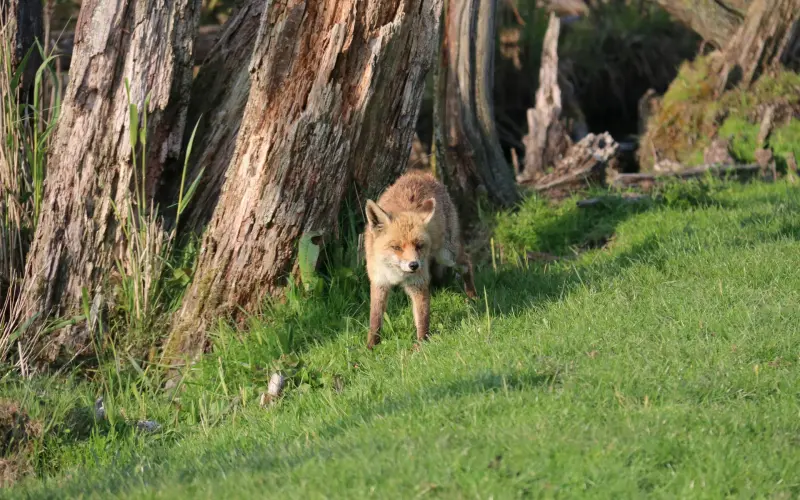
The European red fox is Australia’s most widespread and damaging introduced predator, and NSW farmers bear a heavy share of the cost. According to ABARES, foxes cause an estimated $198 million in agricultural damage nationally each year, making them one of the costliest pest animals on the continent.
For sheep and goat producers, the primary concern is lamb and kid predation. Research compiled by PestSmart shows that fox predation accounts for 2 to 30% of lamb losses in affected flocks, with the highest losses occurring in paddocks near timbered country, creek lines, and rocky outcrops where foxes harbour. In a flock of 1,000 ewes producing 1,200 lambs, even a 5% fox predation rate represents 60 lambs lost. At current prices, that’s a significant financial hit.
What damage do foxes cause?
- Lamb predation: Foxes target newborn lambs in the first 48 hours of life, particularly single lambs from young ewes and lambs born in paddocks with poor visibility. They attack the throat and chest, and may carry smaller lambs away entirely.
- Poultry and small livestock losses: Free-range poultry operations, hobby farms, and small stock enterprises (goats, rabbits) are particularly vulnerable. A single fox can kill multiple birds in one raid.
- Native wildlife destruction: Foxes are a primary driver of native mammal decline across Australia. They prey on ground-nesting birds, small marsupials, reptiles, and amphibians. PestSmart identifies foxes as a key threat to at least 14 threatened species in NSW.
- Disease transmission: Foxes carry hydatids, toxoplasmosis, mange, and various parasites that can affect livestock and working dogs.
Seasonal patterns
Fox activity in NSW follows a predictable annual cycle. Breeding occurs in June and July, with cubs born in August and September, coinciding with the peak lambing period for many NSW flocks. Fox families are most concentrated around den sites during the spring cub-rearing period (September to November). By autumn (March to May), cubs disperse from natal dens and establish new territories, spreading fox populations across the landscape. Understanding this cycle is critical for timing control programmes effectively.
How We Control Foxes
1080 Baiting Programs
1080 baiting remains the most cost-effective method for landscape-scale fox control in Australia. It’s backed by decades of research and is endorsed by PestSmart, NSW DPI, and Local Land Services as the cornerstone of integrated fox management. Foxes are very sensitive to 1080, which occurs naturally in some Australian plant species. Many native wildlife species have evolved a natural tolerance to the compound, making 1080 highly selective against introduced predators. Foxes usually die within two to three hours of ingesting a bait.
PestSmart recommends baiting at least twice a year: once in late winter or spring to disrupt breeding, and again in autumn to target dispersing juveniles. This sustained pressure prevents the population from recovering between control events.
Our baiting programmes follow a structured process:
- Free-feeding phase: Non-toxic baits are buried 5 to 10 centimetres deep at stations spaced 200 to 500 metres apart, with approximately 5 baits per square kilometre along tracks and fence lines. Trail cameras monitor uptake for 7 to 14 days to confirm foxes are feeding.
- Toxic phase: Once consistent bait uptake is confirmed, 1080 toxic baits replace the free-feed baits. Baits remain available for at least 10 days. Foxes conditioned to visit the stations take the toxic baits readily.
- Follow-up: Bait stations are checked and refreshed according to the programme schedule. All uneaten baits are collected and disposed of at the end of the programme to prevent bait aversion developing in surviving foxes.
All baiting is conducted under NSW DPI Pesticides Act requirements with mandatory signage, neighbour notification, record-keeping, and non-target risk management. Dogs and cats must be restrained during the baiting period. Landholders can also work directly with their Local Land Services (LLS) office to access free or subsidised 1080 baits as part of NSW Government funded fox control programmes. We coordinate with LLS to ensure our programmes complement these subsidised initiatives.
Spotlight and Thermal Shooting
Shooting is an effective complement to baiting, particularly for targeting foxes that are bait-shy or in areas where baiting is not practical. Our operators use:
- Spotlight shooting: Conducted from vehicles after dark using high-powered spotlights and calibre-appropriate rifles. Most effective on open country where foxes can be spotted at distance.
- Thermal shooting: Using thermal imaging scopes and monoculars to detect foxes through vegetation and in conditions where spotlighting is less effective. Thermal is particularly valuable in timbered country and creek lines where foxes harbour during the day and emerge to hunt at dusk.
Shooting is most productive when timed around the pre-lambing period and during autumn juvenile dispersal.
PAPP Baiting (FOXECUTE)
PAPP (para-aminopropiophenone) is a newer toxicant assessed by PestSmart as more humane than 1080. Foxes lose consciousness within 60 minutes and die within an hour after that. PAPP works by converting haemoglobin to methaemoglobin, which cannot carry oxygen. A key advantage is that there is an antidote: methylene blue can save non-target animals (including working dogs) if administered quickly after ingestion.
Canid Pest Ejectors (CPEs)
Canid Pest Ejectors are spring-loaded devices hammered into the soil, leaving only a bait head exposed at ground level. When a fox pulls the bait head upward, the device ejects a measured dose of 1080 or PAPP directly into the animal’s mouth. CPEs are highly target-specific because the upward pulling action required to trigger them is a natural behaviour for foxes and wild dogs but unlikely for most non-target species. Unlike buried baits, CPEs cannot be cached or moved by foxes, and they require only monthly checking rather than daily or weekly maintenance. They provide continuous, low-maintenance control across large areas.
Den Fumigation
During the cub-rearing season (typically August to October), fumigating active natal dens with carbon monoxide, the only registered fumigant for this purpose, is an effective supplementary method. Carbon monoxide is colourless and odourless, causing unconsciousness and rapid death without pain. Active dens are identified by small cub footprints, partially consumed carcasses at the entrance, strong odour, and flattened vegetation from cub play areas. Cubs must be older than four weeks before fumigation, as neonatal cubs can survive on lower oxygen levels.
Exclusion Fencing and Guardian Animals
While not a standalone solution, exclusion fencing around lambing paddocks and the use of guardian animals (Maremma sheepdogs, alpacas) can significantly reduce fox predation as part of an integrated programme. Maremmas are particularly effective in smaller paddocks where they can maintain close contact with the flock. We can advise on the most practical combination of methods for your operation.
Our Integrated Pest Management Approach
Understanding Fox Ecology
Fox territory sizes range from 2 to 5 square kilometres, with densities varying from 1 per square kilometre in forests to 6 to 8 per square kilometre in grasslands. Individual foxes travel 10 to 15 kilometres in a single night, and dispersing juveniles (particularly males) can travel an average of 68 kilometres from their natal den. This mobility is why isolated control on a single property has limited lasting effect.
PestSmart research highlights a critical ecological relationship: when rabbit numbers are low, fox numbers are generally low. Rabbits are a primary food source for foxes, and controlling foxes without also controlling rabbits can lead to a rapid rabbit increase, which then fuels faster fox population recovery. The most effective programmes control both species together. Baiting for foxes immediately after rabbit population crashes (from RHDV or drought) is particularly effective because foxes are more vulnerable to baits when their primary food source has declined.
Fox control only works when it’s sustained and coordinated. A single baiting or shooting event may knock numbers down temporarily, but foxes recolonise vacant territories within weeks. Our IPM programmes follow a structured five-step process:
-
Property Assessment: We inspect your property to identify fox activity: den sites, scat, tracks, prey remains, and damage patterns. We discuss your lambing programme, paddock layout, and any previous control efforts.
-
Program Design: Based on the assessment, we design a control programme that aligns with your farming calendar. For sheep producers, this typically centres on a pre-lambing baiting programme 4 to 6 weeks before lambing, complemented by shooting operations during the lambing period itself.
-
Implementation: Our licensed operators deliver the programme on agreed dates, working around your farm operations. Baiting programmes run over several weeks, while shooting operations are typically conducted over 1 to 3 nights.
-
Monitoring: Trail cameras and follow-up inspections track fox activity after control operations. This tells us whether the programme has been effective and whether additional control is needed.
-
Reporting: You receive a detailed report including fox numbers removed, methods used, areas covered, bait uptake data, and recommendations for the next phase. These reports support your biosecurity records and can be shared with LLS.
Where We Operate
Our fox control services cover the primary sheep and livestock regions across NSW:
- Hunter Valley: mixed farming and grazing country
- Merriwa and the Upper Hunter: western sheep and prime-lamb country
- Lower Hunter: poultry, hobby blocks, and small acreage
- Northern Tablelands: prime sheep and cattle country
- North West NSW: pastoral and broadacre regions
- Central West NSW: mixed farming districts
- North Coast NSW: hinterland grazing and small stock
We work with individual landholders and coordinate multi-property programmes for maximum effectiveness. Coordinated programmes with neighbours are significantly more effective than isolated efforts because they reduce the rate of fox recolonisation from surrounding areas.
Pricing
Fox control programmes start from $500 per visit, with pre-lambing seasonal packages available. 1080 baiting programmes are priced based on property size, number of bait stations, and programme duration. Pre-lambing packages covering the critical August-September window offer the best value for sheep producers.
Multi-property programmes reduce per-property costs and deliver better results. Contact us for a free property assessment and quote.
Protect Your Lambs This Season
Every lambing season without fox control is money walking off your property. Whether you’re losing lambs to foxes, dealing with poultry raids, or want to protect native wildlife on your land, our team can design a fox control programme that fits your operation.
Get a free property assessment today, call us or fill out our online form, and we’ll be in touch to discuss your fox problem and the best approach for your property.