A Hazard That Is Growing With the Herd
Most talk about feral deer focuses on what they do to paddocks and crops. But as their numbers and range expand across NSW, deer are increasingly a problem on the roads that run through deer country, and that is a risk to your family, your workers, and anyone driving your district at dawn or dusk.
This article is about the road hazard specifically: how common collisions are, why deer are spreading, who pays when you hit one, and what a landholder near a road can actually do. For the full profile of the six deer species in NSW and the damage they do on farms, see our guide on feral deer in NSW: species, impact, and control.
How Big Is the Problem?
Animal-vehicle collisions are climbing fast. Across Australia, insurance claims for animal collisions topped 24,000 in 2025, up from around 21,000 in 2023, and NSW records the most of any state at roughly 30 percent of them, according to the AAMI Crash Index (2026). The average wildlife-collision claim now exceeds 9,000 dollars, and about one in five collisions writes the vehicle off, with more than 4,500 write-offs in 2025.
Kangaroos account for most strikes, with deer a smaller share, but deer punch well above their numbers on danger. A red or sambar deer can weigh 150 to 300 kilograms, so a collision at highway speed can total a vehicle and cause serious or fatal injury in a way a smaller animal does not. The clearest deer-specific NSW record comes from the Illawarra, where NSW Police data compiled by the Invasive Species Council (2019) showed 107 deer crashes between 2005 and 2017, of which 90 were serious, with 28 injuries and one death, on West Dapto Road in 2012. The worst roads were the F6 Freeway, Lady Wakehurst Drive, the Princes Highway, and Lawrence Hargrave Drive.
Nationally, feral deer are estimated to cost about 4.5 million dollars a year in vehicle and train accidents alone, part of a total feral-deer cost of 91.3 million dollars for 2021 (McLeod, 2023).
Why Deer Numbers Are Spreading
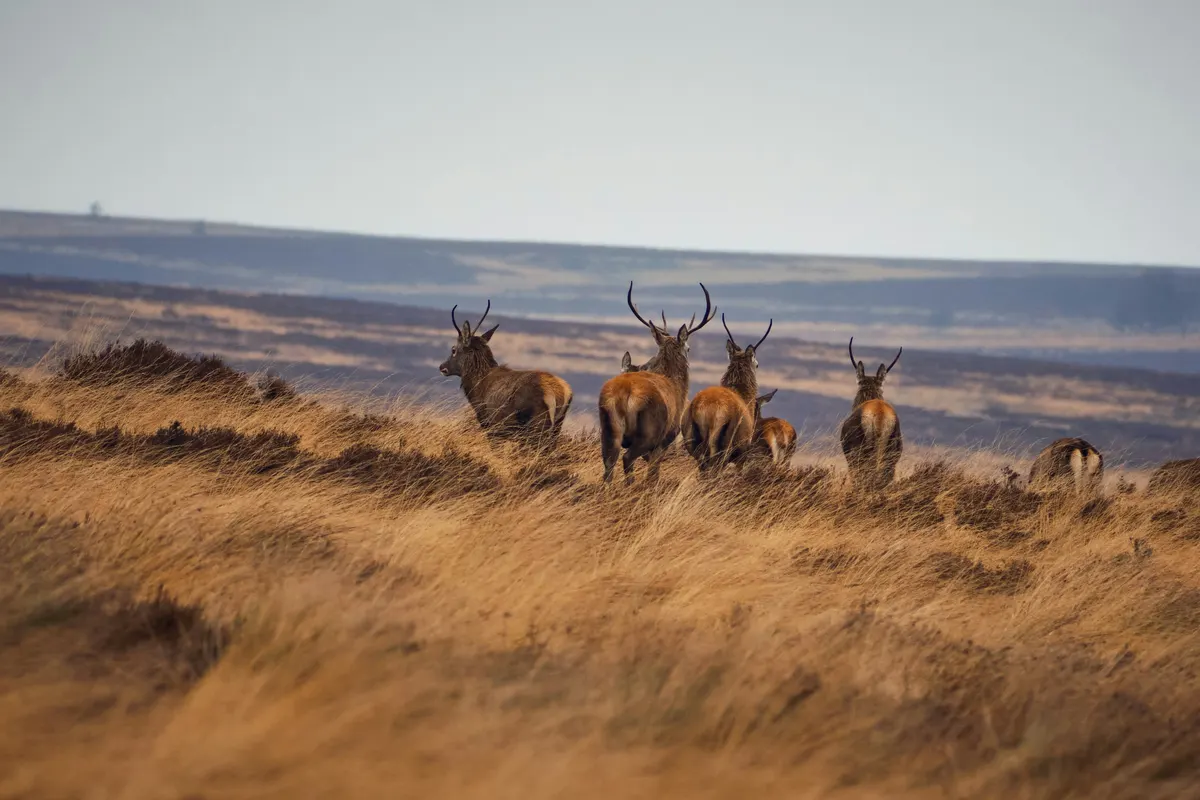
The road risk grows because the herd grows. Australia’s feral deer population is estimated to have risen from around 200,000 in 2002 to between one and two million today, and NSW now carries the most widespread and dense populations in the country, according to the Invasive Species Council and NSW DPI. Local Land Services (2024) reports that uncontrolled herds can grow 34 to 50 percent a year, so a herd of 30 can reach around 500 within a decade, and that deer distribution and density across NSW rose more than 35 percent between 2016 and 2020.
Several things drive it. Deer have no natural predators here. They breed reliably, and they thrive on the mix of grazing land and forest edge that dominates rural NSW, the same country road corridors are carved through. As deer push into peri-urban fringes, from the Illawarra escarpment to Sydney’s southern edge and out through the Hunter, Northern Tablelands, and Central West, they cross more roads more often.
When and Where the Risk Peaks
Two patterns matter for anyone driving deer country.
- Time of day. Deer are most active around dawn and dusk, and dusk is the single highest-risk window for animal collisions (AAMI).
- Season. Roughly 58 to 60 percent of animal collisions happen between May and October, with a clear winter concentration. Autumn adds the deer rut, when bucks move more and are less wary of traffic.
The practical takeaway is simple: slow down at dawn and dusk on roads through deer country, especially in the cooler months, and treat one deer on the verge as a warning that more are close by.
Who Pays When You Hit One?
This is where feral deer differ from most road hazards, and it is worth understanding before it happens.
Feral deer are wild animals with no legal owner. So unlike a collision with someone’s stray livestock, there is usually no third party to claim against: the loss falls on you and your insurer. Australian insurers treat an animal strike as a not-at-fault event, but the damage to your own vehicle is only covered if you hold comprehensive insurance. A compulsory third party (green slip) policy covers injury to other people, not your car, and third-party property cover does not pay for animal-strike damage to your own vehicle. If you drive deer country, comprehensive cover is the policy that protects you, so check your product disclosure statement now rather than after a collision.
There is no established NSW law making a landholder liable for unowned feral deer that stray from their land and cause a collision, which is different from owned livestock straying onto a road. But every landholder does have a general biosecurity duty to take reasonable steps to manage pest animals, and feral deer are a declared priority pest across all 11 Local Land Services regions, so control is expected on land-management grounds regardless of the road question. For more on how insurance interacts with feral animal damage, see our guide on farm insurance and feral animal damage. This is general information, not legal advice.
What Landholders Near Roads Can Do
You cannot fence a highway, but you are not powerless either. Five practical steps.
- Coordinate control, do not go solo near traffic. The most effective and safest deer control near roads is coordinated through Local Land Services and neighbours, not run by individuals shooting close to a road. See why in our guide on coordinated neighbour programmes.
- Use licensed contractors for night shooting. On suitable country back from the road, professional ground shooting at night with thermal optics is the primary control method for deer. It must respect firearms law: safe firing lines, minimum distances from roads and dwellings, and no discharge across a road. Our explainer on whether you can shoot feral animals on your own property covers the rules. Note that the game hunting licence requirement to control deer on private land was removed in 2019, so a landholder needs only an appropriate firearms licence, not a game licence.
- Fence high-value assets, not road frontage. Deer-proof fencing must be at least 1.9 metres high and is costly, so it earns its keep protecting crops, vineyards, and orchards rather than lining a road.
- Report deer and collisions. Logging sightings and crashes with Local Land Services and through FeralScan builds the data that aims the coordinated programmes and the road-authority response. Transport for NSW is also trialling detection technology to reduce wildlife collisions.
- Insure for it. Make sure your own vehicles carry comprehensive cover, because that is what pays when a deer steps out.
How We Help
We control feral deer with professional ground shooting, guided by thermal drone surveys that find the mobs and map their movement corridors between feeding and bedding areas, which is exactly the information you need to reduce the animals crossing local roads. We start with a property assessment and coordinate with your Local Land Services programme so the effort is aimed where the deer actually are. If deer are a growing hazard on your country and the roads around it, get in touch and we will build a plan around it.
Sources consulted: AAMI Crash Index and Suncorp animal-collision releases (2024 to 2026); Invasive Species Council, feral deer and NSW driver risk, and NSW deer status change (2019); McLeod, Annual Costs of Feral Deer in Australia (PestSmart and Centre for Invasive Species Solutions, 2023); NSW Local Land Services and NSW DPI feral deer material (2024); Game and Feral Animal Control Amendment (Deer) Order 2019 and Game and Feral Animal Control Regulation 2022; Transport for NSW, wildlife and vehicle collisions; Australian insurer guidance on animal-strike cover.