What Feral Deer Species Are Found in NSW?
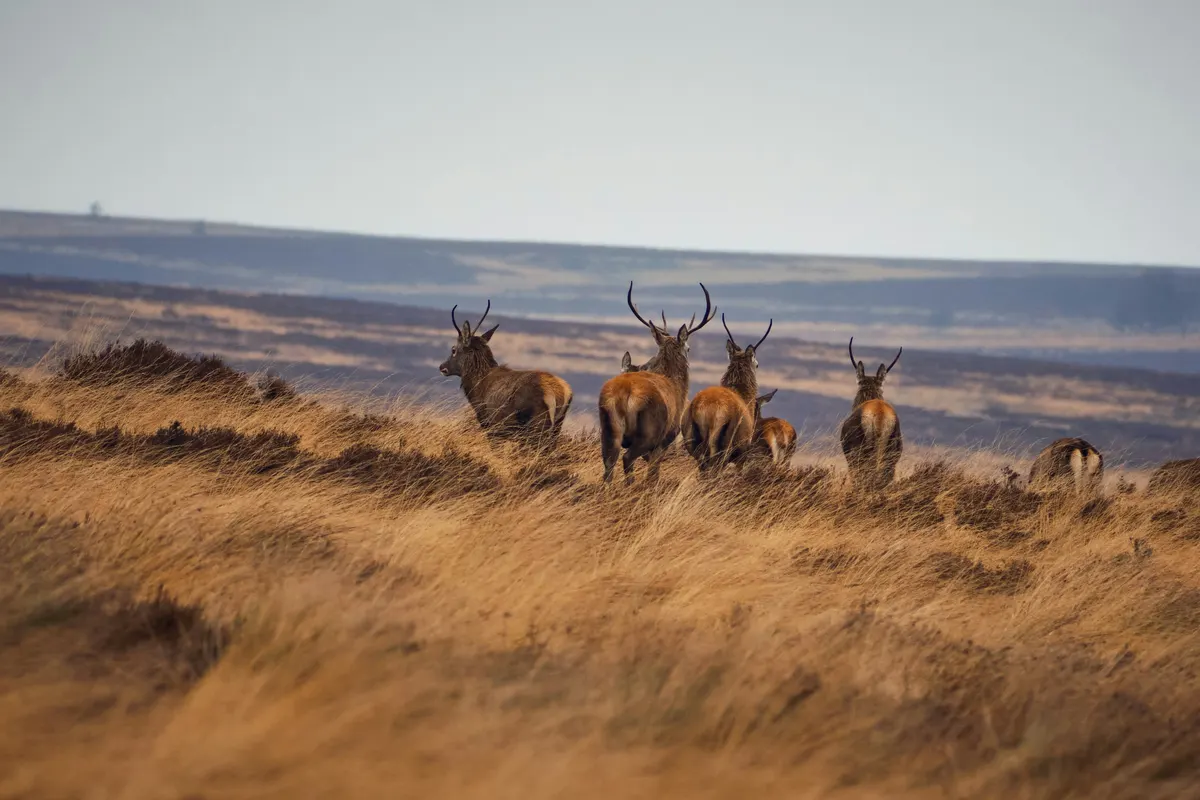
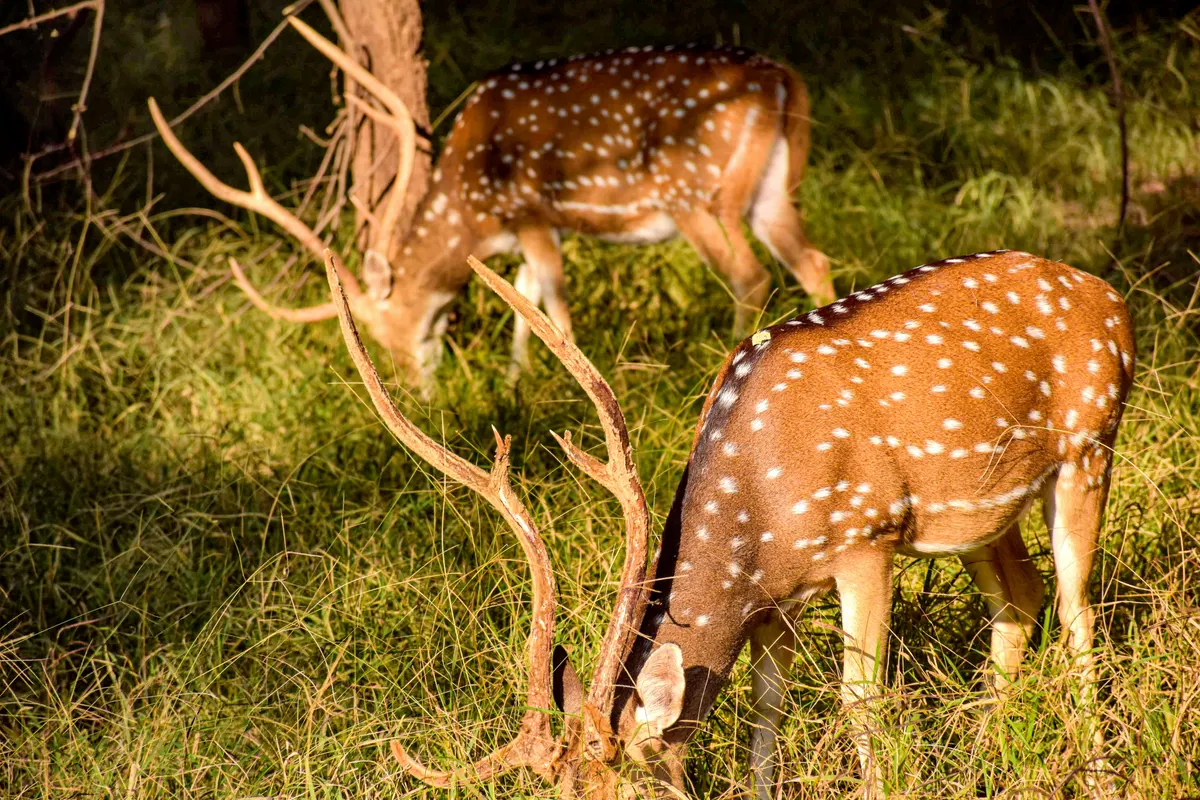
Six feral deer species have established breeding populations across NSW. Understanding which species you’re dealing with is important. They differ in size, behaviour, habitat preference, and the type of damage they cause.
| Species | Weight | Key Features | Primary NSW Distribution |
|---|---|---|---|
| Fallow deer | 30-85 kg | Spotted or dark coat, palmate antlers | Hunter Valley, Central Tablelands, Mudgee, Southern Highlands |
| Red deer | 100-200 kg | Reddish-brown, large branching antlers | Northern Tablelands, New England, Hunter Valley |
| Sambar deer | 150-300 kg | Dark brown, shaggy coat, large body | Royal National Park, Illawarra, South Coast |
| Rusa deer | 60-140 kg | Grey-brown, lyre-shaped antlers | Royal National Park, Greater Sydney, Central Coast |
| Chital deer | 40-85 kg | Spotted year-round, slender build | Northern NSW, Grafton to Casino corridor |
| Hog deer | 35-50 kg | Smallest species, stocky build | New incursion detected between Blayney and Yass in March 2026. Previously limited to Victoria’s Gippsland coast. |
Update (April 2026): In March 2026, feral hog deer were confirmed in NSW for the first time, detected between Blayney and Yass on the Southern Tablelands. The Invasive Species Council has called it a biosecurity emergency. NSW DPIRD considers the population small enough to eradicate if action is taken quickly. Read our full guide: Hog Deer in NSW: What the Biosecurity Emergency Means for Farmers.
Population Growth
Feral deer populations in NSW have been growing at an alarming rate. NSW Department of Primary Industries estimates suggest deer numbers have doubled or tripled in many regions over the past two decades. The Hunter Valley, Northern Tablelands, and North Coast are the worst-affected areas.
Several factors drive this growth:
- No natural predators. Australia has no large predators capable of controlling deer populations
- Escaped farm stock. Deer farming operations, particularly in the 1980s and 1990s, released stock that established wild populations
- Deliberate releases. Historical releases for recreational hunting seeded populations in new areas
- Suitable habitat. NSW’s mix of grazing land, forest, and reliable water provides ideal deer habitat
What Damage Do Feral Deer Cause to Farms?
Feral deer are among the fastest-growing pest animal problems in NSW. Their impacts hit farmers across multiple fronts.
Crop and Pasture Damage
Deer graze improved pastures and crops, competing directly with livestock for feed. A mob of fallow deer can consume the equivalent feed of several head of cattle. They show particular preference for:
- Lucerne, oats, and wheat crops
- Improved pastures and clovers
- Orchard fruit and vineyard grapes
- Vegetable crops
In the Hunter Valley, vineyards report significant losses from deer browsing on young shoots and ripe fruit. Grain farmers across the Northern Tablelands lose entire paddock margins to overnight feeding.
Fence Destruction
Deer cause substantial fencing damage. Adult red and sambar deer can jump 1.8m fences from a standing start, and fallow deer push through or under standard stock fencing. The financial impact is significant:
- Standard fence repairs cost $15-25 per metre including materials and labour
- A single deer breach can lead to livestock escapes, mixing mobs, or road incidents
- Properties with high deer pressure report spending $5,000-$15,000 per year on fence repairs alone
Vehicle Collisions
Deer-vehicle collisions are a growing road safety issue in NSW, particularly on rural highways at dawn and dusk. The Hunter Valley, Mudgee, and Armidale regions report increasing collision rates. A collision with a red or sambar deer at highway speed can total a vehicle and cause serious injury.
Competition with Livestock
Feral deer compete with cattle and sheep for pasture, water, and supplementary feed. During drought, this competition intensifies as deer move onto improved pastures and access feedlots and hay storage. A mob of 50 fallow deer consumes roughly the same feed as 10-15 cattle.
Environmental Damage
Beyond agricultural impacts, feral deer cause significant environmental damage:
- Forest understorey destruction. Sambar and rusa deer browse native vegetation below 2m, preventing forest regeneration
- Waterway damage. Deer wallowing in creeks and dams erodes banks and increases sediment load
- Native species displacement. Deer compete with native herbivores for food and habitat
- Weed spread. Deer carry weed seeds in their coats and digestive systems, spreading invasive plants across properties
Are Feral Deer Protected in NSW?
The legal status of feral deer in NSW has changed significantly in recent years, and the changes are good news for farmers.
Current Legal Status
Under the Biosecurity Act 2015, feral deer are subject to the general biosecurity duty. This means all landholders have an obligation to prevent, eliminate, or minimise the biosecurity risk they pose. Since 2019, when the game hunting licence requirement to control deer on private land was removed, landholders can manage deer as pest animals rather than game animals, which simplifies control.
Key points:
- Landholders can control feral deer on their own property without needing a game hunting licence
- The general biosecurity duty means you’re expected to take reasonable steps to manage deer on your land
- Professional pest controllers operating commercially need a VPAC licence
- Some local government areas have specific deer management plans through Local Land Services
Previous Protections Removed
Previously, deer had partial protection under the Game and Feral Animal Control Act 2002, which treated them as game animals available for licensed recreational hunting. Removing the game licence requirement on private land recognised that recreational hunting alone was not controlling populations and gave landholders and pest controllers clearer authority to manage deer as pest animals.
Permits and Authorisations
For most control activities on your own property, no specific permit beyond your firearms licence is needed. However:
- Night shooting is permitted on private land with appropriate equipment
- Engaging a professional pest controller requires them to hold a current VPAC licence
- Some coordinated regional programmes through LLS may have specific authorisation arrangements
How Are Feral Deer Controlled?
Feral deer present unique control challenges compared to other pest animals. They are alert, fast, and adapt quickly to disturbance. Effective control requires the right combination of methods.
Ground Shooting
Ground shooting is the primary method for feral deer control in NSW. Using thermal optics and night-vision equipment, professional shooters can selectively target deer during their most active periods (dusk to dawn).
Why it works for deer: Deer are creatures of habit with predictable movement corridors between feeding and bedding areas. Once these corridors are identified (through thermal drone surveys or trail cameras), shooters can position for effective operations.
Key considerations:
- Rifle calibre must meet the legal minimum for the species. In NSW, .308 is the standard for all deer species. A .223 does not meet the minimum calibre requirement for deer
- Deer become wary quickly after initial shooting operations, so the first operation is typically the most productive
- Calibre selection balances humane destruction requirements with noise management around stock
Thermal Drone Surveillance
Thermal drones are particularly valuable for deer management because deer are difficult to count and locate from the ground. Their camouflage and use of dense cover makes ground-based population assessment almost impossible.
How we use drones for deer:
- Pre-operation surveys to locate mobs and map movement corridors
- Population estimates across large properties (thermal counts are the most accurate method)
- Post-operation surveys to confirm knockdown rates
- Monitoring population recovery between seasonal control programmes
Exclusion Fencing
For high-value assets (vineyards, orchards, specific crop paddocks), deer-exclusion fencing can be cost-effective despite the upfront investment.
Specifications: Deer fencing needs to be at least 1.9m high for fallow deer and 2.1m for red and sambar deer, with mesh or line spacings that prevent deer pushing through. Purpose-built deer fencing costs $15-30 per metre installed.
Cost-benefit: For a vineyard losing $20,000+ per year in crop damage, fencing a 10-hectare block at $30,000-$50,000 pays for itself within 2-3 years.
Why Baiting and Trapping Are Less Effective for Deer
Unlike feral pigs, deer are not effectively controlled through baiting or trapping:
- No registered toxin is available for deer control in Australia
- Deer are highly alert and cautious around unfamiliar structures, making trapping impractical at scale
- Yard trapping has been used in limited situations but requires substantial infrastructure and is not viable for broad-area control
This is why ground shooting combined with thermal drone surveillance remains the most effective and practical approach.
Why Are Feral Deer Populations Growing So Fast in NSW?
Understanding why deer populations are exploding helps explain why control is urgent:
- No natural predators. Dingoes occasionally take fawns but have no significant impact on adult deer populations. Australia simply lacks the large predators (wolves, bears, mountain lions) that control deer in other countries.
- High reproductive rate. Does typically produce one fawn per year, but in good seasons with abundant feed, twin fawns occur. With no predation pressure, population growth of 20-30% per year is common.
- Habitat expansion. Land clearing has created the mix of open grazing land and forest edge that deer prefer. Improved pastures provide higher-quality feed than native grasslands, supporting larger populations.
- Climate factors. Milder winters and more reliable water availability in many NSW regions allow deer to thrive. Drought concentrates deer on properties with remaining water and feed, creating conflict with livestock.
- Insufficient control effort. Until the rules changed on private land, the regulatory framework made coordinated control difficult. Recreational hunting removed some animals but was never at the scale needed to control populations.
The bottom line: without active management, feral deer populations will continue to grow and the agricultural and environmental damage will increase.
Dealing with feral deer on your property? Get a free phone consultation, and we’ll assess your deer situation, identify the species involved, and recommend the most effective control approach. Or call us directly on 0493 417 929.