Why Records Matter
A lot can happen over a season. Tracks appear, bait stations are checked, paddocks are monitored and follow-up work gets scheduled. Without records, it becomes difficult to remember exactly what happened, where it happened and whether the approach changed anything.
Good records turn observations into a history of the property. They help show what was done, when it was done and what happened afterwards. A full year of control work backed by notes, photos and reports is far more useful than relying on memory alone.
The NSW Government states that keeping records and working with neighbours can assist landholders to meet their General Biosecurity Duty by helping identify pest issues early and plan appropriate, timely management actions. For more on the duty itself, see Your Biosecurity Duty Explained. Records are evidence and a planning tool, but they are not a substitute for action. A tidy folder without any control work behind it does not solve the problem.
Who might one day want to see your records?
- A Local Land Services biosecurity officer if pest activity becomes a district issue.
- The NSW EPA for pesticide use records.
- Your accountant or the ATO when supporting deductions.
- An insurer or broker when assessing a claim.
- A prospective buyer carrying out due diligence.
- The Biodiversity Conservation Trust where reporting is required under a funded agreement.
This article is general information only. It is not legal, tax or insurance advice. Check your own obligations with the relevant authority or your adviser.
What to Record Every Time
A simple entry made every time is usually more useful than a detailed record completed only occasionally.
- Date and time of day or night.
- Who carried out the work.
- Paddock name or GPS location.
- Species being targeted.
- Method used, such as baiting, trapping, shooting, fumigation, ripping or monitoring.
- Effort involved, including hours, nights, baits laid, traps set or kilometres covered.
- Result recorded, including bait take, animals removed, warrens treated or no activity observed.
- Signs or damage found, such as tracks, diggings, kills or crop and pasture impacts.
- Coordination with neighbours or participation in an LLS programme.
- Follow-up actions needed and when they should occur.
A notebook in the ute, a spreadsheet or a phone app can all work well. The important part is recording information at the time and keeping everything together in one place.
Baiting Records
Baiting is the area where record keeping moves beyond good practice and into specific legal requirements.
Pesticide use records
According to Service NSW, if you use pesticides in your business or occupation, or on your produce or farm, you must make a record of their use within 48 hours and keep it for 3 years. 1080 and PAPP baits are pesticides, so these requirements apply to baiting activities.
Another person can prepare the record, but responsibility for ensuring it is accurate remains with the person using the pesticide.
The record should cover:
- Who applied the pesticide.
- The full product name.
- How, when and where it was applied.
- What it was applied to.
- How much was applied.
- An estimate of wind speed and direction if applied outdoors using spray equipment.
The NSW EPA states records must be made in English and should clearly identify the area where the pesticide was used.
For pesticide records see Service NSW guidance, the NSW EPA field crops fact sheet and the NSW EPA livestock fact sheet.
1080 bait requirements
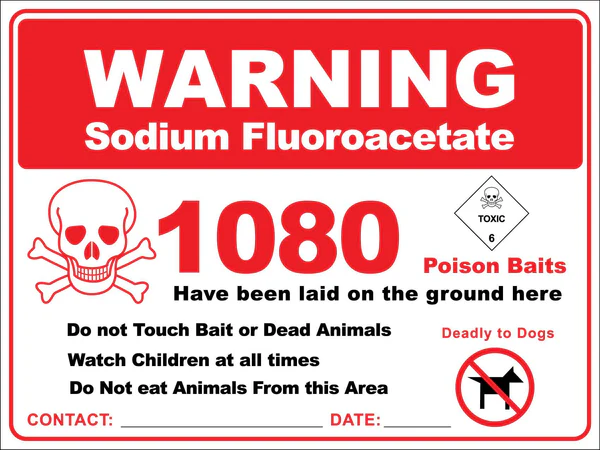
The NSW EPA’s Pesticide Control (1080 Bait Products) Order 2020 sets additional requirements around the use of 1080 wild dog and fox baits.
- A person may only possess specified 1080 wild dog or fox baits supplied by an Authorised Control Officer and must complete and sign an indemnity form for the property.
- At least three days’ notice of the baiting date must be given to neighbouring properties within one kilometre of the baiting location.
- Warning notices must remain in place for at least four weeks after the final day of baiting.
- As practical record keeping advice, note who was notified, along with how and when notification occurred.
See the NSW EPA 1080 bait order. Verify currency on the NSW EPA website before relying on it.
PAPP bait programmes
NSW DPI guidance says buried PAPP bait locations should be marked or recorded so any remaining baits can be collected and destroyed at the end of the programme.
See the NSW DPI PAPP baiting SOP.
Photos, Camera Images and Maps
Photos are often the quickest record to create and the easiest one to misplace later.
- Keep your phone’s date and location settings enabled.
- Take a wide photo and a close-up photo, with an object for scale beside tracks or damage.
- Photograph the same location before and after control work from the same position.
- Sort trail camera images by camera location and date.
- Maintain a dated property map showing paddocks, camera sites, bait stations and warrens.
The NSW Government highlights FeralScan as a free app and website that allows landholders to record pest animal sightings and damage, monitor activity over time and coordinate control across properties. Landholders can also create private groups with neighbours, with reports visible only to group members and the local Biosecurity Officer. See the NSW Government vertebrate pest animals information page.
How Long to Keep Them, and Where
- Pesticide use records: Service NSW states these records must be retained for 3 years.
- Tax records: The ATO states most records should be kept for 5 years from when they were prepared or obtained, or when the related transaction was completed, whichever occurs later. Records must be in English or readily converted to English.
- General pest control logs: No single legal retention period was identified for ordinary monitoring and pest control logs. As practical advice, keeping them for at least as long as your tax records can help build a useful history of the property.
Store records somewhere other than the ute. Digital copies in cloud storage or emailed to yourself can help protect them from loss through flood, fire or simple wear and tear. Owners who are rarely on their property may also find value in developing a structured record system. See Absentee and Lifestyle Landowner Pest Control.
Records From a Contractor
When you engage a contractor, the records should arrive with the work.
- A written report for each visit covering the date, species, method, location, effort, result and recommendations.
- A tax invoice showing the provider’s ABN and a clear description of the work completed.
- For pesticide work, a copy of the pesticide record if requested by the owner or occupier, as outlined by the NSW EPA for pest management technicians.
Hiring a contractor can be one way to act on your biosecurity responsibilities, but it does not transfer those responsibilities away from the landholder. Keep contractor reports alongside your own property records.
You can learn more about our approach at how we run a job or through our Annual Stewardship and Compliance Program.
For properties managed under Biodiversity Conservation Trust agreements, reporting requirements may apply. NSW Government guidance notes that evidence can include photos, receipts and contractor records.
Records for Tax and Insurance
Tax
The ATO states that primary producers have the same record keeping obligations as other businesses. As practical advice, keep receipts for bait, ammunition, traps, fuel and contractor invoices with your pest control log so each expense connects to a recorded activity.
The ATO also notes that landcare operations can include work that is primarily and principally aimed at “eradicating or exterminating animal pests from the land”. Some capital works may therefore fall within landcare operation deductions. Check the details with your accountant before relying on any tax treatment. See Tax Deductions for Feral Animal Control.
Insurance
No insurer or regulator source was identified setting specific record requirements for claims involving pest animal damage. As general advice, dated photos and a clear log of pest control activity can provide useful documentation where a claim becomes relevant. See Does Your Farm Insurance Cover Feral Animal Damage?.
If you would like the work and the paperwork handled together, ask about our Annual Stewardship and Compliance Program. We help set up a control programme with reporting you can file and refer back to. Call 0493 417 929.