The Block You Cannot Get To
Plenty of good country in NSW is owned by people who are not standing on it. A weekender in the hills, a bush block held for later, a lifestyle block bought for the space, a farm run from a job in town, a place inherited and kept because selling it feels wrong. The country is real, the rates notice arrives, and so does a legal responsibility that most owners only half know about.
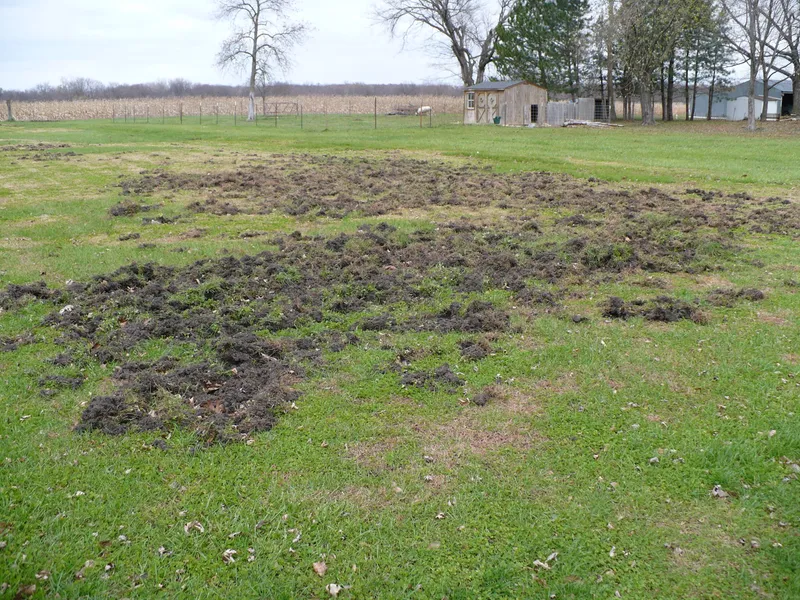
Feral animals do not wait for you to visit. Pigs work over a paddock in a night, foxes settle into the timber and start on the neighbour’s lambs, deer come in through a back boundary and stay. By the time you get out there, the damage is done, you have no idea how long it has been building, and the neighbour has an opinion about it.
This guide is written for the owner in that position. It covers what the law actually asks of you, what changed in July 2026, and the part nobody else writes about: how you discharge a pest control duty on land you are not standing on.
What the Law Actually Asks of You
Under the Biosecurity Act 2015, every person who deals with a biosecurity risk, and who knows or ought reasonably to know about it, has a general biosecurity duty to prevent, eliminate, or minimise that risk so far as is reasonably practicable. Owning land that carries feral animals puts you squarely inside that definition. Our full guide on the biosecurity duty and what reasonable steps means works through the detail.
What matters here is that NSW has published guidance aimed directly at you. The NSW Government’s absentee landholder page defines the category in one line: “An absentee landholder is someone who owns land but lives elsewhere, either full or part time.” It then states the obligation without qualification. You are responsible for managing your land to prevent pests and weeds spreading into neighbouring properties. “Regular inspections, pest animal control and weed removal are essential.” And you must take action regardless of how your land is used, “whether you do it yourself, or hire help.”
That last phrase is the useful one. The duty is about the land being managed. It has never required that you personally be the one holding the bait bucket.
The standard scales, the duty does not
There is a fair question underneath all of this: is a 20 hectare bush block really held to the same standard as a 2,000 hectare grazing operation?
No, and the Act says so. “Reasonably practicable” is weighed against the nature of the risk, its likely impact, what you know or ought to know, what control methods are available to you, and their cost. The Act states plainly that a step is not reasonably practicable where the cost would be greatly disproportionate to the risk. A small block is not expected to run a large property’s programme.
What does not scale is the duty itself. It applies to the urban house block, the 10 hectare hobby farm, and the 1,000 hectare enterprise alike, in Local Land Services’ own framing. The question an authorised officer would ask is not “did you do as much as your biggest neighbour” but “did you do something proportionate, and can you show it”.
What Changed in July 2026
For years the honest summary of enforcement was that the duty was real and nobody had ever been pursued over feral animals. That is no longer quite the summary.
In July 2026 the NSW Government announced its first General Biosecurity Direction for feral pig control. It covers every public and private landholder in the Walgett region in the state’s north west, and it requires them to take part in a coordinated control programme combining baiting, trapping, and aerial and ground shooting. Landholders who do not comply face penalties of up to $220,000 for individuals and $440,000 for corporations, including government agencies, and those penalties can continue to apply each day until they comply. The pilot is scheduled to start in November 2026 and run through to 30 June 2027, and the government has said it could be extended to other parts of NSW, including areas dealing with both pigs and deer, if it works.
It is the first time the Biosecurity Act 2015 has been used this way for feral pigs or deer.
Two things are worth saying about it, because the temptation in an article like this is to wave it around.
The first is what it does not mean. It covers one region. It had not started at the time of writing. No NSW landholder has been prosecuted for failing to control feral animals, and we are not going to tell you a fine is heading your way. If you own a block outside the Walgett region, nothing about your legal position changed in July.
The second is what it does mean. The direction of travel is now visible rather than theoretical, and the objection raised most loudly in the farming press was about people like you. Walgett agronomist Peter Meppem, who supports coordinated control, told The Land that “while we need a coordinated approach from everyone, facing fines for failing to comply with the eradication program is a step too far, especially for smaller landholders.” NSW Farmers president Rebecca Reardon said the organisation was “horrified that the government seems more interested in using the big stick with a compliance and fines approach rather than working with farmers.” The small and part-time landholder is exactly who both are worried about, which tells you where this lands if it spreads.
The Absentee Owner Stereotype, and What the Research Says
There is a story rural districts tell about absentee owners: the city people who bought the block, ride a buggy around it, and will not engage with anything the neighbours are doing. You will find versions of it in farming press interviews, and the Local Land Services regional plans acknowledge varying landholder participation as a genuine problem.
It is worth knowing that the research is more generous than the folklore.
A study of absentee and resident landowners across two high-amenity areas of NSW, published in the Journal of Environmental Planning and Management in 2024, compared how the two groups approached invasive plant management. It found that attitudes and practices were very similar between absentee and resident owners, with the real differences sitting in motivations and in the barriers each group faced, and concluded that the differences between absentee and residential landowners “may be overstated” (Gill, Lewis, Chisholm and Adan, 2024). That study looked at weeds rather than feral animals, so treat it as directional here rather than as a measurement of pest animal behaviour. But it points at something that matches what we see: most owners of blocks they do not live on are not indifferent. They are absent.
That distinction matters, because it changes what the solution looks like. If the problem were attitude, the answer would be pressure. Since the problem is presence, the answer is a system that works without you.
How to Discharge the Duty From a Distance
Here is the practical sequence for an owner who is not on the property.
1. Find out what is actually there. Not what you saw last visit or what the neighbour reckons. Species, roughly how many, where they are concentrated, and which boundaries they are crossing. This is what a property assessment produces, and it is the step everything else depends on, because you cannot make a proportionate decision about a risk you have not measured.
2. Put something in place that watches between visits. Trail cameras with species detection at the crossings, gates and water points animals actually use, and periodic thermal drone surveys to see across the whole block rather than past one fixed point. This is the piece that substitutes for you being there, and it is the difference between finding out in March and finding out in September.
3. Act on what it shows, through someone licensed. When the monitoring flags real pressure, that is when control is worth paying for and where it should go. Use a licensed and insured contractor, or the free coordinated programmes described below, rather than an informal arrangement that produces no record.
4. Join the district’s timing. Feral animals cross fences, so control that ignores the neighbours does not hold. Ask when your district runs its coordinated baiting and shooting windows and line up with them. Our guide to coordinated neighbour programmes explains why this is the only approach that reliably gets ahead.
5. Use the free help. Local Land Services will give you advice, mapping, and in many regions free 1080 baited grain, trap and camera loans, and access to coordinated programmes, at no cost. In 2024-25 the Feral Pig and Pest Program supported 9,369 landholders across more than 18 million hectares, supplied 196,490 kg of free 1080 baited grain, and delivered 38,582 one-on-one consultations. Call 1300 795 299 and ask for your local biosecurity officer. Our roundup of free Local Land Services resources covers what is available.
6. Keep the paper. Every report, invoice, and log. More on this below.
At a glance: the duty, and how an off-site owner meets it
| What the duty expects | What that looks like when you live on the property | What that looks like when you do not |
|---|---|---|
| Know what pests are present | Walking the country, seeing the damage as it happens | Trail cameras with species detection, periodic thermal surveys, a professional assessment |
| Take proportionate action | Baiting, trapping, or shooting yourself through the season | A licensed contractor engaged when the monitoring shows it is warranted |
| Coordinate with neighbours | Conversations over the fence, joining the district’s baiting window | Programme timing aligned to the district’s windows by whoever manages the block for you |
| Keep records that prove it | A diary, receipts, FeralScan entries | Scheduled written reports and contractor invoices that arrive whether you visit or not |
| Use available help | Calling the local LLS biosecurity officer | The same call, made once, and your contractor working alongside the LLS programme |
The Evidence Problem
Of everything on that list, record-keeping is the one absentee owners fail on hardest, and it is the one that matters most if your effort is ever questioned.
The reason is simple. Records are a by-product of being present. If you are on the property you notice the diggings, you remember the weekend you baited, you have the receipt from the produce store. If you are not, there is nothing to be a by-product of. Owners in this position routinely do more than they can prove, which is the worst position to be in: the cost without the protection.
The fix is to buy the record along with the work. A professional monitoring or control report is timestamped, produced by a licensed operator with no stake in overstating your compliance, and it accumulates in the background regardless of whether you made it out there this quarter. Add the invoices, log control actions to FeralScan, and keep any correspondence with LLS about coordinated programmes. If pesticides including 1080 are used on your place, those use records are legally compulsory under Part 4 of the Pesticides Regulation 2017, not a nice-to-have.
None of that requires you to be on the property. All of it requires you to have decided that somebody is producing it.
Being a Good Neighbour on a Boundary You Never See
There is a reason this topic generates heat. An unmanaged block is not a neutral thing in a district. It becomes the country the animals retreat to when everyone else is baiting, which means the neighbours’ work gets undone from your side of the fence. That is the real complaint underneath the stereotype, and it is a fair one.
The encouraging part is that it is cheap to fix relative to the goodwill it buys. You do not need to run the biggest programme in the district. You need your block to stop being the gap. Knowing what is on your country, timing your control to the district’s windows, and being able to tell a neighbour what you are doing about it resolves nearly all of it, and it usually costs less than the fencing you were thinking about.
If you would like the full picture of why timing with the neighbours matters more than effort on your own place, coordinated neighbour programmes is the guide to read next.
How We Help
We built Absentee-Owner Monitoring for exactly this problem. It is an annual retainer that keeps eyes on a block you do not live on: trail cameras with AI species detection placed where animals actually travel, periodic thermal drone surveys across the whole property, and scheduled written reports with photo evidence, a plain-English read on whether pressure is rising or falling, and an alert when activity spikes between reports. There is no control work bundled in and no equipment for you to buy or maintain. You get to know what is on your country and you get the documented record, without being there for either.
When a report shows pressure that genuinely needs acting on, the same data feeds straight into a property assessment and a control programme built around it, so you are deciding with evidence rather than guessing or panicking. For owners whose block sits under a stewardship or conservation agreement, where the reporting obligation is contractual rather than just sensible, our Annual Stewardship and Compliance Program runs the control and produces the annual report to match.
Own country you cannot always get to? Get in touch and we will tell you what is on it.
Sources consulted: NSW Government, Absentee landholders, and New rural property owners; Biosecurity Act 2015 (NSW), sections 16 and 22; NSW Government and Local Land Services, Feral Pig and Pest Program 2025-26 (2024-25 outcomes, updated March 2026); Local Land Services, Pest species control; NSW Government ministerial release, 5 March 2026 (feral pig and deer management); reporting on the Walgett General Biosecurity Direction in The Land (11 August 2026), Region Riverina (1 August 2026) and Yahoo News Australia (24 July 2026); Gill, Lewis, Chisholm and Adan, “What is the problem with absentee landowners? Invasive plant management by residential and absentee amenity rural landowners”, Journal of Environmental Planning and Management 67(13), 2024; Pesticides Regulation 2017 (NSW), Part 4; LLS Greater Sydney Regional Strategic Pest Animal Management Plan 2024-2028.