First Light, and a Dead Ewe
You find a dead ewe at first light. Before moving her, dragging the carcass or phoning anyone, stop and look at three things: what was hit, where it was bitten and what the ground around the carcass shows.
Those checks will usually help separate a wild dog, a fox, another cause or an animal that died before it was scavenged. Each calls for a different response. We will follow the signs in the same order you meet them in the paddock.
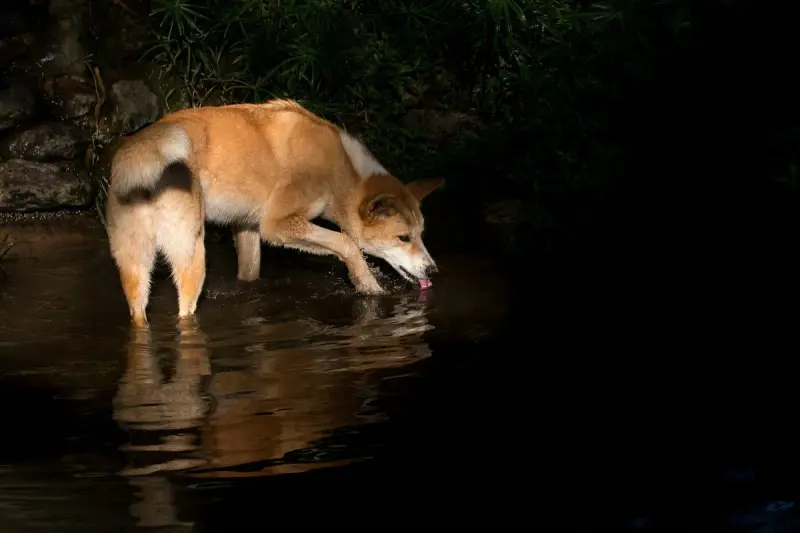
Is It a Wild Dog? Wild Dogs, Domestic Dogs and Dingoes
The NSW Government uses “wild dog” for all wild-living dogs, including dingoes, feral domestic dogs and their hybrid descendants. NSW Environment and Heritage describes the term in the same broad way. The NSW Government wild dog guidance also explains that the NSW Wild Dog Management Strategy 2022-2027 balances management where dogs cause negative impacts with preserving the ecological role of dingoes in conservation areas.
That definition matters for reporting and management. It matters less when you are standing over a sheep. A carcass cannot tell you a dog’s genetics, and you do not need to settle its ancestry before deciding whether a dog has attacked your stock.
In our experience, damage from a roaming domestic dog can be hard to separate from wild dog damage by the carcass alone. Sightings and local knowledge may help. Where a neighbour’s dog is suspected, check your council’s reporting process. For example, Wollondilly Shire Council asked residents to report dog attacks on livestock. Report suspected wild dog attacks to Local Land Services as covered below.
Tracks and Scats: Dog Versus Fox
Look for tracks on soft ground beside the carcass, around a dam edge or along a dusty track. PestSmart gives these field signs in its guide to recognising wild dog presence:
- Size: An adult wild dog’s front foot is usually longer than 6 cm, excluding the nails. By autumn and winter, wild dog prints are usually much larger than fox prints.
- Shape: Dog prints are usually larger and rounder. Fox prints are smaller and more elongated, and PestSmart says a straight line can separate a fox’s pads.
- Nails: Dog toe nails usually point straight out. Fox nails point inwards.
- Overlap: A dog’s back foot usually partly overlaps its front print. A fox’s back foot mostly overlaps the front print.
Do not make the whole call from one mark. In late spring and early summer, wild dog pups can leave prints as small as fox prints. Wind, rain, soil organic matter and other conditions can also blur the useful detail.
Scats and scratch marks may occur in the same places. PestSmart says wild dog scats should contain hair, bones, scales, feathers or insects. Record the sign and its position rather than treating it as proof by itself.
Reading a Carcass: Dog Attack Versus Fox Attack
How wild dogs attack
PestSmart explains that sheep and goats commonly bleat, mob together, circle, then break and run when they see a wild dog. The movement of fleeing stock can trigger a chase whether or not the dog is hungry. A dog may then attack several animals as they split from the mob, leaving some uneaten, maimed or wounded. See PestSmart’s explanation of wild dog impacts.
The NSW Government lists injuries around the hindquarters, missing or dead sheep, goats and calves, skittish stock, tracks, scats, sightings and howling among the signs. PestSmart also lists bite marks and torn ears. Taken together, the typical paddock picture is several sheep hit, some still alive, wounds around the rear or flanks and a nervous mob that is difficult to move.
Do not rely on one sign when several are available. The pattern across the mob, wound locations and nearby tracks is stronger than any one clue.
How foxes attack
PestSmart’s fox identification guidance says foxes generally do not attack and mutilate adult sheep. Its fox attack signs concern lambs. Foxes and dogs commonly bite lambs around the neck and muzzle, and the neck may be crushed or the muzzle badly bitten.
Both can leave several lambs killed in one event. Check the punctures. A fox has a slender jaw with canine teeth closer together than a dog’s, so the puncture spacing is narrower. Foxes particularly tend to feed on the tongue and organs first. These clues need to be read together, not used as a single test.

Killed or scavenged?
An animal that died from another cause and was fed on later presents a different problem from a predator attack. PestSmart says an attack on a live animal causes bleeding at the wound. Clotting forms dark haemorrhagic areas, while an animal already dead does not bleed.
Bite marks are best checked by skinning the carcass. Look under the skin around the neck and head of a lamb, and around the hindquarters where dog damage may occur. Bites without bleeding or bruising underneath mean the animal was most likely dead before it was fed on.
For a lamb, soft, gelatinous, dark plum-red fat around the heart and kidneys points towards starvation or mismothering rather than a predator. This internal check can prevent scavenging from being mistaken for the original cause of death.
Other Culprits People Blame
- Feral pigs: PestSmart says extensive mutilation and consumption of a lamb carcass, including bones, may indicate feral pig predation. The absence of canine punctures helps confirm that reading.
- Birds of prey: These usually feed only on the upper side of a lamb, concentrating on the eyes, nose, mouth, navel and anus.
- Domestic dogs: They are still dogs, and their damage can be hard to distinguish from a wild dog’s. Sightings and whether local dogs roam are the best practical guide.
The two checks that settle many cases are canine punctures and bruising beneath the skin.
What to Record When You Find a Kill
A few minutes spent recording the scene before anything is moved can help LLS and whoever carries out the control work. It also gives you something solid to compare if the pattern appears again.
- Photograph each carcass as found, then take close-ups of wounds, bites and tracks. Put an object beside tracks for scale.
- Note the date, time found, paddock name and a GPS pin if available.
- Count animals killed, injured and missing, and record their class, such as ewe, lamb or weaner.
- Record where each animal was bitten and whether there is bruising under the skin.
- Photograph tracks, scats, wool trails or drag marks, and note the direction they lead.
- Write down anything seen or heard in the preceding days, including howling or a nervous mob.
Who to Call, and in What Order
Our practical order is LLS, neighbours, then a professional controller. That gets the incident recorded, brings nearby country into the picture and supports targeted follow-up.
- Local Land Services: The NSW Government says wild dog sightings and attacks should be reported through FeralScan or to Local Land Services on 1300 795 299. Its wild dog control page provides the official guidance. You can also read how autumn wild dog and fox baiting programmes operate and what wild dog support NSW offers.
- Neighbours: A dog that has worked one mob may also be moving through neighbouring country. Sharing timely observations across boundaries gives everyone a clearer picture and makes coordinated control more likely to hold.
- A professional controller: Once LLS knows about the attack, targeted trapping, shooting or baiting can focus on the specific animal. Read about professional wild dog control and professional fox control.
Act or watch?
One dead lamb with no bruising and no canine punctures is a reason to watch and record, not enough by itself to launch a programme. A confirmed dog attack calls for same-day reporting and control because PestSmart says wild dogs often take more animals than they need for food. A single confirmed fox kill in a lambing paddock is a warning worth addressing before the next lamb drop. See fox control before lambing in NSW.
Found a kill and still unsure what did it? Contact Feral Up about wild dog control or call 0493 417 929. We can help read the signs and plan a response that works alongside your Local Land Services programme.