Look for Sign, Not Pigs
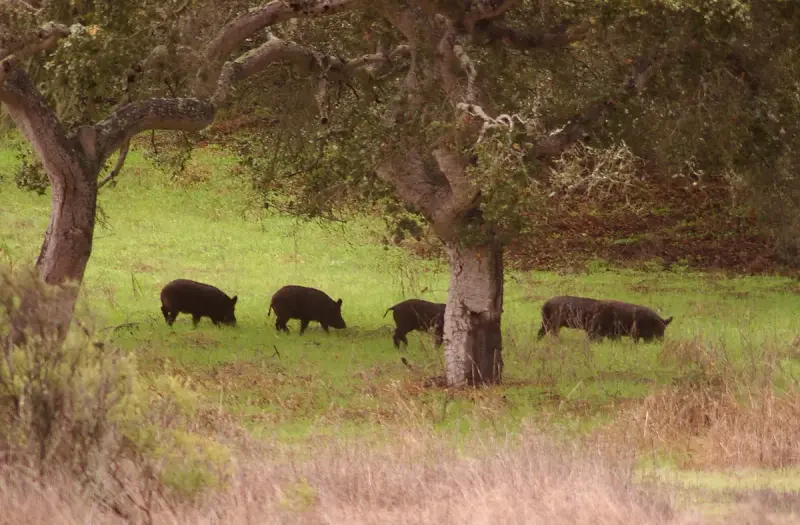
Pigs can move through a district for months without being seen. The National Feral Pig Action Plan says pigs are rarely seen during the day because they commonly shelter in thick vegetation and avoid people. It also identifies seeing live pigs as the least reliable way to detect them.
NSW Department of Primary Industries monitoring guidance says pigs limit much of their activity to the cooler parts of the day, around dawn and dusk. In hot weather they are mainly active at night. Start by walking water points, creek lines and timber edges, then look for these three things:
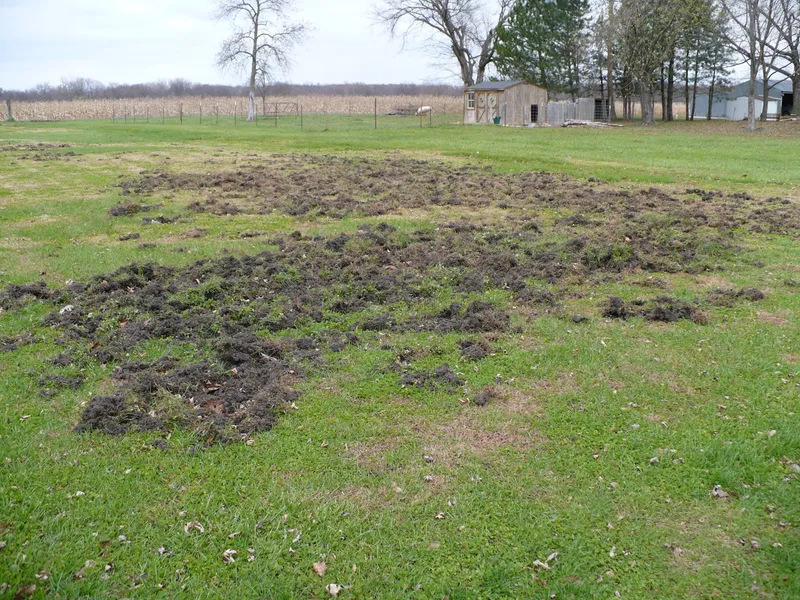
- Rooting: Ground turned over like a rough plough job. The National Feral Pig Action Plan identifies rooting as the most reliable sign of pig presence.
- Wallows and mud rubs: Muddy, often oval hollows around dams, soaks and creeks, with dried mud on nearby trees or posts. NSW Government guidance lists both as common signs.
- Pads and fence damage: Worn trails leading to water, plus holes pushed under the bottom wire. Check the wire for caught hair or mud.
One sign deserves a closer look. Two or three together make a strong case that pigs are using your property.
Rooting and Ground Damage
PestSmart explains that pigs use a muscular, mobile snout and their forefeet to turn soil while searching for food. NSW Government guidance says rooting is often the first sign a landholder notices. It can begin as small, shallow diggings, then spread into larger areas within a couple of days.
The National Feral Pig Action Plan says some diggings reach half a metre deep and paddocks can look as though they have been ploughed. Even a small number of pigs can disturb a large area in one night. The PestSmart Glovebox Guide therefore warns that the extent of rooting is not a reliable guide to pig numbers.
Wombats, echidnas and rabbits also dig, so read the ground in context. Look for the broad, rough-ploughed pattern, then check nearby soft ground for pig tracks and paths for dung.
Tracks, Trails and Wallows
Tracks
Pig tracks show the two middle hooves. Dew claws may also register in very soft ground. The PestSmart Glovebox Guide describes the overall print as square, with similar length and width and rounded hoof tips.
Sheep, goat and deer tracks are often heart-shaped when they are not splayed. Their front usually narrows to a sharper point while the back is rounded. NSW Government guidance also points to the two widely spread dew claws behind a pig print as a useful difference.
Look around dam edges, creek crossings and other soft ground. The National Feral Pig Action Plan notes that stock can quickly obscure pig prints when they come in to water, so check these spots early.
Pads and dung
NSW Government guidance says pigs often create pads while travelling to and from water. Dung may be found on or away from these paths. Close examination may show fragments of grain, plants, bone, wool or hair.
Wallows and rubs
PestSmart explains that pigs lack sweat glands and need dependable water and shade to cool down in hot conditions. The National Feral Pig Action Plan says they wallow in wet areas or moist soil to manage body temperature and protect themselves from biting insects.
NSW Government guidance says wallows are often oval. Their condition can help show how recently and how often pigs have used the area. After wallowing, pigs commonly rub against trees and fence posts, leaving mud behind.
The National Feral Pig Action Plan says rubbing also removes mud, hair and parasites, while boars commonly leave tusk marks. A Queensland Government fact sheet says mud rubs and tusk marks can indicate pig size.
Focus on creek and swamp edges, waterholes, dams and thick cover. The PestSmart Glovebox Guide identifies these as likely activity areas, while the Queensland Government says watering points become a particular focus in hot weather.
Damage to Crops, Fences, Water Points and Stock
NSW Department of Primary Industries monitoring guidance lists impacts on newborn lambs, crops, pasture, fences and water sources. Look past the obvious rooting and check the working parts of your property.
- Crops: NSW Government guidance says pigs damage crops by eating, trampling and bedding in them.
- Fences: Pigs push through fences and enlarge holes beneath the bottom wire, which can create a gap for other animals. Look for long, thick hairs or mud caught on the lower strands.
- Water points: A Queensland Government fact sheet says wallowing can damage and foul tanks and bore drains, silt up troughs and, through rooting, weaken dam walls.
- Lambs: The National Feral Pig Action Plan says pigs may consume a whole carcass, leaving little visible evidence. Other scavengers can make the cause difficult to determine, and predation of lambs and calves can be seasonal depending on available food.
If the signs point to pigs working lambing paddocks or water points, see how a feral pig control programme is put together.
Signs Pigs Are Here Right Now Versus Old Sign
Old sign can send you in the wrong direction. The National Feral Pig Action Plan says wallows may remain visible for a long time. NSW Department of Primary Industries monitoring guidance also says how long dung lasts varies with diet and weather. Neither sign by itself proves pigs are still using that spot.
Change is the useful clue. Fresh wallows show recent activity, while NSW Government guidance says rooting can expand from small diggings to large disturbed areas within a couple of days.
- Photograph each sign and save its location with a phone pin.
- Revisit the same places three or four days later.
- Look for spreading rooting, new tracks over older tracks or a newly stirred wallow.
A trail camera on a pad or wallow can show how many pigs pass, when they move and whether they return. The PestSmart Glovebox Guide recommends finding places where pigs are regularly and currently active before setting traps or bait stations. That means revisiting each site and checking for fresh sign. See our guide to trail camera placement and settings.
What to Do Once You Have Seen the Signs
Your first week
- Record everything: Take photos and note dates and locations. The PestSmart Glovebox Guide says monitoring before control establishes baseline information on abundance and damage, giving you something to compare later records against.
- Put a camera on the freshest sign: A pad leading to water or an active wallow is usually a useful starting point. Keep the view focused on the route or sign you want to confirm.
- Log it on FeralPigScan: PestSmart describes FeralPigScan as a free monitoring and mapping resource for landholders, community groups and pest controllers. Exact locations of sightings, damage reports and control activities are not visible to the public.
- Contact Local Land Services: Call 1300 795 299. The LLS Feral Pig and Pest Program supports landholders to take action to prevent, eliminate or minimise pest animals and their impacts. NSW Government guidance says every landholder has a General Biosecurity Duty to reduce risks caused by feral pigs. Read more about what reasonable steps can look like.
- Talk to neighbours: The PestSmart Glovebox Guide says family groups of sows, piglets and juveniles can use home ranges of 2 to 20 square kilometres. Boars are usually solitary and can range across 8 to 50 square kilometres. That makes it likely that pigs seen on one property are also moving through neighbouring country.
Good records help separate a one-off old sign from a pattern. They also give LLS, neighbours or a professional something clear to work from.
When to call a professional
Keep watching if the sign looks old and is not spreading. Act when it continues to grow after a week or two, reaches crops, lambing paddocks or water points, or when you do not have time to run a control programme properly.
National guidance says at least 70 percent of the population needs to be removed every year to prevent rapid population recovery. It also says management using a range of control techniques produces the best results. A professional can turn your notes, photographs and camera records into a property-specific plan. Before deciding, review the main feral pig control options.
Sources consulted: NSW Government feral pig management guidance and video transcript; National Feral Pig Action Plan, Do you have feral pigs? (2021); PestSmart Glovebox Guide for Managing Feral Pigs (Centre for Invasive Species Solutions, 2020); PestSmart feral pig biology, ecology and behaviour; Mitchell and Balogh, Monitoring techniques for vertebrate pests: feral pigs (NSW DPI, 2007); Queensland Government fact sheet PA6 (2010); National Code of Practice for the Effective and Humane Management of Feral Pigs (2024); Central West Regional Strategic Pest Animal Management Plan 2024 to 2028; PestSmart FeralPigScan.
Seeing pig sign on your place? Tell us what you have found or call 0493 417 929. We can help work out what you are dealing with and the right next step for your property.