How Much Damage Do Feral Pigs Cause in Australia?
Feral pigs are one of Australia’s most destructive pest animals. With an estimated 24 million feral pigs across roughly 45% of the continent, they cause an estimated $156 million in agricultural damage every year according to ABARES research.
In NSW, the damage is concentrated in key farming regions:
- Crop destruction. Pigs root through cereal crops, cotton, and sugar cane, often destroying entire paddocks overnight. A single mob of 20 pigs can destroy several hectares of crops in one feeding session.
- Pasture damage. Rooting behaviour tears up improved pastures, destroying years of investment in soil improvement and fertilisation. Damaged pastures are vulnerable to weed invasion and erosion.
- Lamb and kid predation. Feral pigs are opportunistic predators. During lambing season, they actively prey on newborn lambs, particularly in the Northern Tablelands and North West NSW.
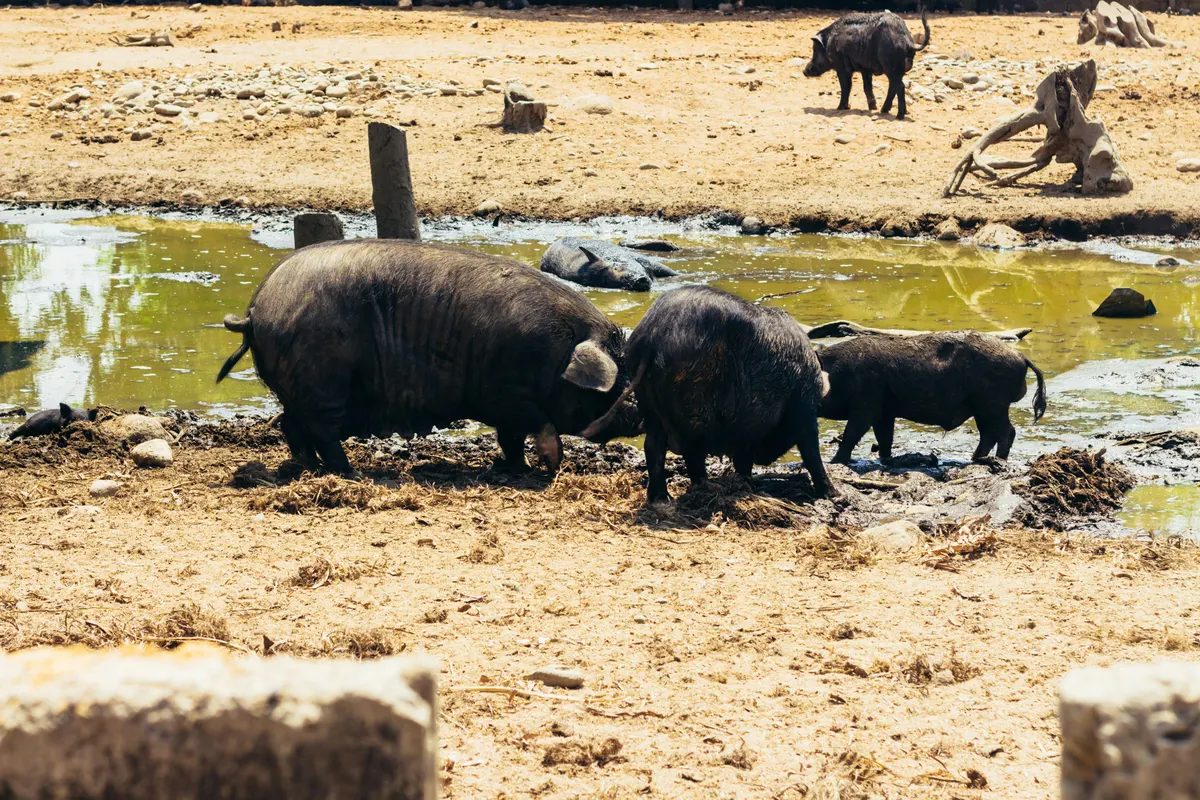
- Waterway contamination. Pigs wallow in farm dams and creeks, fouling water sources with faeces and urine. This introduces bacteria and parasites that affect livestock health and water quality.
- Disease transmission. Feral pigs carry leptospirosis, brucellosis, melioidosis, and numerous parasites. They can spread these diseases to cattle, sheep, and working dogs through contaminated water and direct contact.
The Hunter Valley and North West NSW are particularly affected, with high pig densities driven by reliable water sources, cropping land, and connected bushland corridors.
What Are the Most Effective Feral Pig Control Methods?
No single method will solve a feral pig problem. The most effective approach is integrated pest management (IPM), combining multiple control techniques in the right sequence.
One critical rule from PestSmart’s national guidelines: ground shooting should not be conducted before or during baiting or trapping programmes. Shooting disrupts normal pig behaviour and causes temporary dispersal, undermining bait station uptake and trap effectiveness. The correct sequence is always: bait or trap first, then follow up with shooting to remove survivors.
Timing also matters for baiting. Research shows that farrowing sows restrict their normal home range by as much as 94%, and their litters rarely get exposed to baits. Baiting before the main breeding period ensures more of the population encounters the bait stations.
Ground Shooting
Ground shooting using thermal optics and night-vision equipment is the most targeted method of feral pig control. It allows operators to selectively remove pigs with minimal disturbance to livestock and infrastructure.
How it works: Professional shooters patrol your property during peak pig activity periods, typically dusk to dawn. Thermal scopes detect body heat signatures, allowing precise shot placement even in complete darkness.
Best for: Properties with known pig movement corridors, around crop paddocks, and where baiting restrictions apply. Ground shooting is most effective when combined with thermal drone surveillance to identify mob locations before operations begin.
Limitations: Labour-intensive and covers limited area per night. Pigs that survive shooting operations become more wary, making subsequent operations harder.
Baiting Programs
Baiting with 1080 (sodium fluoroacetate) or HOGGONE (sodium nitrite) is the most cost-effective method for reducing feral pig populations across large areas.
How it works: Free-feed stations are established at feral pig hotspots: preferred feeding grounds, water points, and travel pads between these areas. Stations should be spaced at least one kilometre apart. Pre-feeding with 10 to 20 kilograms of non-toxic bait (wheat, barley, or sorghum) laid in a three to five metre trail runs for at least five to seven days before toxic baiting. Stations are checked daily (or every two to four days for HogHopper units), and trail cameras positioned roughly five metres from each station at waist height confirm which species are feeding and how many pigs are visiting. PestSmart research shows that pig numbers at bait stations can more than double with just a couple of extra days of pre-feeding. Once all target pigs are feeding consistently, all leftover pre-feed is removed and replaced with an equivalent amount of toxic bait in the same manner. Toxic bait delivery continues until bait take ceases, typically around three days. All uneaten toxic bait is then collected and disposed of appropriately. All 1080 baiting must be conducted by operators with VPIT (Vertebrate Pesticide Induction Training) certification.
Best for: Large-scale population reduction across multiple properties. Baiting is most effective when coordinated with neighbouring landholders through Local Land Services programmes.
Limitations: Requires a free-feed period of 1-2 weeks before toxic baiting. Some pigs develop bait shyness. Not suitable near waterways or areas with high non-target animal activity without additional precautions.
Trapping
Panel traps and corral traps capture pigs alive for humane destruction. Trapping is particularly useful for removing entire mobs, including wary animals that avoid bait stations.
How it works: Large corral traps (up to 20m diameter) are baited with grain and fitted with trigger mechanisms, either mechanical trip wires or remotely activated gates monitored via trail cameras. Once an entire mob is entering the trap regularly, the gate is triggered to capture the whole group.
Best for: Removing established mobs, particularly sows with piglets. Corral traps can capture 20+ pigs in a single trigger event.
Limitations: Requires significant setup time and regular monitoring. Traps must be checked at least daily under NSW animal welfare requirements.
Thermal Drone Surveillance
Thermal-equipped drones are a game-changer for feral pig management. They provide accurate population counts and movement data that makes every other control method more effective.
How it works: Drones fitted with radiometric thermal cameras fly systematic grid patterns over your property at dawn or dusk, when the temperature differential between pigs and the ground is greatest. Thermal imagery detects pig body heat signatures through vegetation canopy, revealing animals that would be invisible from the ground.
Best for: Pre-operation reconnaissance (finding where pigs are before sending in shooters), post-operation monitoring (confirming knockdown rates), and ongoing population tracking across large properties.
Limitations: Thermal detection is less effective in hot weather when ground temperatures approach body temperature. Best results are achieved in autumn and winter.
Can I Shoot Feral Pigs on My Own Property in NSW?
Yes. As a landholder in NSW, you have a general biosecurity duty under the Biosecurity Act 2015 to manage pest animals on your property. You can shoot feral pigs on your own land with an appropriate firearms licence.
Key points for landholders:
- You need a current NSW firearms licence with the appropriate category for the firearms you’re using
- You can authorise other people to shoot on your property with your written permission
- For professional contract shooters operating commercially, a VPAC (Vertebrate Pest Animal Controller) licence is required under the Pesticides Act 1999
- All shooting must comply with NSW firearms legislation and relevant animal welfare standards
- Night shooting with spotlights or thermal optics is permitted on private land
If you’re engaging a professional pest controller, check that they hold a current VPAC licence and appropriate firearms licences. At Feral Up, we hold AHCPMG304 and AMPGAM303 certifications, VPIT for baiting, a current NSW Firearms Licence (Categories A and B), $20 million public liability insurance, and all required pest management qualifications.
How Does Integrated Pest Management Work for Feral Pigs?
Integrated pest management is the gold standard for feral pig control. It’s not just about killing pigs, it’s about reducing the population below the damage threshold and keeping it there.
Our IPM approach follows five steps:
-
Assess: We survey your property using thermal drones and ground inspections to estimate pig numbers, identify movement corridors, feeding areas, and water sources. We review the damage history and assess risk to crops, livestock, and infrastructure.
-
Plan: Based on the assessment, we develop a control plan that combines the most appropriate methods for your situation. This includes timing (seasonal patterns, crop cycles), method selection (shooting, baiting, trapping), and coordination with neighbouring properties.
-
Implement: We execute the control programme using the planned methods. This typically involves an initial knockdown operation (intensive shooting and/or baiting over 3-5 days) followed by ongoing maintenance operations.
-
Monitor: Post-operation thermal drone surveys confirm the knockdown rate and identify any remaining animals. Trail cameras monitor known movement corridors and bait stations.
-
Report: You receive a detailed report including pre- and post-operation population estimates, methods used, animals removed, and recommendations for ongoing management.
Why coordinated control matters: Feral pigs range across property boundaries. If you control pigs on your property but your neighbours don’t, pigs from surrounding properties will recolonise your land within weeks. The most successful programmes coordinate control across multiple neighbouring properties through Local Land Services wild dog and pig management plans.
Research from PestSmart indicates that a minimum 70% annual removal rate is needed to suppress feral pig population growth. Below this threshold, the population recovers within 12-18 months due to their high reproductive rate.
When Is the Best Time to Control Feral Pigs?
Feral pig activity patterns change with the seasons, and timing your control programme to match these patterns dramatically improves results.
Autumn and Winter (March to August)
This is the most effective period for feral pig control in NSW:
- Cooler temperatures make thermal detection more accurate (greater contrast between pig body heat and ambient temperature)
- Pigs concentrate around reliable water sources as seasonal creeks dry up
- Reduced vegetation cover improves ground shooting success
- 1080 baiting is most effective when natural food sources are scarce
Pre-Harvest (Varies by Crop)
If you’re protecting crops, time your control operations 2-4 weeks before harvest. Pigs move into cropping areas as crops mature, and a well-timed knockdown operation can prevent significant harvest losses.
Post-Rain Dispersal
After significant rainfall, pigs disperse from concentrated water sources into new areas. This is a critical time for monitoring. Trail cameras and thermal drone surveys can detect pigs moving into previously unaffected paddocks.
Spring Lambing and Calving
If feral pigs are predating on newborn lambs or calves, intensive control operations during the 2-3 weeks around lambing/calving are essential. Ground shooting around lambing paddocks is the most targeted approach.
Need help with feral pigs? Get a free phone consultation, and we’ll assess your situation and recommend the right approach for your property. Or call us directly on 0493 417 929.