The Short Answer
For most properties, the answer is both, in the right order. Baiting provides the broadscale knockdown, then thermal night shooting deals precisely with pigs left behind.
Table 1 of the national Code of Practice describes 1080 ground baiting as the most cost-effective technique currently available. It places ground shooting as a supplementary method that is target specific, labour intensive and suited to smaller-scale operations.
National guidance also says poisoning is mainly an initial control method, with trapping, ground shooting and exclusion used afterwards to keep pig numbers low. That does not make shooting second best. On smaller blocks, near homes or where working dogs cannot be managed around poison, baiting may not be practical.
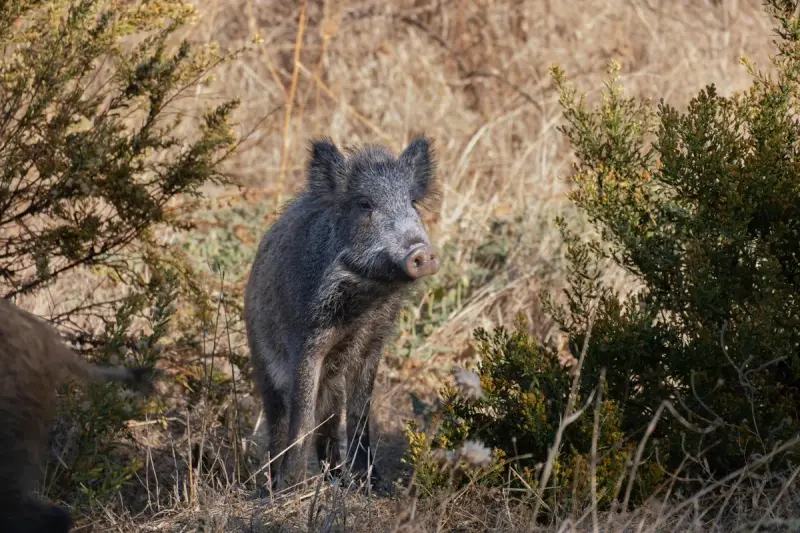
How Night Shooting With Thermal Works
Feral pigs are most active from late afternoon through to early morning, according to PestSmart’s feral pig biology guidance. The national standard operating procedure says early morning, late evening and night are the best ground shooting periods when spotlights or thermal imaging are used. The national Code of Practice says thermal and night vision can improve detection, create less disturbance than traditional spotlighting and help locate animals before they are disturbed.
- Daylight walk-through: We first inspect the shooting zone and terrain during daylight. With you, we confirm stock locations, houses, roads and safe backstops before any night work begins.
- Scan with thermal: Thermal equipment helps locate pigs while causing less disturbance than a spotlight. This gives the shooter a better chance of approaching while the mob remains settled.
- Positive identification: Every target must be positively identified. The shooter must never fire over a hill or ridge. Sensitive livestock such as horses and farmed deer should also be kept away from the work area because lights and gunshots can frighten them.
- Humane shot placement: The national standard operating procedure says a well-placed head shot that destroys the brain causes instantaneous insensibility and a quicker death than a well-placed chest shot. Any wounded animal must be found promptly and dispatched.
- Record and report: We record numbers, locations and field observations in an after-action report so you know what was seen and what occurred.
Ground shooting has limits. National guidance describes it as time-consuming and labour intensive, making it inefficient for large-scale control. Used alone, it is rarely effective for damage control or suitable as a long-term method. It should generally not happen before or during trapping or poisoning because it can disrupt normal pig activity and cause temporary dispersal. See how we run night operations.
How a Baiting Programme Works
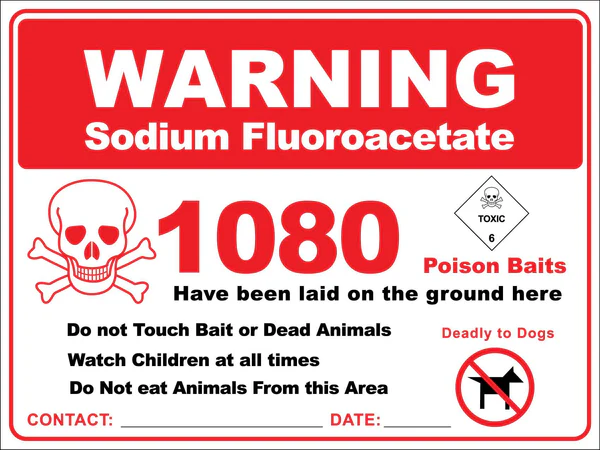
In NSW, 1080 feral pig baiting operates under the Pesticide Control (1080 Bait Products) Order 2020. The current requirements must be checked on the NSW EPA website before a programme begins.
- Who can bait: The NSW 1080 Order allows baiting by the landholder or an authorised agent who holds at least current AQF level 3 Chemical Accreditation or a current Local Land Services Vertebrate Pesticide training certificate. NSW Government guidance says Local Land Services is the sole authorised distributor of 1080 bait products to the NSW public.
- Neighbours: The NSW 1080 Order requires at least three days’ notice to the landholder or authorised agent of every property sharing a boundary within one kilometre of a baiting location. The notice must warn that pets and working dogs may be affected.
- Signs: Notices must be in place before baits are laid. They must remain for at least four weeks after the final day of baiting.
- Distances: Under the NSW 1080 Order, bait must not be placed within 500 metres of a habitation. A landholder may work closer to their own habitation, but not closer than 150 metres. Bait must also remain at least 5 metres from a property boundary, 20 metres from a domestic water supply and 20 metres from a public road.
- Free feeding: At least three nights of unpoisoned bait must be laid before any 1080 ground baiting begins.
- Bait stations: All 1080 pig bait must be placed in a fenced bait station or exclosure that keeps livestock out. The exception is where the property has no livestock or livestock have been removed from the baiting location.
- Clean-up: The NSW 1080 Order’s general rule is that pig bait must not remain in use for more than three consecutive days. Remaining bait must then be collected and buried under at least 500 mm of soil. Where practicable, carcasses are removed and buried.
HOGGONE sodium nitrite follows the HOGGONE label rather than the NSW 1080 Order. The label requires pig-specific bait stations such as the HOGGONE Paste Bait Hopper. Bait must not be within 150 metres of a dwelling, 20 metres of permanent or flowing water, 50 metres of a boundary fence or 50 metres from the edge of a formed public road. Read our HOGGONE and 1080 comparison.
The national standard operating procedure says baiting works best when surface water is scarce and pasture has dried off. Pigs then concentrate near permanent water and are more likely to take bait because feed is limited. In south-eastern Australia, late autumn is usually the most effective period. See our baiting programme service.
Side by Side
| Factor | Night shooting with thermal | Baiting (1080 or HOGGONE) |
|---|---|---|
| Role in a programme | Supplementary follow-up for survivors and smaller areas | Primary initial control method |
| Speed | Results on the night, one pig at a time | 1080 requires at least three nights of free feeding first |
| Scale | Labour intensive and inefficient for large-scale control | Initial knockdown across the programme area |
| Cost-effectiveness | Rated not cost-effective by the national Code of Practice | 1080 is rated most cost-effective; HOGGONE costs more than 1080 |
| NSW rules | Safe shooting practice and positive identification of each target | 1080 requires accreditation, notice, signs and distances; HOGGONE follows its label |
| Risk to dogs and other animals | Relatively target specific and does not usually affect other species | Dogs are extremely sensitive to 1080; sodium nitrite residues pose minimal scavenger risk |
| Humaneness | A well-placed head shot causes instantaneous insensibility | Sodium nitrite is rated more humane than 1080; 1080 death usually takes about 4 to 6 hours |
| Effect on the mob | Can disrupt activity and cause temporary dispersal | Repeated use can lead to habituation, including bait aversion |
When Shooting Is the Better Fit
- After a knockdown: The national Code of Practice recognises shooting for wary survivors after other control methods.
- Close to houses: The 1080 distance rules can leave limited baiting room on small blocks or near homes.
- Where dogs cannot be managed: Shooting removes the poison risk.
- Low numbers on a small area: National guidance places shooting in smaller-scale operations.
When Baiting Is the Better Fit
- High numbers over large country: National guidance says shooting becomes inefficient at large scale.
- Dry times: When surface water and feed are scarce, pigs gather near permanent water and are more likely to take bait.
- Working with neighbours: Coordinating the same baiting period across neighbouring properties can support a wider programme.
Before baiting, read our guide to protecting working dogs during 1080 baiting.
Using Both Together
The order matters. The national standard operating procedure says ground shooting should generally not occur before or during trapping or poisoning.
- Monitor: Find where pigs feed and water.
- Bait or trap: Run the initial control while the mob remains settled.
- Shoot: Use thermal equipment to target survivors.
- Monitor again: Check activity and repeat as needed. The national Code of Practice says at least 70% of the population needs to be removed at least annually to prevent rapid recovery.
If trapping better suits your country, compare 1080 baiting and trapping for feral pigs.
What It Costs
Our published pricing gives you a clear starting point.
- Single visit: from $500 per visit, a one-off visit including ground shooting and a property assessment.
- Seasonal programme: from $1,800 per year for 4 visits, baiting programme coordination included.
- Annual integrated programme: from $2,500 per year for 6 to 12 visits, thermal drone surveys and baiting programme coordination included.
- Group booking: from $300 to $350 per property per visit, minimum 3 neighbouring properties.
Standalone baiting programmes are quoted individually. Every quote reflects property size, terrain, target species and required methods. There is no separate call-out fee.
Sources consulted: National Code of Practice for the Effective and Humane Management of Feral Pigs (2024); national standard operating procedures NATSOP-PIG003 (ground shooting), PIG004 (1080), PIG005 (PIGOUT) and PIG006 (HOGGONE); NSW Pesticide Control (1080 Bait Products) Order 2020; NSW Government, Using 1080 baits in NSW; HOGGONE meSN APVMA-approved label; National Feral Pig Action Plan, Baiting feral pigs: options available (2021); PestSmart feral pig biology, ecology and behaviour.
If you are weighing up shooting or baiting, talk with us about a night shooting job or combined programme. We will recommend the right order for your property. Call 0493 417 929.