Diesel Past $3 a Litre: What It Means for Pest Control
Farming costs in 2026 are squeezing margins from every direction, and diesel is leading the charge. Regional diesel hit 307.6 cents per litre across ACCC-monitored locations in late March 2026. That is up more than 40% since tensions in the Strait of Hormuz disrupted global oil supply in late February. NSW Farmers Vice President Rebecca Reardon called it “the sort of shock we haven’t actually seen before.”
For farmers already managing rising fertiliser, chemical, and labour costs, the fuel spike adds pressure to every part of the operation. Pest control is no exception. Every night of ground shooting, every trap run, every drive out to check bait stations burns diesel. When the price nearly doubles, the cost of keeping feral animals under control rises with it.
Below we cover how fuel costs flow into pest control, why cutting back usually costs more than it saves, and practical ways to get more done per litre.
The Hidden Fuel Cost in Pest Control
Most farmers think of fuel as a cropping and livestock cost. Tractors, headers, feedlot operations. But pest control has its own fuel footprint that is easy to overlook.
Ground shooting requires driving hundreds of kilometres across a property over multiple nights. A typical spotlighting run covers 40 to 80 km of tracks per session, often repeated across several nights to cover different areas.
Trap lines need checking every 24 to 48 hours under NSW regulations. If you are running 20 traps spread across 5,000 hectares, each check means a significant drive.
Bait stations require monitoring and replacement. 1080 bait potency degrades after rain, so stations need regular visits during variable weather.
Travel to remote paddocks adds up quickly on larger properties. In the North West, it is common to drive 30 to 50 km just to reach the back boundary of a single property.
Add these together and a serious pest management program can easily burn 200 to 500 litres of diesel per month. At $1.75 per litre, that is $350 to $875. At $3.00 per litre, the same work costs $600 to $1,500. The pest control itself has not changed. Only the fuel bill has.
The Cost of Doing Nothing
When money gets tight, pest control is one of the first things farmers scale back. ABARES data shows that average pest management spending per farm dropped from $20,405 in 2016 to $11,576 in 2019 during a period of rising input costs and drought pressure.
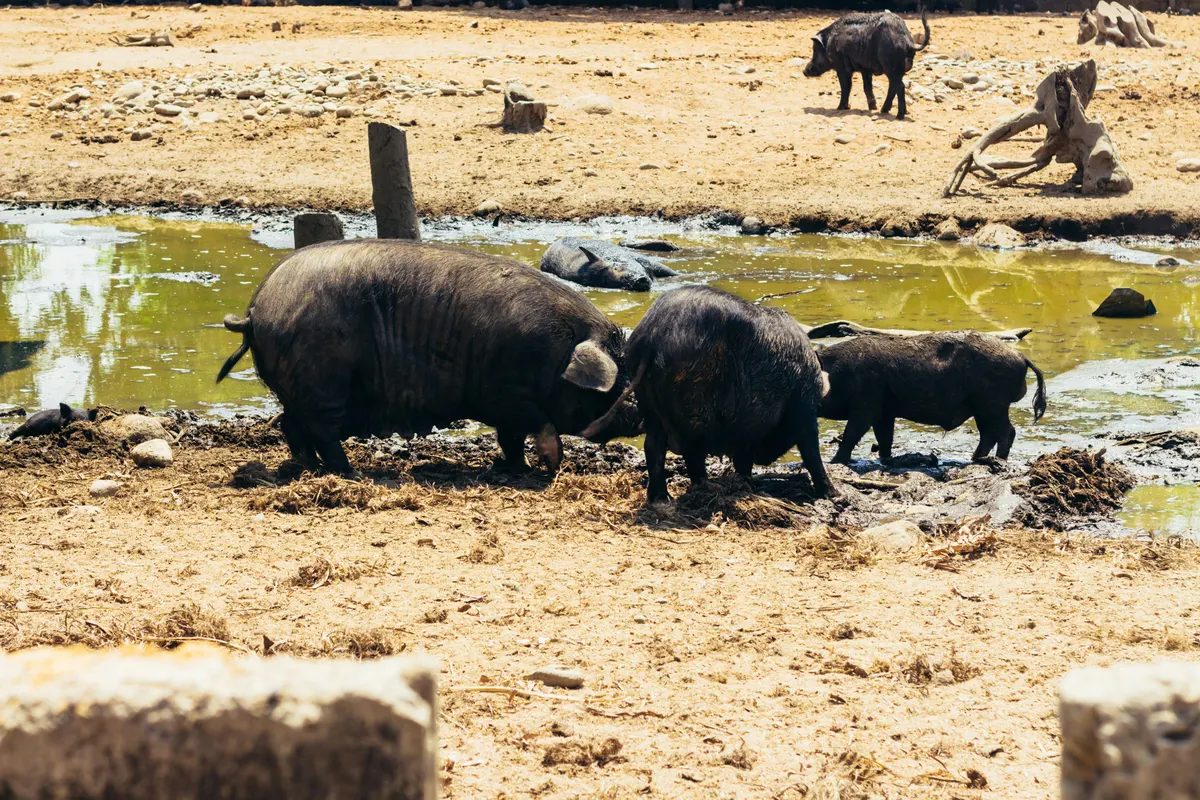
The problem is that feral animals do not take a season off. Feral pig populations can recover from a 70% knockdown within 12 to 18 months. A single mob of 20 pigs can destroy several hectares of crops overnight. Wild dog attacks cost between $7,500 and $15,000 per incident in livestock losses, and attacks increase when control pressure drops.
The numbers tell the story. NSW Local Land Services research has put average feral pig damage at around $65 per animal per year, estimated feral pig damage in North West NSW at $62.35 million per year, and found that when baiting and aerial shooting achieved a 60% population reduction, the net economic benefit was around $23 million across the region. All three figures come from the same NSW Local Land Services work, and our reference page on what feral animals cost Australian agriculture sets them alongside the national estimates.
Cutting pest control to save $1,000 in diesel can easily lead to $10,000 or more in crop damage, livestock losses, and pasture destruction. It is not a saving. It is a false economy.
As South Australian Liberal MP Tom Venning put it during a parliamentary debate in March 2026: “A whole truckload of goats might only sell for $1,500. That does not even begin to pay for the diesel, the motorbikes or the workers needed to catch them.”
The answer is not to stop controlling pests. It is to control them more efficiently.
Coordinated Programs: More Done Per Litre
The single most effective way to reduce fuel costs in pest control is to stop doing it alone.
When five neighbouring properties each hire a professional operator separately, that operator makes five separate trips. Five return journeys from town, five sets of fuel costs, five individual invoices. If those same five properties coordinate and book as a group, the operator makes one regional trip and services all five properties across consecutive nights.
This is not a new idea. Local Land Services has run coordinated baiting programs on exactly this model for years, grouping neighbouring landholders into autumn and spring campaigns where subsidised baits are distributed across multiple properties at once. The approach works because pest animals do not respect fence lines. A coordinated knockdown across a landscape is always more effective than isolated efforts on individual properties.
The fuel savings are straightforward. If a professional operator drives 200 km return from their base to your region, that travel cost is split five ways instead of absorbed by one property. At $3.00 per litre and roughly 15L per 100 km, the 200 km return trip costs about $90 in fuel. Split across five properties, that is $18 each rather than $90.
NSW Farmers Conservation and Resource Management Committee member Craig Mitchell put it directly: “We need to be working collaboratively with our neighbours in a bid to effectively reduce the number of these invasive species.”
How to Set Up a Coordinated Program
- Talk to your neighbours. Find out who else has pest problems and would benefit from a joint approach.
- Contact your Local Land Services office about existing coordinated baiting programs in your area.
- Get a group quote from a professional pest control operator for a multi-property visit.
- Schedule multiple nights of control across consecutive properties in a single trip.
- Share the results and plan follow-up visits together.
Technology That Cuts Fuel Waste
Thermal Drone Surveys
The biggest waste of fuel in pest control is driving out to check a paddock and finding nothing there. Thermal drone surveys solve this by locating feral animals from the air before ground crews head out.
A thermal drone survey can cover hundreds of hectares in a single flight, identifying pig mobs, fox dens, and deer groups by their heat signatures. Instead of spending three nights driving every track on a property hoping to encounter animals, you spend one flight confirming where they are and one or two targeted nights dealing with them.
In South Australia, the Murraylands and Riverland Landscape Board used drone-assisted hunting across 118,600 acres and removed 221 feral pigs over 18 months. Hunters using drone guidance reported more than doubling their kill rates compared to traditional spotlighting alone.
Less time driving empty tracks means less fuel burned for the same result.
Data-Driven Planning
Keeping records of where you find animals, when damage appears, and which methods work best for each area turns pest control from guesswork into targeted action. If you know pigs consistently use the creek line on your eastern boundary during autumn, you place your traps and bait stations there instead of spreading them across the entire property.
This is the difference between reactive pest control (driving out when you see damage) and planned pest control (acting on patterns you have tracked over seasons). Reactive approaches burn more fuel because every response is an unplanned trip. Planned approaches concentrate effort where it counts. On a 5,000 hectare property, targeting three known hotspots instead of patrolling the full boundary can cut your fuel use per session in half.
Use the Right Vehicle for the Job
Not every pest control task needs a diesel ute.
ATVs and side-by-sides run on petrol, which is currently cheaper than diesel per litre. For lighter tasks like checking trap lines, monitoring bait stations, and accessing narrow tracks through dense bush, an ATV uses a fraction of the fuel a full-size ute would burn on the same run.
Reserve the ute for operations that genuinely need it: ground shooting with spotlights and a tray full of equipment, transporting heavy traps, or hauling carcasses.
Match the vehicle to the task. A 250cc ATV checking 15 traps along a ridge line uses roughly 5 to 8 litres. The same run in a 4WD ute uses 20 to 30 litres. Over a month of regular trap checks, that difference adds up to hundreds of dollars.
Claim Every Litre
The ATO Fuel Tax Credits scheme refunds 50.8 cents per litre on off-road diesel used in agricultural operations. This includes diesel burned in farm utes during pest management activities. Petrol used in off-road farm vehicles like ATVs is also eligible, though at a lower rate.
Agriculture accounts for 45% of all fuel tax credit claims nationally, worth an estimated $1.3 billion in 2024-25 according to the Australia Institute. If you are burning fuel for pest control on your property, it is likely claimable.
Keep a log of fuel used for pest management. Record the date, litres, vehicle, and purpose. Your accountant can include these in your quarterly BAS claims alongside your other farm fuel use.
At current prices, the 50.8 cent diesel rebate brings $3.00 diesel down to an effective $2.49 per litre for off-road use. It does not eliminate the pain, but it helps.
When Professional Help Makes More Sense
There is a tipping point where doing pest control yourself costs more in fuel than hiring a professional who services your region.
A professional operator based in your area already has the travel cost built into their business model. They service multiple properties per trip, spreading fuel costs across clients. They bring the right equipment for the job, reducing the number of return trips needed. And they plan campaigns across properties, achieving landscape-scale results that individual efforts cannot match.
When diesel was $1.75 per litre, the fuel cost of a DIY spotlighting night was modest. At $3.00 per litre, every self-funded trip is significantly more expensive. If you are making four or five individual trips per month to manage feral pigs on your property, compare that total fuel spend against a professional operator’s per-visit rate for your area.
The comparison often favours the professional, especially when you factor in the opportunity cost of your own time.
Practical Checklist: Reducing Fuel in Pest Control
Here is a summary of the strategies covered in this article:
| Strategy | How It Saves Fuel | Who Benefits Most |
|---|---|---|
| Coordinate with neighbours | Share travel costs across multiple properties | Remote properties with high travel distances |
| Thermal drone surveys | Locate animals before driving out | Large properties with variable pest distribution |
| ATV for light tasks | Petrol ATV uses a fraction of diesel ute fuel | Properties with established track networks |
| Data-driven planning | Target known hotspots instead of blanket patrols | Properties with recurring seasonal pest pressure |
| Batch multiple nights | One trip with consecutive nights instead of separate visits | Landholders using professional operators |
| Claim fuel tax credits | Recover 50.8 cpl on off-road diesel | All farmers using vehicles for pest management |
The Bigger Picture
Diesel prices will fluctuate. The Strait of Hormuz tensions may ease, and fuel costs may come back down. Or they may stay elevated for months. Nobody knows.
What we do know is that feral animals are not going anywhere. Established vertebrate pest animals cost Australian farmers $1 billion per year, and that figure does not include weeds. Feral pig damage in North West NSW alone runs past $62 million annually. These costs accumulate regardless of what diesel is doing at the bowser.
The farmers who manage pest control most effectively in a high-cost environment are the ones who plan ahead, coordinate with their neighbours, use technology to target their effort, and treat pest management as a non-negotiable operating expense rather than a discretionary line item.
Fuel costs make every trip more expensive. They do not make pest control less necessary.
Need Help Planning Efficient Pest Control?
If rising fuel costs have you rethinking your pest management approach, we can help. Feral Up runs coordinated programs across neighbouring properties, uses thermal drone surveys to target effort, and plans multi-night campaigns to get maximum results per trip.
Get in touch for a no-obligation chat about what a coordinated program would look like for your property and your neighbours.