Why Kangaroo Numbers Are a Growing Problem in NSW
Kangaroos are a native species. They belong on the Australian landscape. But the landscape has changed dramatically since European settlement, and those changes have created conditions where kangaroo populations can grow far beyond what the country can sustain.
Four factors have driven this population growth:
Land clearing created open grassland. Kangaroos evolved in open woodland and grassland. Clearing dense bush for farming created vast areas of ideal kangaroo habitat where it didn’t exist before.
Improved pastures provide better feed. A paddock of improved rye grass or clover produces far more feed than native pasture. Kangaroos don’t know the difference between your livestock’s feed and free grazing. They eat it all the same.
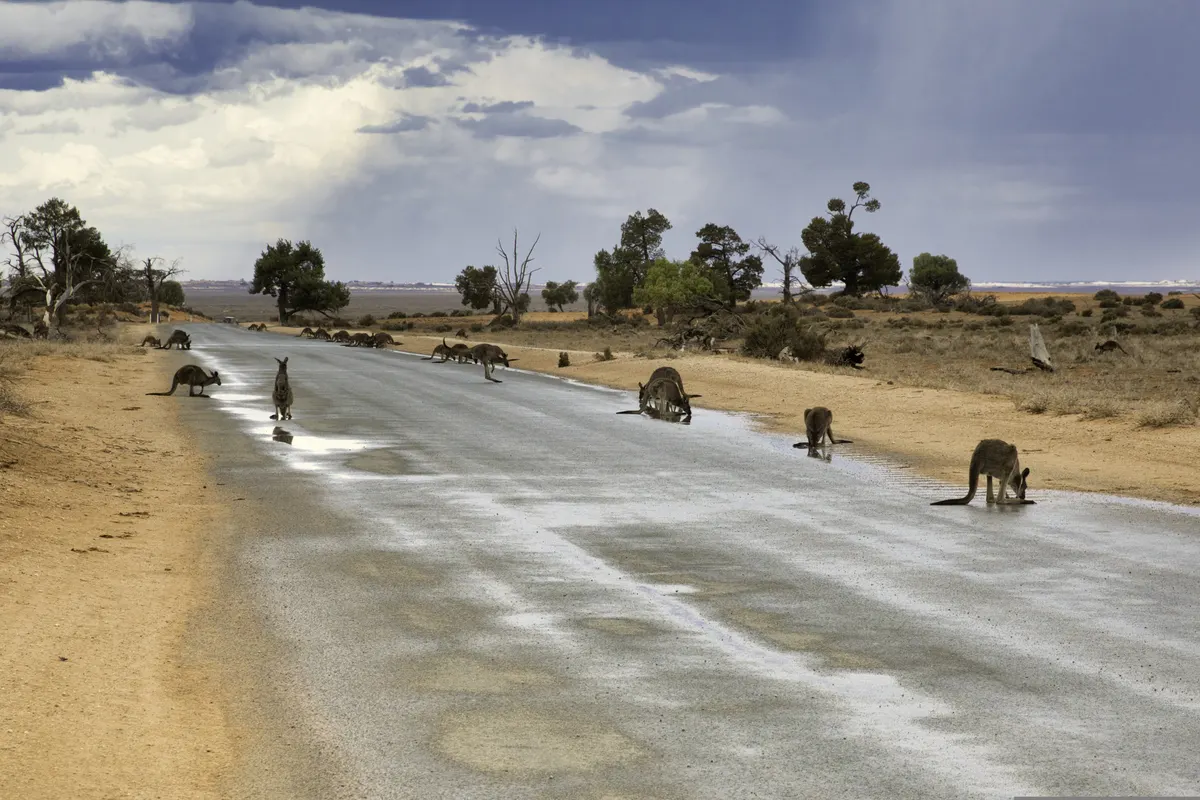
Artificial water points sustain higher numbers. Farm dams, troughs, and bore drains mean kangaroos no longer need to move to find water during dry periods. Populations can sustain at higher densities year round because water is always available.
Dingo removal eliminated the only natural predator. Adult kangaroos have no native predators in modern NSW. Dingoes were the only animal capable of keeping kangaroo numbers in check, and dingo control programmes (essential for sheep producers) have removed that population pressure across most of the state.
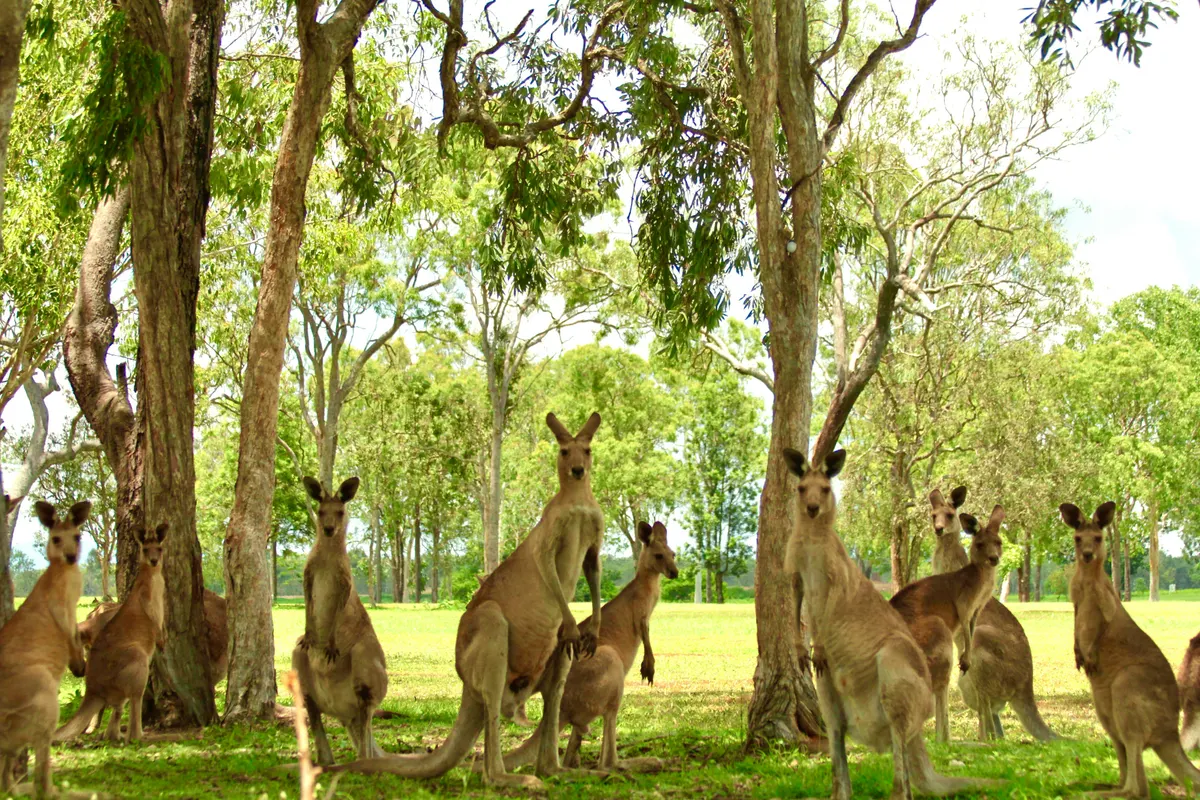
The result: an estimated 13.9 million kangaroos across NSW’s management zones (2024 survey data). The population peaked at 17.4 million in 2016.
The Boom and Bust Cycle
This is the part that catches landholders out. During good seasons with reliable rain, kangaroo numbers climb rapidly. Females can breed continuously, and joey survival rates are high when feed and water are plentiful. A mob of 30 kangaroos on your property in autumn can become 50 or more by the following spring.
Then the season turns. Drought sets in. The improved pastures dry off. And suddenly those 50 kangaroos are competing directly with your livestock for whatever feed remains.
Each kangaroo consumes the equivalent of 0.35 DSE (dry sheep equivalent). That means 100 kangaroos on your property eat as much as 35 sheep. In western NSW, kangaroos make up an estimated 50% of total grazing pressure on some properties.
When feed runs out completely, the kangaroos don’t move on. They stay, because the artificial water keeps them there. And they starve. Over three million kangaroos died across NSW during the 2017 to 2018 drought. The images of emaciated kangaroos crowding around empty troughs and dying in paddocks were confronting for everyone involved.
This is the welfare argument for proactive management. Allowing populations to boom unchecked during good seasons guarantees mass starvation when the season turns. Managing numbers during good times prevents the suffering that follows.
What Damage Do Kangaroos Cause?
Kangaroo damage goes well beyond eating pasture. Across NSW, kangaroos cause an estimated $44 million in agricultural damage annually: approximately $15.5 million to graziers through pasture competition, $11.9 million to crops, and $16.7 million in fencing damage.
Pasture competition. On properties carrying both livestock and high kangaroo numbers, the competition for feed is direct and measurable. During dry conditions, when every kilogram of dry matter counts, kangaroos graze the same paddocks as your sheep and cattle. They don’t respect rotational grazing plans. They jump into spelled paddocks and eat the recovery growth you’re trying to build.
Fencing damage. Kangaroos destroy fencing. They tangle electric fence wires, bend top rails, push through netting, and create gaps that other pest animals then exploit. Replacing and repairing fencing is one of the largest ongoing costs for properties with high kangaroo numbers.
Crop damage. Kangaroos feed on cereal crops, legumes, and improved pasture sown for hay or silage. Mob feeding can flatten sections of standing crop overnight. Damage to emerging crops in autumn and winter, when feed is scarce elsewhere, can reduce yields by up to 20%.
Environmental impact. Overgrazing by kangaroos doesn’t just affect farmland. UNSW research found that kangaroo overgrazing in conservation reserves had a greater impact on vegetation and soil than rabbit grazing, threatening species including the critically endangered Plains Wanderer.
How to Legally Manage Kangaroos in NSW
Kangaroos are protected under the Biodiversity Conservation Act 2016. You cannot shoot, harm, or capture a kangaroo in NSW without a licence, even on your own property. The penalties for unlicensed culling are significant.
Here’s how the permit system works:
Step 1: Apply for a Non-Commercial Licence to Harm
Contact your local National Parks and Wildlife Service (NPWS) office. You can apply by email, post, or in person. If you’ve held a licence previously, you can apply by phone.
You’ll need to demonstrate that kangaroos are causing damage to your property. NPWS will assess:
- The type and extent of damage (pasture, crops, fencing, water infrastructure)
- What non-lethal measures you’ve attempted (fencing, deterrents)
- The species and approximate numbers on your property
- Your property size and land use
Step 2: Receive Your Licence
Once approved, your licence specifies:
- The species you can cull (eastern grey, western grey, red kangaroo, or wallaroo)
- The maximum number you can take (typically 25 to 500 depending on property size)
- The licence duration (up to three months)
- Any conditions on methods and timing
Step 3: Conduct the Cull
All shooting must comply with the National Code of Practice for the Humane Shooting of Kangaroos and Wallabies. Key requirements:
- Shooters must hold current NSW firearms licences
- Head shots (brain destruction) or chest shots (heart and lungs) are the approved methods
- Shooting from moving vehicles is prohibited
- Injured animals must be dispatched immediately
- If a female with a pouch joey is killed, the joey must be humanely euthanised
Step 4: Submit Your Records
Within seven days of your licence expiry, you must submit records to NPWS including shooter names, firearms licence details, and the species and number of animals culled.
2018 Reforms That Made the Process Easier
The NSW Government simplified the non-commercial licence process in 2018:
- Physical tags are no longer required on carcasses
- More than two shooters can operate under a single landholder licence
- Shooters no longer need to be listed on the licence at the time of application (only on returns after culling)
How Feral Up Can Help
We understand that most landholders would rather be running their property than navigating permit applications and organising shooters. That’s where we come in.
Permit assistance. We help you prepare your NPWS Licence to Harm application, including documenting the damage, estimating kangaroo numbers on your property, and ensuring the application covers the right species and numbers for your situation.
Professional shooters. Our operators hold current firearms licences and humane destruction certification (AHCPMG304). We carry out all culling in strict compliance with the National Code of Practice, using appropriate calibres and thermal optics for humane, efficient operations.
Night operations. Kangaroos are most active at dawn, dusk, and through the night. Our operators use thermal imaging equipment to locate and identify animals in darkness, ensuring accurate species identification and humane shot placement.
Record keeping and compliance. We maintain all required records, including species, numbers, locations, and shooter details, and can help you prepare the returns that NPWS requires within seven days of licence expiry.
Ongoing management. A single cull won’t solve a kangaroo problem long term. We work with you to develop an ongoing management approach that keeps numbers at a level your property can sustain alongside your livestock.
Exclusion Fencing: An Alternative Approach
For some properties, kangaroo exclusion fencing is a viable long-term investment. Standard kangaroo fencing costs $4,000 to $7,000 per kilometre. Multi-species exclusion fencing that also deters feral pigs, dogs, and foxes runs around $15,000 per kilometre.
Financial support is available:
- Drought Ready and Resilient Fund: loans up to $500,000 at low fixed interest rates (the former Farm Innovation Fund is now closed)
- Drought Assistance Fund: $50,000 interest-free loan
- LLS grants: up to 30% of fencing costs (up to $8,000 per kilometre in some regions)
For the complete list of every grant, loan, and free program available, see our pest control funding guide for NSW farmers.
Fencing works best for high-value areas (cropping paddocks, hay storage, feedlots) rather than entire broadacre properties where the cost would be prohibitive. We can advise on whether fencing, culling, or a combination makes the most sense for your situation.
The Welfare Case for Management
This is a topic that generates strong opinions. Some people believe kangaroos should never be culled. We understand that perspective, but the reality on the ground tells a different story.
When kangaroo populations boom on improved pastures and permanent water, then crash during drought, the result is mass starvation. Over three million kangaroos died in NSW during the 2017 to 2018 drought. Animals suffer slow, painful deaths from starvation and dehydration. Females eject joeys from pouches. Mobs crowd around dwindling water points and fight at troughs.
Proactive management during good seasons keeps populations at levels the landscape can sustain through dry periods. A well-placed head shot is a far more humane outcome than weeks of starvation.
This is the same principle behind every responsible wildlife management programme in the world: managing populations to prevent suffering at scale.
Common Misconceptions
“I can shoot roos on my own property whenever I want.” No. Kangaroos are protected. You need a Licence to Harm from NPWS regardless of where they are or how much damage they’re causing.
“Kangaroos are endangered.” They’re not. The NSW Government estimates 13.9 million across the state’s management zones. They’re one of the most abundant large mammals on earth.
“Commercial harvesting keeps numbers under control.” Commercial harvesters only take about 36% of their allocated quota each year, and the number of active harvesters has declined from around 900 to 200 statewide over the past five years. Commercial harvesting alone is not managing the population.
“They’re only a problem in drought.” Kangaroos cause year-round damage to fencing, crops, and pastures. The damage intensifies during drought, but it doesn’t start there.
“Closing water points will move them on.” This has limited effect. Kangaroos can travel long distances for water and will find alternative sources. Closing water points may also affect your livestock and native wildlife.
Where We Provide Kangaroo Management Services
We assist with kangaroo management across our full service area:
Get Help Managing Kangaroos on Your Property
Whether you need help with the NPWS permit application, professional shooters to carry out a cull, or advice on the best approach for your property, we can help. Contact Feral Up today for a free phone consultation. We’ll talk through your situation, explain the permit process, and give you a clear idea of what’s involved and what it will cost.