A Big Cost Once, or a Smaller Cost Forever
There are two honest ways to spend money on feral animals. You can build an exclusion fence, a large cost paid once, or you can run active control (baiting, shooting, and trapping), a smaller cost paid every year for as long as you farm. Farmers weighing the two usually want a straight answer on which is cheaper. The honest answer is that it depends on your time horizon and what you count.
This guide compares the real costs over a five-year window. If you want the breakdown of what a single shoot or control programme costs, see our guide on how much feral animal control costs in NSW. If you want the bigger picture of what feral animals cost the whole country, see the cost of feral animals in Australia. Here we put the fence against the programme.
What a Fence Costs
Exclusion fencing is not one price. It depends on the specification and who builds it.
| Fence type | Typical cost per km | Notes |
|---|---|---|
| Basic pest-exclusion (pig, fox, dog netting) | $4,000 to $7,000 installed | LLS and PestSmart figures |
| Owner-built, materials only | ~$2,500 | Real NSW example, own labour |
| Contractor build with energiser | ~$10,000 | Real NSW example |
| Deer-specification (1.9 m plus apron) | ~$16,000, more in rough country | Must be tall enough to stop jumping |
| Cluster or dog fence (current builds) | $15,000 to $20,000 | Costs have risen in recent years |
A well-built standard exclusion fence lasts 25 to 30 years, and deer fencing 15 years or more with minimal maintenance. That long life is central to the economics: the capital cost is spread across decades of protection, not consumed in one season.
What Control Costs
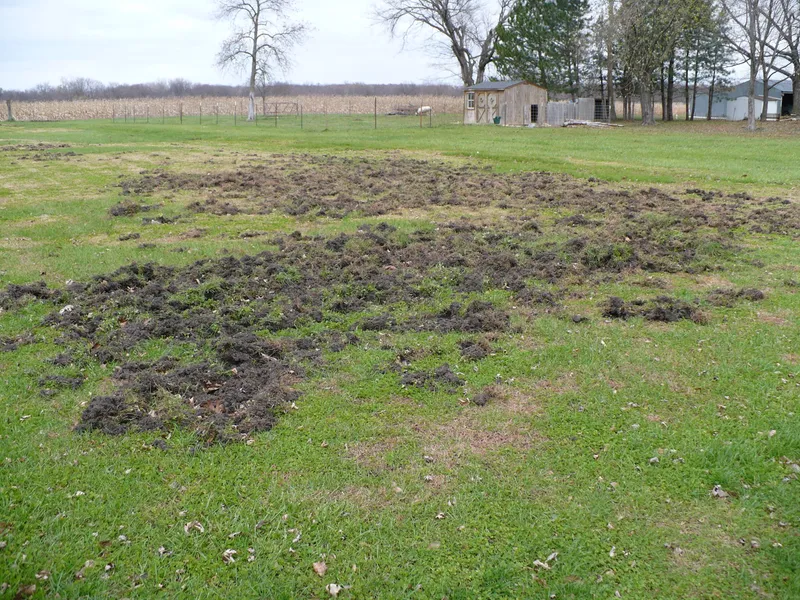
Active control is cheaper in any single year but never stops. The average Australian farm spends around 21,950 dollars a year on pest and weed management, according to ABARES (2023). That figure includes weeds and varies widely, but the shape is what matters: it recurs every season. Baiting, shooting, and trapping reduce a population, but because feral animals reinvade from neighbouring land, the job is never finished. Stop for a year and numbers climb back. Nationally, vertebrate pests cost landholders an estimated 866 million dollars a year, with wild dogs up to 302 million and foxes 198 million (ABARES, 2023), and 72 percent of the total is labour, exactly the recurring cost a fence is designed to reduce.
The 5-Year Comparison
Here is the comparison farmers actually ask about. Take a mid-sized property fencing a 20 kilometre boundary at the upper standard rate of 7,000 dollars per kilometre, versus five years of active control benchmarked on the ABARES average. Both scenarios still need some control inside the fence.
| Year | Fencing scenario | Control-only scenario |
|---|---|---|
| 1 | ~$145,000 (build plus internal knockdown) | ~$21,950 |
| 2 | ~$5,000 (maintenance plus residual control) | ~$21,950 |
| 3 | ~$5,000 | ~$21,950 |
| 4 | ~$5,000 | ~$21,950 |
| 5 | ~$5,000 | ~$21,950 |
| 5-year total | ~$165,000 | ~$110,000 |
On a cost-only, five-year view, control wins: about 110,000 dollars against 165,000. If that were the whole story, no one would fence.
What the Cost-Only View Misses
The comparison above leaves out the three things that actually decide it.
1. What the fence earns. The dominant benefit of exclusion fencing is production recovery. Cluster fencing in Queensland took lambing rates from as low as 2 percent back to 80 to 90 percent, with some producers marking over 100 percent of lambs (AWI, 2022). One property went from 7 percent lambing before fencing to 108, 100, and 98 percent in the three years after, and caught 137 wild dogs in the year before the fence went up against just four the year after (Sheep Central, 2024). That recovered income is why two real NSW properties analysed by Agrista (2024) paid back their fences in two to four years, one returning 23 percent and the other 51 percent on the investment, with benefit-cost ratios of 2 to 1 and 4.4 to 1 over ten years.
2. The tax deduction. For a primary producer, fencing is 100 percent deductible in the year you build it, with no cost cap. On a 140,000 dollar fence, that is tens of thousands back at tax time depending on your marginal rate. See our pest control funding and grants guide for that and the low-interest fencing loans available through the Drought Ready and Resilient Fund.
3. The fence keeps working. By year 10 the fence has cost roughly its build price plus modest maintenance, while control-only has cost more than 200,000 dollars and keeps climbing every year after. Over a 25 to 30 year fence life, the fixed cost is amortised into insignificance, while the recurring cost never ends.
A fair note for balance: independent evaluations found fences lifted lambing rates but not always by as much as producers expected, because climate, land type, and stock health confound the result, and ground-cover improvement was limited at some sites (Centre for Invasive Species Solutions). A fence is a strong tool, not a guarantee.
When Each One Wins
Fencing wins when:
- Pest pressure is severe and the losses (especially lamb predation) are large.
- The country is high-value and the property is large or regular enough to spread the per-kilometre cost.
- Neighbours will cluster their fences, turning a shared boundary into a shared cost.
- You can use the tax deduction and a low-interest loan to soften the capital hit.
Active control wins when:
- The property is small, irregular, or heavily timbered, where fencing per hectare is expensive and awkward.
- You need an immediate knockdown of an active problem.
- The pest climbs or flies, or is already inside the fence line.
That last point is the one farmers most often miss: a fence does nothing about the animals already on your property. It can even make them worse by concentrating them with no pressure. Every good fencing job is followed by an intensive knockdown to clear the residents.
Why the Two Belong Together
The false choice is fence or control. The real answer is fence, then control, then maintain. A fence cuts reinvasion so your control effort is not swallowed by animals pouring back in from next door. Control clears the animals the fence traps inside and holds numbers down. Maintenance and monitoring keep the fence sound and tell you whether it is working. Every credible source treats exclusion fencing as one tool in an integrated programme, alongside baiting, trapping, and shooting, not as a replacement for them.
How We Help
We start with a property assessment that maps where your pests are coming from and where the pressure is worst, so you can decide whether a fence earns its keep on your country, and if so where to put it. Whether you fence or not, we clear the animals already there with coordinated baiting, trapping, and ground shooting, and we monitor so you can see the result. Get in touch for a plan that weighs the fence against the programme for your property, not a generic answer.
Sources consulted: ABARES, Cost of established pest animals and weeds to Australian agricultural producers (2023); Agrista, Return on Investment Analysis of Exclusion Fencing (2024); Australian Wool Innovation, cluster fencing (2022); Sheep Central (2024); Victorian Deer Control Community Network and PestSmart, exclusion fencing for feral deer (2023); NSW Local Land Services; Centre for Invasive Species Solutions exclusion-fencing evaluation; Australian Taxation Office, primary-producer fencing assets; NSW Rural Assistance Authority, Drought Ready and Resilient Fund.