Feral Pigs
This page provides Australian landholders with essential information on feral pigs and ground shooting as part of sustainable control program.
What are feral pigs?
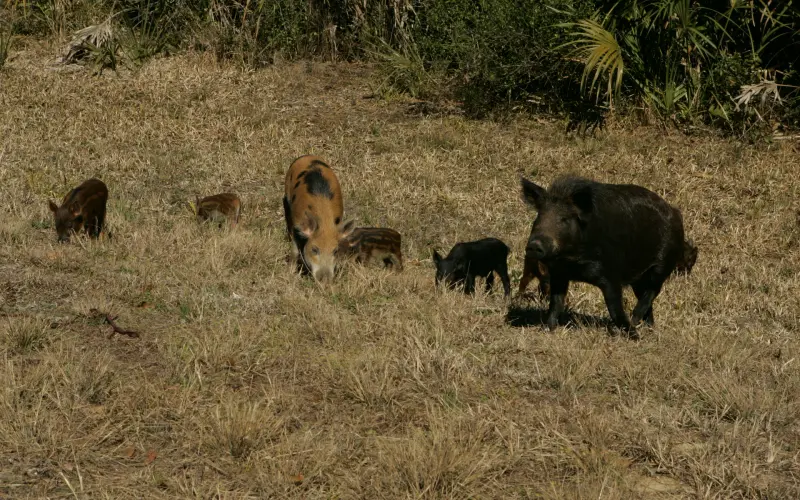
Feral pigs are wild populations of the domestic pig (Sus scrofa). They have been in Australia since early European settlement, originally near towns but now spread across 45% of the mainland. You'll find feral pigs in all states and territories, especially in wetlands, floodplains, woodlands, and agricultural areas with water. They tend to roam in groups (mob sizes range from 10 up to 50 pigs) and are creatures of habit, often returning to the same watering holes, wallows and feeding areas.
Feral pigs are usually smaller and leaner than farm pigs, with coarse hair, long snouts and tusks. They need daily water and shade (they're not heat tolerant), so they shelter in thick scrub or riverbanks during hot days and come out to feed in the cooler hours. Being omnivores, they eat a wide variety of foods. They'll dig up roots and bulbs, graze on pastures, and also prey on small animals or lambs if they can. Signs of feral pigs on your property include rooted-up soil (from their digging), wallows (mud holes), rub marks on trees, footprints, droppings and damaged fences.
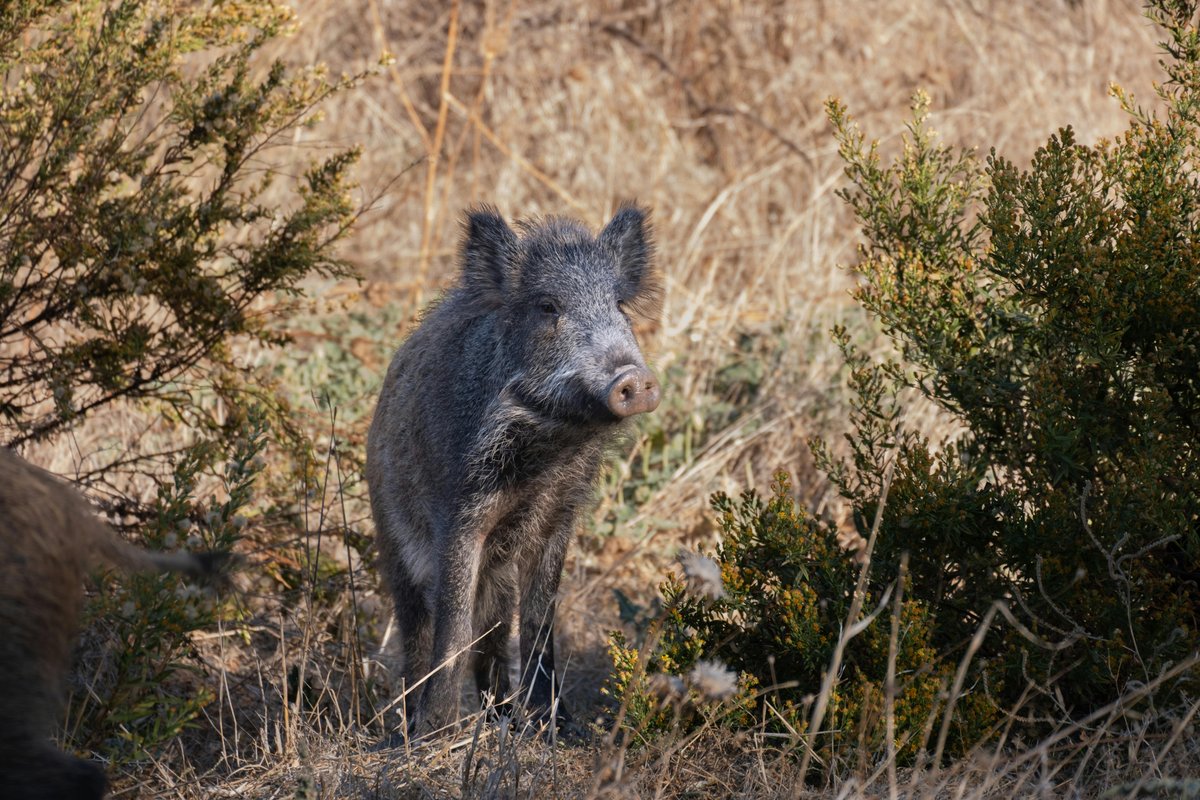
Feral pig displaying typical physical characteristics - lean build, coarse hair, and alert posture
How fast do they breed?
One of the biggest challenges with feral pigs is how rapidly they breed. In good conditions, pigs can breed year-round. Sows (females) become sexually mature by about 6 months old. A single sow can have two litters every 12 to 15 months, and each litter averages around 6 piglets, but can be up to 10 to 12 piglets in size. Those young pigs grow quickly and can start breeding within the same year, leading to exponential population growth.
What does this mean in practice? If feral pigs have plenty of feed and water, their numbers can boom before you know it. Estimates of Australia's feral pig population vary widely with seasonal conditions, from around 3.5 million up to 24+ million nationwide. After good rain or a big harvest (when food is plentiful), you might suddenly see mobs of pigs where you hadn't before. Consecutive wet seasons recently have caused pig numbers to spike in many areas of NSW and Victoria.
Because pigs rebound so fast, knocking down the population by less than half won't last long as they'll quickly breed back up. Research indicates you need to remove at least 70% of a feral pig population each year just to hold their numbers steady or decline.
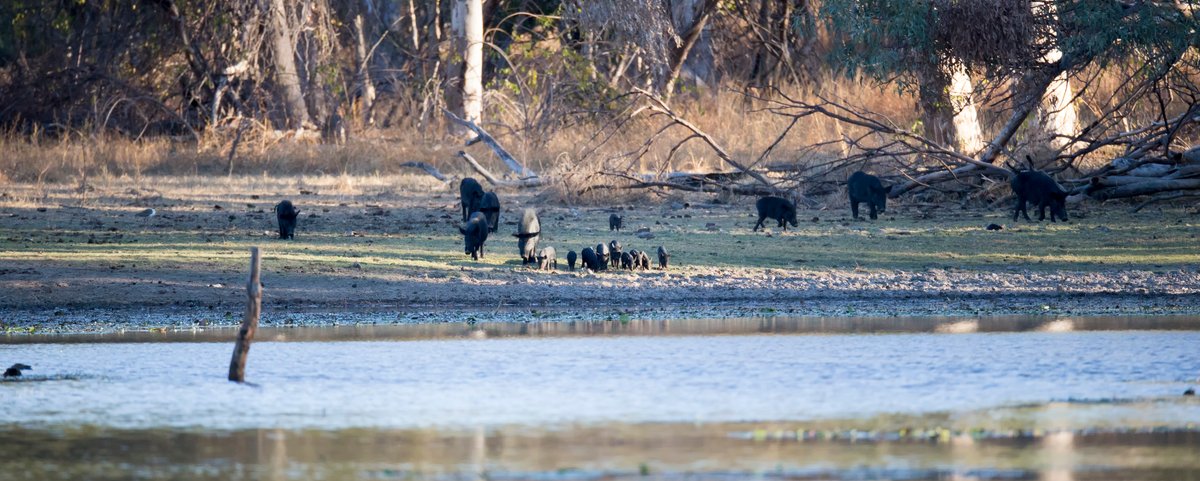
Feral pig group demonstrating their prolific breeding - populations can boom rapidly without control
Why are feral pigs a problem?
Feral pigs cause several issues for farmers and land managers:
- Crop damage and pasture loss: Pigs uproot crops, dig for roots and grubs, and trample paddocks. A mob of pigs can wreck hectares of newly planted field or damage native pastures in a single night. They'll also eat grain, fruit, sugar cane, and almost anything edible, reducing your yields.
- Preying on livestock and wildlife: Although primarily scavengers, feral pigs will attack and eat vulnerable animals. They have been known to prey on newborn lambs or kid goats, and they also threaten ground-nesting birds, turtles, and other wildlife by eating eggs and chicks. This is an added loss to biodiversity alongside farm impacts.
- Infrastructure damage: Pigs frequently break fences (e.g. pushing under or through wires) and foul up water holes and dams by wallowing. They can damage irrigation lines or feeders while rooting around. Repairs cost time and money.
- Disease spread: Feral pigs pose a serious biosecurity risk. They carry endemic diseases like leptospirosis and brucellosis that can infect livestock or people. Even more worrying, if diseases like Foot-and-Mouth Disease or African Swine Fever ever arrive in Australia, feral pigs could spread them rapidly and widely, a huge threat to the livestock industry. To mimimise the spread of disease you should always wear PPE like gloves when handling pig carcasses.
Feral pigs cost Australian agriculture well over $100 million each year in losses. Some sources put it higher (NSW alone estimates ~$50m annual losses in the northwest region). Besides the direct costs, farmers are also legally obligated in most areas to control declared pest animals on their land. So doing nothing isn't really an option as pigs won't magically go away, and both economics and the legislation require control efforts.
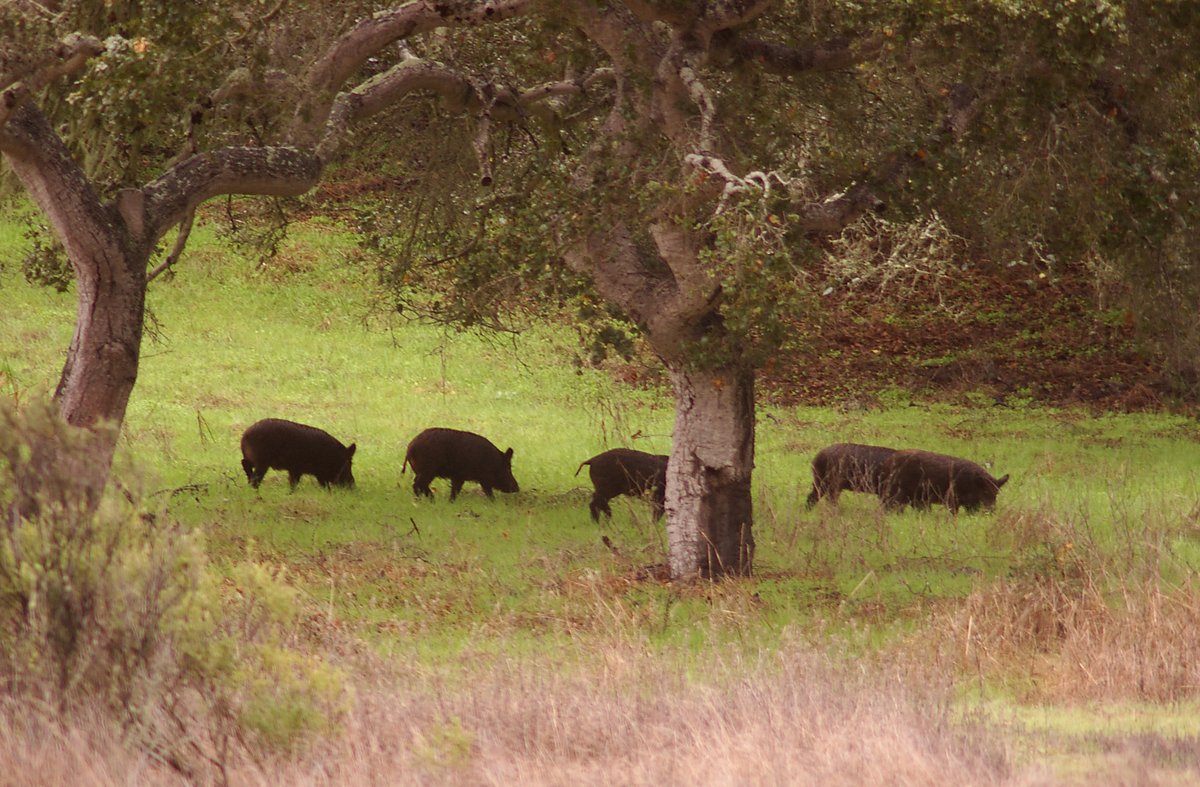
Feral pigs in agricultural setting - their rooting behavior causes extensive damage to crops and pastures
Controlling feral pigs: an integrated approach
Integrated Pest Management (IPM) means using a combination of methods to get the best result. Experience and research show that no single method will solve a feral pig problem, especially a big one. To control pigs you need to mix techniques like baiting, trapping, and shooting, and often work with your neighbours for a coordinated effort.
Common control methods for feral pigs include:
- Poison baiting: Using poisoned baits (such as 1080 or sodium nitrite) is one of the most cost effective ways to rapidly reduce pig numbers over large areas. Baiting can knock down a high percentage of pigs if done correctly. However, it requires strict handling, training and permits, and there's a risk of harming non-target animals if not managed properly. Baiting works best in cooler months or drought when natural food is scarce.
- Trapping: Large cage or panel traps can be set up at pig hot spots (water points, fence gaps, feeding areas) to capture feral pigs. Trapping is useful as a follow up after reducing the population by other means, or in small scale operations. It's labor intensive and pigs can be cautious of traps at first. Trapping is safe in areas where poison or shooting isn't suitable (near livestock or houses).
- Aerial shooting: Using helicopters with professional shooters is extremely effective for quickly culling pigs over large, open areas, especially right after baiting or during dry periods when pigs congregate around few water sources. Aerial shooting can cover inaccessible terrain and remove a high number in a short time. The downside is cost, it's expensive to hire helicopters and crews. It's often used as the initial knockdown method in a campaign, followed by trapping or ground control for the survivors.
- Ground shooting: This means hunting the pigs on foot or from a vehicle, by day or night. We'll cover ground shooting in detail in the next section.
- Exclusion fencing: Pig proof fencing around high value areas can prevent pig damage. Fencing is costly to install and maintain, so it's used selectively for smaller areas where you absolutely must keep pigs out.
Often, the best strategy is sequential: for example, a coordinated program might start with baiting to poison a large portion of the population, then quickly follow with ground shooting to mop up those that didn't take bait. After that, any remaining pigs are few and scattered, that's when techniques like trapping can be used followed by ground shooting again to get the last survivors and keep numbers suppressed.
Also, working together with neighbours greatly improves success. Pigs don't respect fences; if you cull all your pigs but the farm next door doesn't, pigs will just move to where the feed is. The most effective programs are community or district wide, covering a whole area at once so pigs have nowhere safe to flee.
Ground shooting to control feral pigs
Ground shooting refers to shooting feral pigs on foot or from a vehicle (as opposed to from a helicopter). This can be done during the day, but often it's more effective at night when pigs are active and less wary. Traditional ground shooting might involve a farmer or professional shooter with a spotlight and a rifle patrolling paddocks after dark. Modern ground shooting can employ advanced gear like thermal monocular's and scopes or night vision scopes, which allow detection of pigs by their heat signatures even in total darkness, within stubble or in scrub.
Is ground shooting effective? Ground shooting is widely used by landholders, pest controllers, and volunteer shooters. It has some big advantages:
- It's target specific, you are only shooting the pest animals you want to remove, so there's little risk to non target species.
- When done properly, it's a humane control method. A skilled shooter aiming for a head or heart/lung shot can dispatch a pig instantly.
- It's flexible and can be done opportunistically whenever pigs are encountered.
- It can be used in some situations where baiting or aerial shooting isn't possible, such as on smaller farms near towns or when a small number of pigs are holed up in thick vegetation.
However, ground shooting also has limitations:
- It is labour intensive and time consuming. Finding and stalking wild pigs can be hard work.
- By itself, shooting is unlikely to permanently reduce a large pig population. Studies and government guidelines note that hunting alone will not achieve long term population reductions when completed in isolation.
- Pigs can become educated and wary after some are shot at. Survivors learn to avoid spotlight or vehicles.
Because of these factors, ground shooting works best in particular scenarios rather than as a sole solution. It's very useful for small, isolated pig populations or as an excellent follow up or maintenance tool after other controls.
The advantage of modern tech and volunteers
Traditional ground shooting was limited by what a person could spot with a spotlight or binoculars. Now, technology like thermal imaging, night vision, and drones has changed the game. Using thermal, a shooter can quietly observe a paddock and detect pigs by heat even hidden in crop stubble or bush. Drones with thermal cameras can survey a wide area from above and direct shooters on the ground to where pigs are hiding. These tools greatly increase the efficiency of ground shooting by overcoming the visibility problem.
Another factor is cost and manpower. Paying professional contract shooters to do regular ground culls can be expensive and not all farmers can afford to hire a shooter frequently enough to keep pigs in check. However, with organised volunteer shooters, ground shooting becomes highly cost effective (essentially free). There are thousands of licensed, insured volunteers willing to help farmers at no charge. These volunteers are often very skilled and equipped with quality gear. By tapping into that resource (which is exactly what Feral Up does, but in a more coordinated, on-demand way), a farmer can get the benefit of ground shooting as often as needed without the prohibitive cost.
In short, ground shooting; especially with today's technology and a volunteer model, is a powerful component of a feral pig management plan. It may not single handedly erase a pig infestation, but it serves a crucial roles: it can respond quickly to pig sightings, clean up survivors of other control efforts, and hold pig numbers down over time.
When is ground shooting most effective?
- After a major knockdown: Once an initial reduction of pigs has been achieved (via bait, trapping or aerial shooting), use ground shooting to find and remove the remaining pigs that avoided other methods. Those survivors are often wary and scattered, but with thermal/night vision, a good shooter can help to clean up the remaining pigs.
- For ongoing suppression: Even if you can't do large scale baiting, regular ground shooting can contain the growth. For instance, a farm might have low to moderate pig activity, by culling a few each week or month, you keep the pressure on so they never explode in number.
- In small, contained outbreaks: If you spot a new group of pigs in an area that was previously pig free, a swift response with ground shooting might remove them entirely. Early intervention is key.
- At night and in cooler periods: Ground shooting yields better results at night, especially with thermal gear, since pigs are active and less human shy under darkness when feeding.
- Not during coordinated bait/trap efforts: Avoid ad-hoc shooting if you are in the middle of a baiting or trapping program, as it can interfere.
- As part of neighbor cooperation: Working together increases the impact and prevents just shuffling pigs around.
Finally, always remember the safety aspects: follow firearm laws and basic safety rules on your property. Ensure anyone shooting on your farm is licensed and trustworthy. Feral Up addresses safety by vetting all volunteer shooters (checking licenses, insurance, references, etc.), providing comprehensive training and using GPS tracking during operations.
Key Facts: Feral Pigs in Australia
| Distribution: | Occur across 45% of Australia's mainland (all states/territories). Densest in NSW, west of the Great Dividing Range, QLD Gulf country, NT Top End, parts of WA and VIC. |
| Population size: | Estimated 3.5 to 25 million nationally (varies with seasons). After wet seasons, local populations can surge dramatically. |
| Breeding rate: | Sows breed at 6 months old, can produce 2 litters per year with 4–10+ piglets each. In good conditions, populations can increase by 86% in a year. |
| Damage to farming: | >$100 million per year in agricultural losses (crop destruction, pasture loss, lamb predation, fence damage). Also fouling water sources and risking disease spread to livestock. |
| Environmental impact: | Uprooting causes erosion and habitat loss. They prey on native fauna and compete with wildlife. Feral pigs threaten ground-nesting birds, reptiles, and amphibians. |
| Disease risk: | Can carry diseases like leptospirosis, Q fever, brucellosis transmissible to humans and stock. Major concern as potential vectors for Foot-and-Mouth Disease or African Swine Fever if those diseases enter Australia. |
| Control best practices: | Integrated approach recommended, use poison baiting and/or aerial shooting to knock down large populations, then ground shooting and trapping for follow-up. Need to remove >70% of pigs yearly to stop population growth. Neighbour coordination greatly improves success. |
| Ground shooting role: | Most humane and targeted control method, but labour-intensive. Best for small populations or follow up after baiting. Can be done at night with thermal/NV gear for higher success. Volunteer programs (like Feral Up) make ground shooting cost effective and scalable. |
Ready to take action?
Feral pigs won't control themselves; but you don't have to tackle them alone. Feral Up connects you with certified and qualified volunteer shooters equipped with professional grade thermal and night vision equipment, at no cost to you. We operate under strict safety and biosecurity protocols to ensure a successful, safe result. Whether you need a one off cull or ongoing visits to keep pig numbers in check, Feral Up can help as part of your overall pest management plan.
Register Your PropertyAvailable in NSW now, expanding to QLD, VIC, SA, WA in 2026