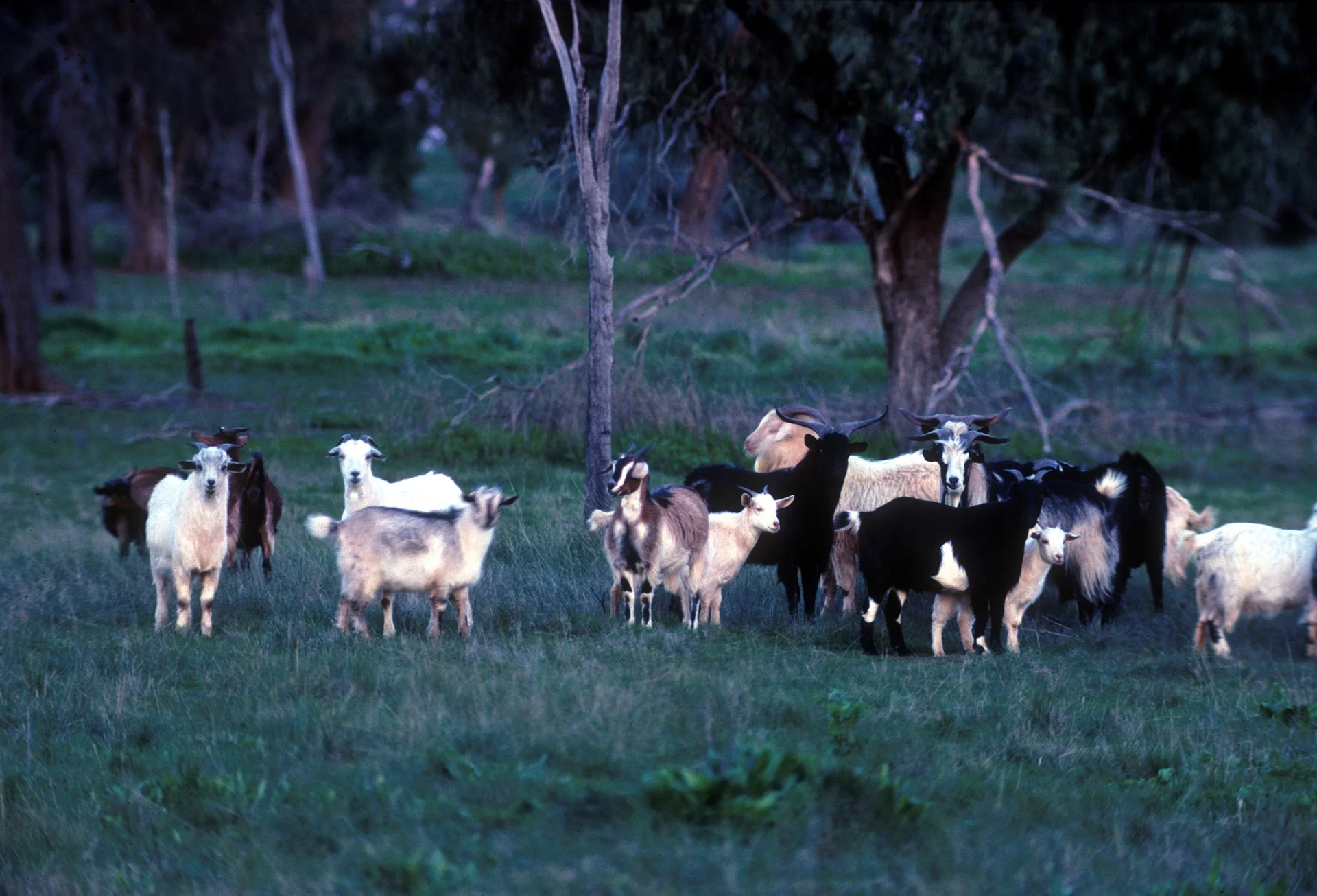
Feral Goats
Feral goats are invasive pests across much of Australia, causing major problems for farmers by eating pastures, damaging the land, and competing with livestock. This page provides practical guidance on feral goat control using ground shooting as part of a broader pest management plan.
What are feral goats?
Feral goats (Capra hircus) in Australia are goats that have gone wild after being introduced as domestic livestock. Goats arrived with the First Fleet in 1788 and were later released or escaped from farms and stations over the years. Without fences or anyone looking after them, they formed wild populations. Today feral goats are found in all mainland states, from Queensland and New South Wales through to South Australia, Western Australia, Victoria and the Norther Territory, though the biggest numbers tend to be in the semi arid rangelands.
Physical traits: Feral goats range from small stocky goats to larger breeds that have interbred, often with shaggy coats and horns. They're extremely hardy creatures. They can survive on tough, dry scrub that sheep or cattle won't touch, and need surprisingly little water when green feed is available. They're also natural escape artists, excellent climbers and jumpers, able to get through fences and navigate steep rocky country with ease.
Social behavior: Goats are herding animals. In good seasons when food and water are plentiful, they might break into smaller scattered groups. But in dry times, those groups come together, farmers have reported seeing hundreds of goats mobbing up around scarce water points in a drought. Feral goats are mostly active in the daytime, resting overnight on ridges or sheltered spots. They're quite intelligent and will change their habits if they've been disturbed. For example, if people start hunting them regularly in one paddock, they'll move to harder to reach areas or become more nocturnal.
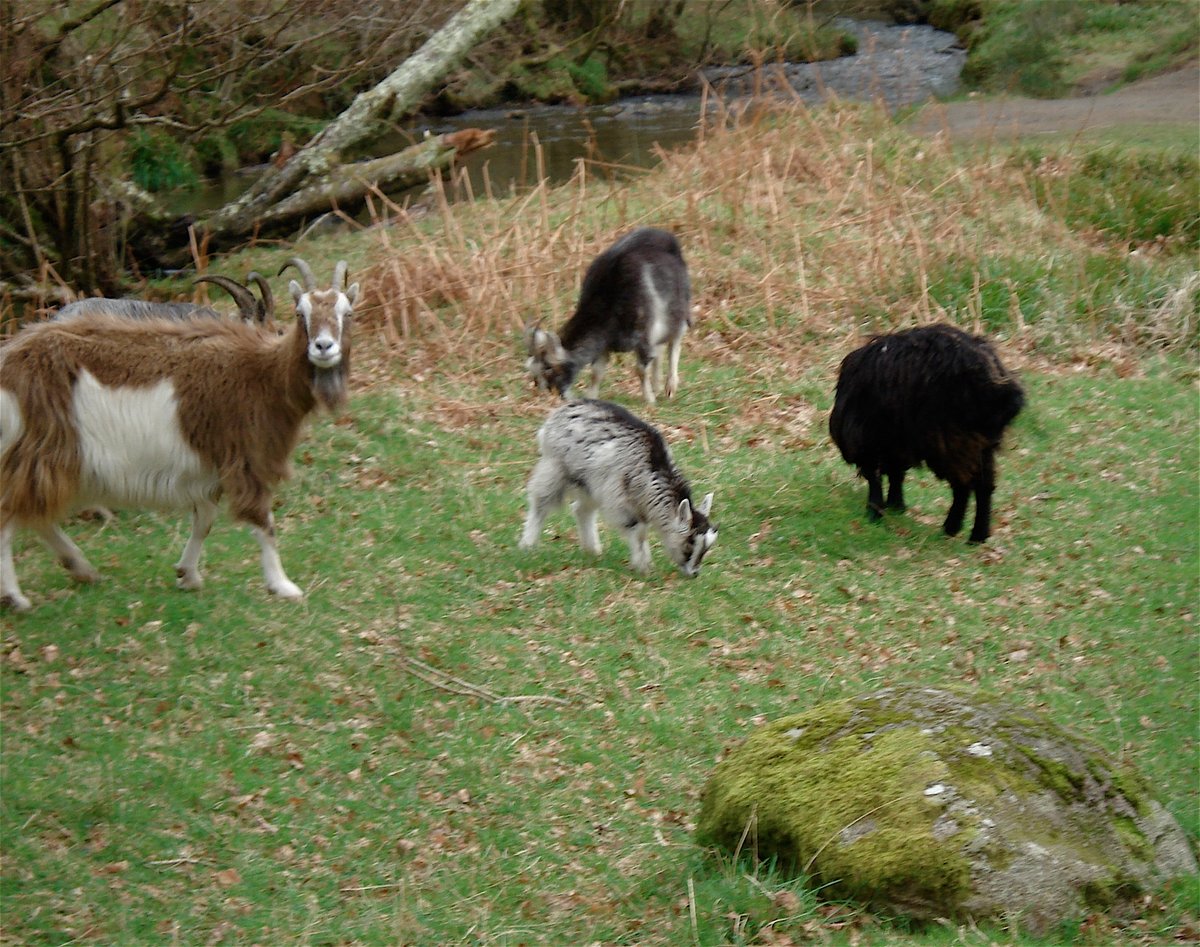
Feral goat mob in natural habitat - note their agility in rough terrain and varied coat colors
Breeding and spread
One reason goats are such a headache is how fast they reproduce. Feral goat nannies (females) can get pregnant as early as 6 months old, and unlike some animals that breed only once a year, goats can breed all year round whenever conditions are good. A nanny can even fall pregnant again while she's still feeding her last kids. They often have twins (or more), having two kids at a time is common, and triplets aren't unusual. With a roughly a 5 month gestation, a single nannie could potentially raise two sets of kids in a year.
In practice, feral goat populations can boom very quickly when there's plenty of feed. Studies have estimated goat numbers can increase by up to 75% in a year if no control measures are in place. In other words, a mob of 100 goats could turn into 175 within a year, so just knocking a few off here and there won't make a dent long-term.
All this means that feral goats spread rapidly and are very hard to eradicate once established. They roam over large distances too, if feed or water is scarce, goats will travel for kilometres (records show some goats covering tens of kilometres, even up to hundreds in extreme cases) to find better habitat. They don't respect fences; unless fencing is goat-proof, they'll squeeze through or climb over. This mobility lets them quickly reinvade areas where they might have been cleared out.
Why are feral goats a problem?
Feral goats spell trouble both environmentally and economically.
- Pasture competition: For farmers, the biggest issue is that goats graze and trample pastures meant for livestock. An unmanaged mob of goats can chew a paddock down to the roots, leaving very little feed for sheep or cattle. They'll ringbark young trees and foul waterholes. In western NSW and other dry areas, goats often crowd around limited water sources, muddying dams and contaminating troughs.
- Infrastructure damage: They can damage infrastructure too, it's not unknown for goats to push through fences or knock down sections of a fence line in their search for food.
- Disease spread: Feral goats carry diseases and parasites that can spread to domestic livestock. For example, goats can carry footrot and other sheep diseases, making it harder to control those problems on your farm. If there were an outbreak of an exotic disease like foot and mouth, feral goats could help it spread further.
- Economic impact: One estimate in the 1990s put farm production losses from feral goats at about $25 million per year (and that didn't even count environmental damage), and that figure would be much higher today.
- Environmental damage: Goats are voracious browsers, they eat native shrubs, young trees, grasses, even bark off trees. They can drastically thin out native vegetation, targeting the more palatable plants first. By stripping vegetation and trampling the soil with their hooves, goats contribute to erosion and land degradation, especially on slopes and in arid rangelands.
- Biodiversity threat: Goats compete with native herbivores (like kangaroos and wallabies) for food and water, and they can destroy habitat that native species rely on. Feral goats have been listed as a key threatening process to native species in Australia, meaning they've been officially recognised for contributing to endangerment of wildlife and ecosystems.
In short, if you care about your land's long term health (and that of Australia's native fauna and flora), feral goats are not something you want running rampant.
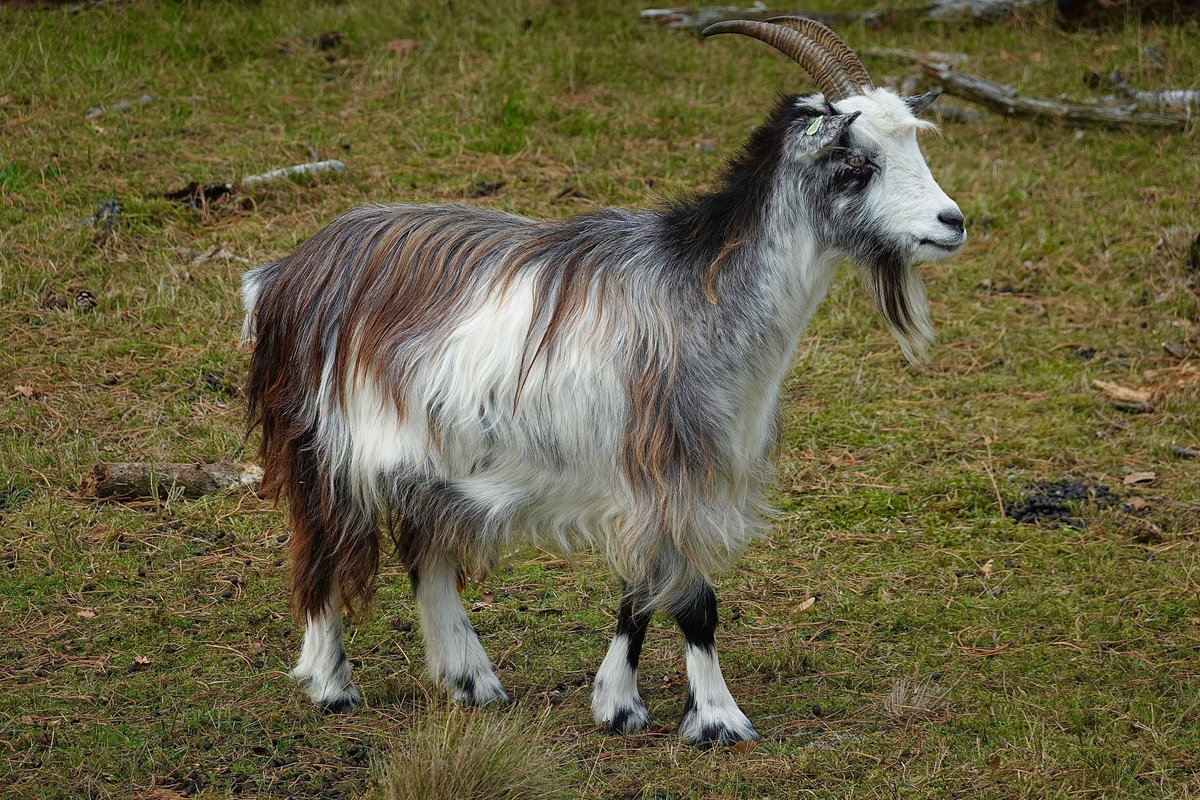
Feral goats excel at navigating difficult terrain - their climbing ability makes control challenging
How can feral goats be controlled?
Effective feral goat control requires an integrated approach – there's no single "silver bullet" that will eliminate them in one go. Goats are clever, breed fast, and often live in difficult terrain, so the best results usually come from using a combination of methods and coordinating with neighbours or local authorities.
- Mustering: Herding goats into yards using dogs, horses or motorbikes, sometimes with drones or even helicopters. Because goats like to stick together in mobs, a skilled musterer can round up a large portion of a local goat population, especially in open country. Mustered goats are often sold for meat (which can recoup some costs). However, mustering is labour intensive and goats in rough or forested terrain tend to evade capture.
- Trapping at water: This technique exploits goats' dependence on water in dry areas. Sturdy yards or trap enclosures are built around watering points with one way gates or ramps. Goats can push in to drink but can't get back out. Traps need to be checked frequently so captured goats don't suffer. Trapping can be very effective when conditions are hot and dry, but it requires investment in fencing materials.
- Exclusion fencing: Goat proof fencing (wire mesh of sufficient height, often electric wires as well) can keep goats out of specific areas. Fencing is a preventative measure but it's expensive and needs constant maintenance (goats will test any weak spot).
- Aerial shooting: In large, remote or rugged areas, shooting goats from a helicopter has proven to be one of the most efficient ways to rapidly knock down numbers. Skilled marksmen can cover a lot of ground by air and remove hundreds of goats in a short time. It's highly effective for broad scale reductions but helicopter time is costly.
- Ground shooting: On the ground hunters shooting goats using rifles. We'll go into detail on this method in the next section, since it's central to programs like Feral Up.
The key takeaway is that integrating multiple methods and working together regionally gives the best chance of success. For example, one common strategy is: mass muster/trap in dry season, this may remove 80% of the goats, then conduct follow up ground shooting of the remaining wary goats in the hills and repeat as necessary, while also fixing fences or setting up exclusion areas.
Ground shooting as a control method
Ground shooting refers to controlling feral goats by shooting them with firearms (typically medium-calibre rifles) from the ground. When done correctly, ground shooting has some important strengths: it's immediate (the results are seen right away), selective (you can choose specific target animals), and if shooters are experienced, it's a humane method.
Ground shooting can be carried out both during the day or at night. In daylight, goats are often spotted feeding in mobs and can be stalked by shooters on foot or approached on vehicles. At night, shooters use spotlights or thermal scopes and night-vision to locate goats in the dark. With modern thermal optics, shooters can detect the heat signature of goats from hundreds of metres away in darkness.
Despite these advantages, one person on the ground with a rifle can only cover so much area in a session. That's why ground shooting is often characterised as labour intensive in official guidelines. However, it is extremely useful for knock down and ongoing control: you can rapidly reduce numbers in accessible areas, and by doing periodic shooting you can keep suppressing the population.
Using ground shooting effectively:
- Coordinate with other methods: A common approach is to do a big muster or trapping effort first (to remove the easy to catch majority), then use ground shooting to hunt down the escapees that hide in rough terrain or dense scrub.
- Pick the right timing: During dry periods, focus efforts around water sources, as water gets scarce, goats predictably congregate at dams/creeks, making ambushes or stake-outs productive. Time of day matters: early morning and late afternoon are prime times to find goats out feeding.
- Be consistent: One ground shooting session won't solve the problem. Follow up is crucial. Scheduling regular culling sessions (e.g. every few months or each season) will continually put pressure on the population.
- Cost effective with volunteers: One concern some landholders have with ground shooting is cost as hiring professional shooters can be expensive. This is where programs like Feral Up come in, by leveraging trained volunteer shooters. Instead of paying a contract shooter hundreds of dollars a day, you can have competent volunteers who are happy to do it for free.
Modern technology advantage
Another modern development is the technology that is now available. Many volunteer shooters today invest in their own high end gear, from thermal and night-vision scopes to drones with thermal cameras for spotting and herding animals from the sky.
They can, for example, deploy a drone in the evening to survey large paddocks and locate goat mobs, then plan a ground approach accordingly. Or they can operate quietly at night with thermal scopes where goats have zero clue they're being targeted. These tactics can achieve cull rates that weren't possible with the old spotlight-and-ute approach.
Essentially, ground shooting has been amplified by technology, narrowing the gap between what a volunteer on the ground can do and what a helicopter muster might achieve (in the right conditions). It's not a replacement for other methods, but it greatly increases the effectiveness of shooting as a tool.
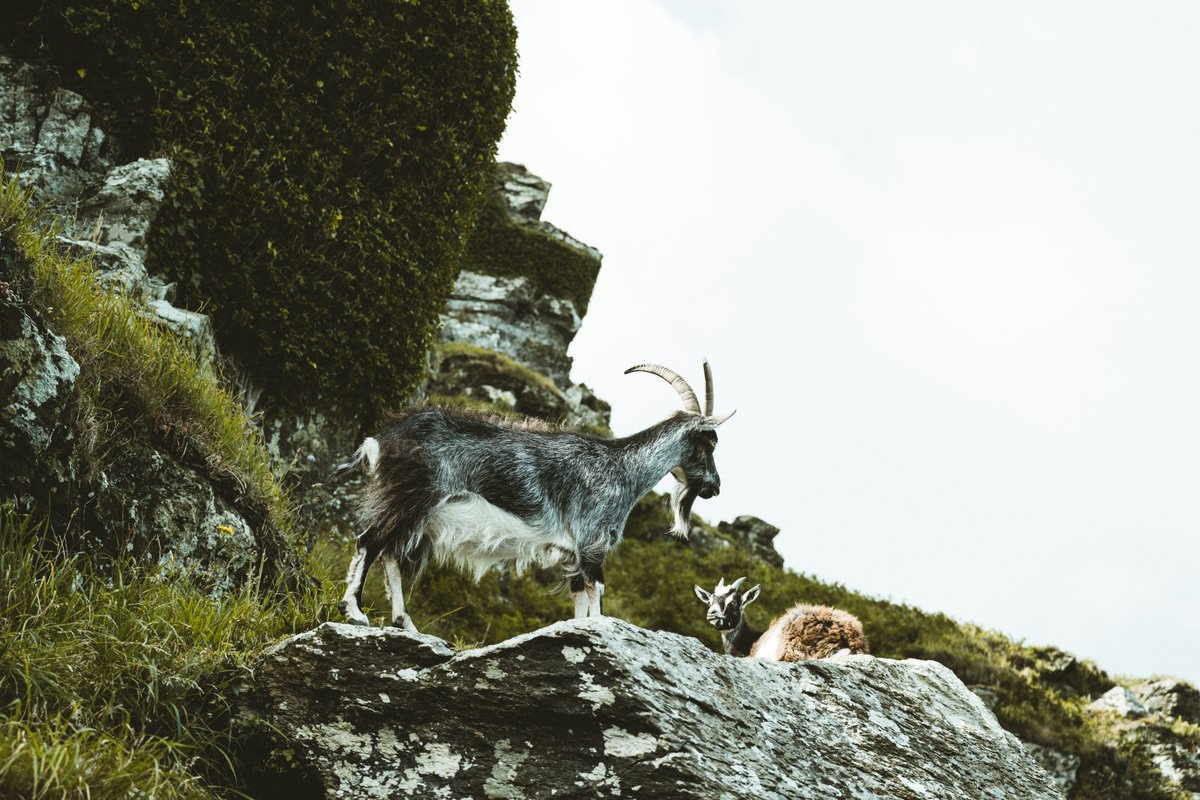
Feral goats in farmland - their competition with livestock for pasture causes significant economic losses
Key Facts: Feral Goats in Australia
| Distribution: | Found in all mainland Australian states (QLD, NSW, VIC, SA, WA, NT). Largest populations in semi-arid rangelands. Total population estimates vary with conditions, from hundreds of thousands to over a million nationwide. |
| Physical traits: | Domestic goat species (Capra hircus) living wild. Range from small stocky animals to large breeds. Often shaggy coats and horns. Extremely hardy, can survive on tough dry scrub. Excellent climbers and jumpers (can clear 1.5m+ fences). Adapted to low water conditions. |
| Social structure: | Herding animals living in groups. Group size varies with conditions: small scattered groups in good seasons, large mobs (hundreds) around scarce water in droughts. Intelligent and adaptable, change behavior patterns when disturbed by humans. |
| Breeding: | Females (nannies) sexually mature at 6 months. Breed year-round when conditions favorable. Gestation ~5 months. Litters typically twins (sometimes triplets), occasionally single kids. Females can produce 2 sets of kids per year. Population can increase 75% annually if unchecked. |
| Diet: | Browse on wide variety: grasses, shrubs, tree bark, young trees. Prefer browsing over grazing. Can eat tough vegetation sheep/cattle won't touch. Ringbark young trees, eat fruit and crops, foul water sources. Mobile, travel tens of kilometers for food/water. |
| Farm impacts: | Compete with livestock for pasture (eat significant fodder). Damage crops, orchards, vineyards. Trample and erode soils with hard hooves. Break through fences. Carry livestock diseases (footrot, etc.). 1990s estimates: $25M annual farm losses (much higher today). |
| Environmental impact: | Voracious browsers strip native vegetation. Cause erosion and land degradation through trampling and overgrazing. Compete with native herbivores (kangaroos, wallabies). Listed as key threatening process to native species and ecosystems. |
| Control methods: | Integrated approach required. Mustering (herding into yards with dogs/horses/motorbikes). Trapping at water points. Exclusion fencing (expensive). Aerial shooting (helicopter culls, expensive but effective over large areas). Ground shooting (most accessible for farmers). |
| Ground shooting role: | Effective follow-up after mustering/trapping. Target-specific and humane. Can be done day or night with thermal/night vision technology. Best used as part of coordinated regional efforts. Volunteer programs (Feral Up) make shooting cost-effective and accessible with professional equipment at zero cost. |
Ready to tackle your feral goat problem?
Feral goats are a tough pest, they breed rapidy and wreck the environment. Controlling them demands a mix of approaches. Feral Up connects you with verified, insured volunteers equipped with the latest thermal and night vision gear. They can help you control feral goats on your property at no cost to you, acting as a professional grade ground shooting team to complement your other pest management efforts.
Register Your PropertyAvailable in NSW now, expanding to QLD, VIC, SA, WA in 2026