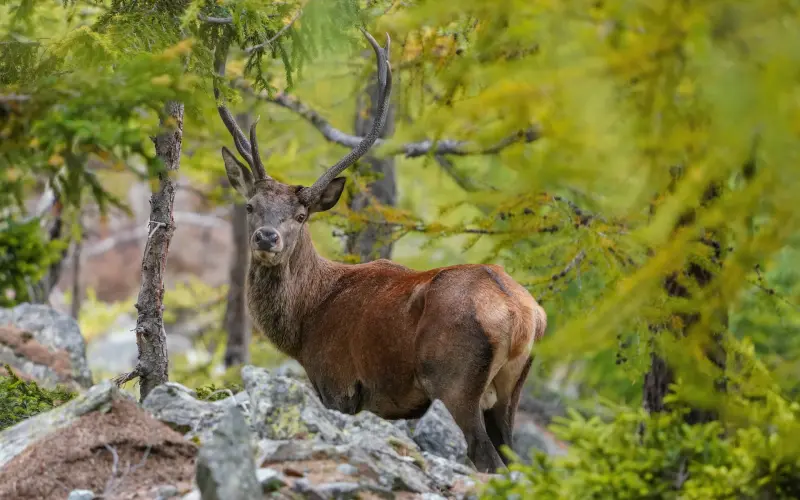
Feral Deer
Australia's feral deer populations are booming, creating a serious challenge for farmers and the environment. Feral deer are now one of Australia's fastest-growing pest problems, with estimated 1 to 2 million deer nationwide costing communities $91 million in losses each year through destroyed pasture, crop damage, and land degradation.
What are feral deer?
Australia has six species of feral deer established in the wild:
- Fallow Deer – the most widespread feral deer in Australia
- Red Deer – large deer found in QLD, NSW, VIC, and SA
- Sambar Deer – very large deer mainly in Victoria's high country
- Rusa Deer – found in coastal NSW/QLD
- Chital Deer – present in Queensland and some NSW areas
- Hog Deer – a small deer in parts of Victoria
These deer were originally brought to Australia in the 19th and 20th centuries for hunting estates and deer farming. Over time many escaped or were deliberately released. Today feral deer occur in all states and territories. They browse on crops and pasture, shelter in wooded areas during the day, and come out to feed mostly at dawn, dusk and night.
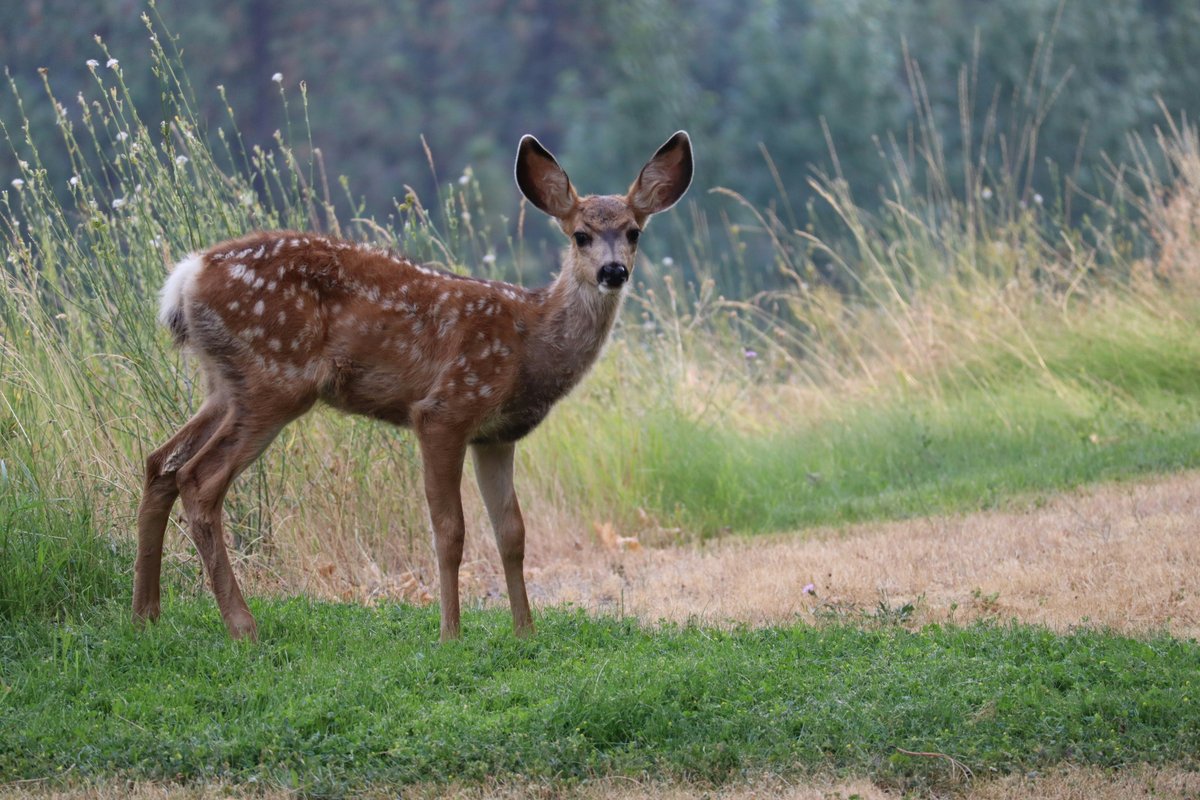
Feral deer displaying typical alert behavior - deer are highly adaptable and thrive in Australian conditions
How Fast Do Deer Breed?
Feral deer breed rapidly. A healthy deer population can increase by 30 to 50% in a single year if not controlled. Deer usually breed once a year, with females generally having one fawn at a time (occasionally two for fallow deer). With plenty of food and no natural predators in Australia, many deer populations are exploding.
This means that to reduce a feral deer population, more deer must be removed each year than are born – experts estimate at least 35 to 50% of the herd must be culled annually just to start bringing numbers down.
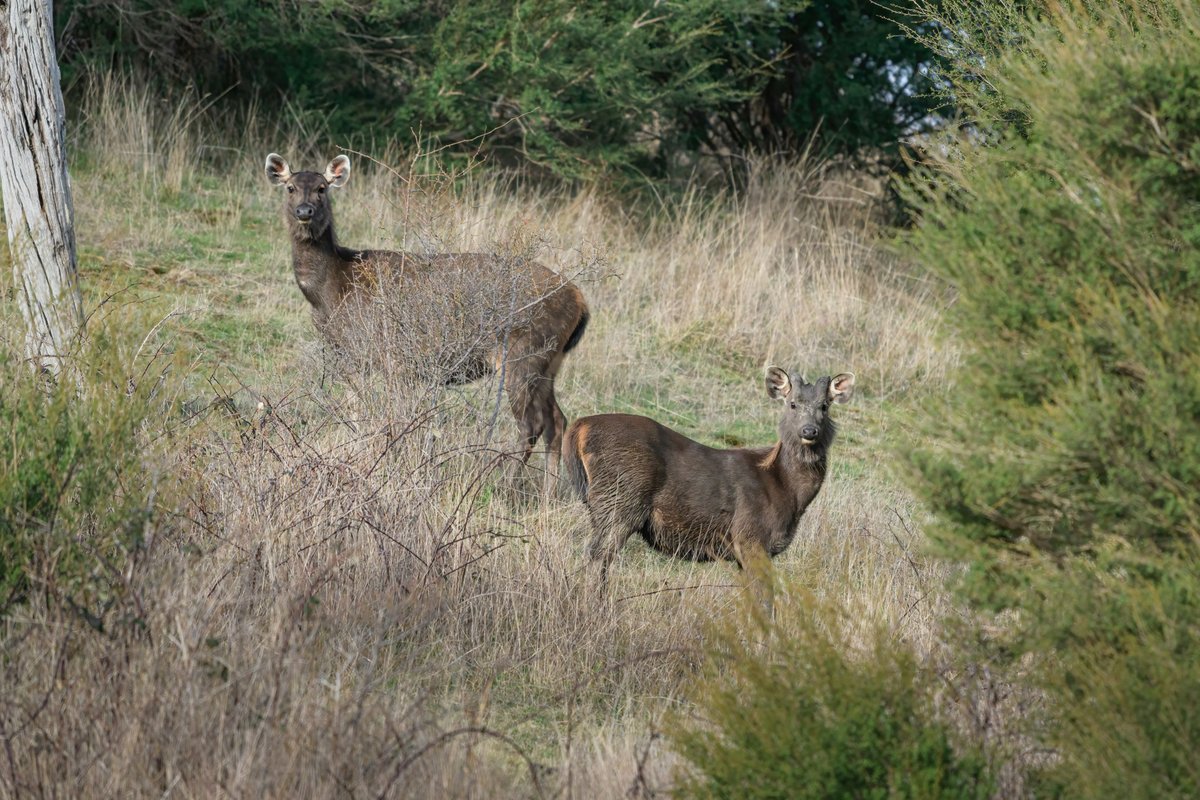
Deer herd demonstrating social behavior - populations can increase 30-50% annually without control
Damage Caused by Feral Deer
Some of the impacts deer have on farms and the environment include:
- Competing with livestock for feed: Deer graze on pasture and browse crops just like cattle or sheep. A mob of deer can eat a significant amount of grass or crop, effectively stealing fodder meant for farm animals.
- Crop and orchard damage: Deer readily jump standard farm fences and invade crop fields, orchards, and vineyards. They can strip grapevines, destroy fruit trees, and trample grain or vegetable crops.
- Pasture and soil degradation: Hard hooves trampling wet ground leads to soil compaction and erosion. Feral deer also ringbark young trees by rubbing their antlers.
- Fence and infrastructure damage: Stags in the rut can crash through fences. Deer easily clear or break typical 4 to 5 foot farm fences, meaning farmers incur repair costs.
- Disease risk: Feral deer can carry diseases that affect livestock. Notably, they are potential carriers of foot and mouth disease and could spread it if there were an outbreak.
- Environmental impacts: In natural areas, feral deer over browse native plants, compete with native herbivores, muddy waterways, and can contribute to declines in biodiversity.
Controlling Feral Deer: An Integrated Approach
Managing feral deer requires an integrated pest management approach. There is no single "silver bullet" for deer control:
- Ground Shooting: Culling deer on foot or from a vehicle with trained shooters. Currently considered the most practical way to reduce deer numbers in many areas.
- Aerial Culling: Using helicopters with shooters. Can remove large numbers quickly over difficult terrain but requires significant funding and coordination.
- Exclusion Fencing: Deer proof fencing (at least 2.5m high) can protect specific high value areas like vineyards, but is expensive.
Coordinated efforts are vital. If only one farm culls deer but neighbors don't, new deer will keep wandering in. Many regions are forming Deer Control Groups to share information and synchronise culls.
Ground Shooting: A Practical Tool for Farmers
Ground shooting is one of the most accessible and effective deer control methods for farmers. Here's why:
- Effectiveness: Ground shooting is currently the most effective technique available to reduce feral deer populations in many areas. Each deer removed is one less breeding and causing damage.
- Target-Specific: A shooter can identify the target and take a precise shot. This means minimal risk to other wildlife or the environment.
- On the spot results: There's immediate removal of the animal with no lingering issues if shooters are skilled.
- Flexible scale: Can be done by a single person or scaled up with multiple teams across a district.
- Humane when done properly: A well-executed ground shoot means the deer dies instantly with a well placed head or heart shot.
Best Practices for Ground Shooting Deer
- Plan the timing: Avoid conducting shoots during peak fawning seasons when newborn fawns are present.
- Shoot at night if possible: Deer are often easiest to find at night when they feed in the open. Modern thermal imaging scopes or night vision gear allow shooters to detect deer without them noticing.
- Use adequate equipment: Proper high powered rifles with suitable caliber for deer are essential. Smaller deer require at least .243 caliber, while larger deer need .270, .308 or above for an instant kill.
- Prioritize targets wisely: Try to cull entire groups so survivors don't become gun shy. Target female deer preferentially as removing a doe has bigger impact on population growth.
- Be safe and sure: Identify your target positively; never shoot at just movement. Only take shots within your accurate range. Always follow up any wounded animals immediately.
- Coordinate with neighbors: Deer don't respect property boundaries. Liaise with neighbors about planned shooting for maximum effect.
Modern Tools Make Ground Shooting More Effective
One reason ground shooting has become even more effective in recent years is the advent of affordable high tech equipment:
- Thermal imaging scopes and drones: Thermal devices pick up body heat, allowing shooters to spot deer in complete darkness or hidden in vegetation. Drones with thermal cameras can survey large areas and direct ground teams.
- Night vision scopes: Amplifies ambient light so you can see deer at night almost as if in daylight.
Most scientific research on deer control is based on older methods. Now, with thermal imagers and other gear, a small team of skilled volunteers at night can remove far more deer than was once possible. Modern tech allows even volunteers to achieve professional grade results.
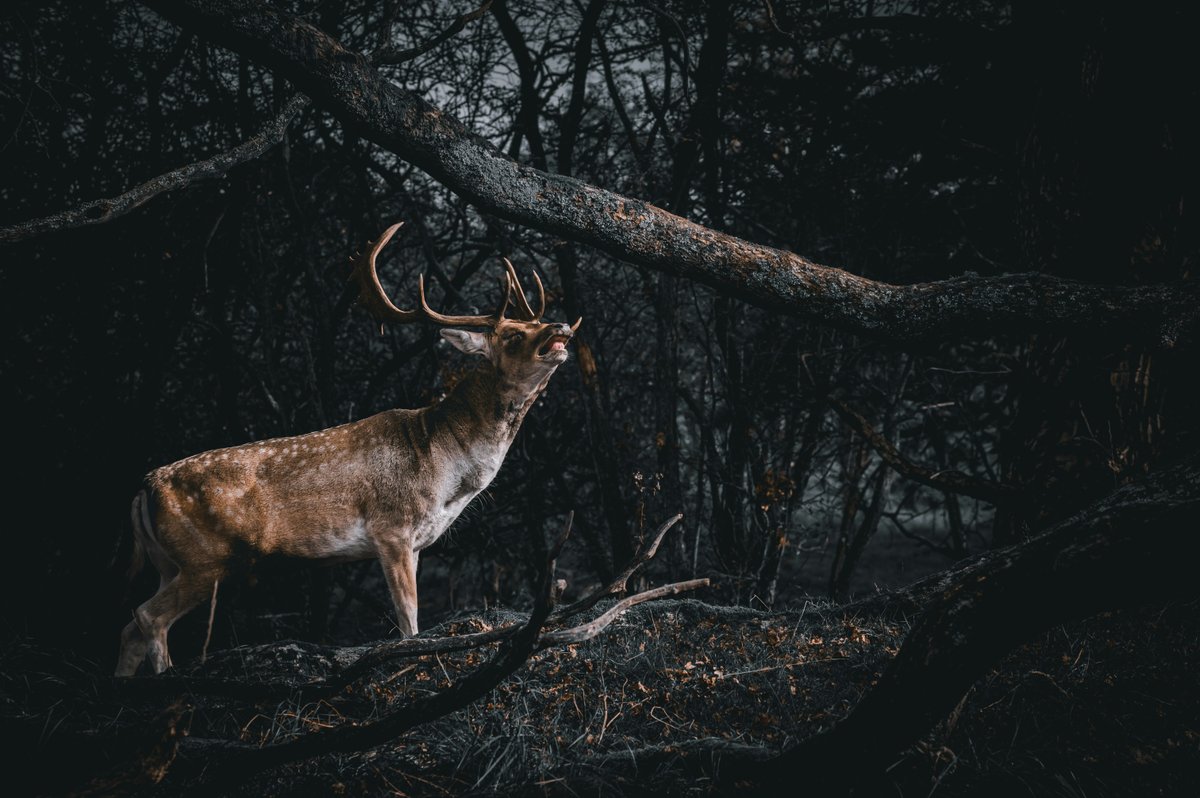
Feral deer near farmland - their ability to jump fences and raid crops causes $91 million in annual losses
Volunteers and Programs: Help at No Cost to You
Programs like Feral Up connect farmers with licensed, vetted volunteer shooters who are eager to help reduce feral animals, for free. Using volunteer shooters yields several benefits:
- No Cost Service: Because volunteers donate their time, ground shooting becomes one of the cheapest pest control methods available to farmers.
- Enthusiastic, Qualified Helpers: Feral Up verifies firearms licenses, requires completion of safety training, and carries $20 million in liability insurance coverage for every operation.
- Strength in Numbers: A network of volunteers can cover more ground than one farmer alone.
- Local Knowledge: Feral Up volunteers are often local. Over time, they build knowledge of your land and can be even more efficient on subsequent visits.
Key Facts: Feral Deer in Australia
| Distribution: | Found in all Australian states and territories. Six feral species established: Fallow deer (most widespread), Red deer (QLD, NSW, VIC, SA), Sambar deer (VIC high country), Rusa deer (coastal NSW/QLD), Chital deer (QLD/NSW), Hog deer (VIC). Total population estimated 1 to 2 million nationwide. Rapidly expanding range. |
| Physical traits: | Size varies by species. Fallow deer: 50 to 100kg. Red deer: 100 to 200kg (large males 250+ kg). Sambar deer: 150 to 300kg (largest feral deer in Australia). All species have antlers on males (grown and shed annually). Hard hooves damage soft soils. Excellent jumpers (clear 2m fences easily). Strong swimmers. |
| Breeding: | Breed once annually. Rut (mating season) varies by species: Fallow (April to May), Red (March to May), Sambar (Aug to Oct). Gestation 7 to 8 months depending on species. Typically 1 fawn per female (twins rare except some fallow deer). Fawns weaned 6 to 8 months. Population can increase 30 to 50% annually if unchecked. |
| Social behavior: | Form herds (mob sizes: 5 to 50+ individuals depending on season and species). Males often solitary outside breeding season. Primarily crepuscular (dawn/dusk active), also nocturnal. Shelter in wooded areas during day, emerge to feed in open pastures at night. Highly mobile, can travel 10 to 20+ km between feeding and sheltering areas. |
| Diet: | Herbivores browsing on grasses, forbes, crop seedlings, tree bark/shoots. Compete directly with livestock for pasture. Browse on native vegetation preventing regeneration. Ringbark young trees by rubbing antlers. Target agricultural crops: cereals, vegetables, vineyards (especially grapes), orchards. Cause significant pasture degradation through selective grazing and trampling. |
| Agricultural damage: | $91 million annual cost to Australian agriculture and communities. Pasture competition (graze equivalent to sheep/cattle). Crop destruction (cereals, vegetables, vineyards, orchards, up to 100% loss in severe cases). Fence damage (crash through or jump standard farm fences). Infrastructure damage (trample irrigation lines, damage gates/yards). Soil compaction and erosion from hard hooves, particularly in wet conditions. |
| Disease risk: | Potential vectors for exotic diseases (foot-and-mouth disease, bluetongue if introduced). Carry parasites affecting livestock (liver fluke, lungworm). Can transmit Johne's disease, leptospirosis, tuberculosis. Represent biosecurity threat particularly if exotic disease outbreak occurs. Mixing with livestock increases cross species disease transmission risk. |
| Environmental impact: | Over browse native vegetation reducing biodiversity. Prevent natural tree/shrub regeneration. Compete with native herbivores (kangaroos, wallabies). Trample and muddy waterways affecting water quality and aquatic habitat. Spread weeds through seed dispersal. Contribute to soil erosion on sloping terrain. Declared threatening process in some jurisdictions. |
| Control best practices: | Integrated approach essential (no single silver bullet). Ground shooting most practical and effective method currently available (target specific, scalable). Aerial culling (helicopter shooting) effective for large scale removal in difficult terrain but expensive. Exclusion fencing (minimum 2.5m high) protects high value areas but costly. Coordinated regional efforts critical (prevent reinvasion). Annual removal of 35 to 50%+ required to reduce populations. |
| Ground shooting role: | Currently most effective and accessible control method for farmers. Target specific and humane with skilled shooters using adequate caliber (.243, .270, .308+). Modern thermal imaging and night vision technology dramatically increases effectiveness (detect deer in complete darkness or thick cover). Volunteer programs (Feral Up) provide free access to skilled shooters with professional equipment. Best practices: night shooting, adequate caliber, target does to reduce reproduction, coordinate with neighbors, avoid peak fawning season. |
Take Action: Get Deer Under Control with Feral Up
Feral deer are tough, but with the right approach, farmers can beat them. Don't battle the deer alone. Feral Up is here to help you. We connect you with qualified volunteer shooters equipped with thermal scopes, night vision, and all the gear needed to remove pests like deer efficiently and safely.
Register Your PropertyAvailable in NSW now, expanding to QLD, VIC, SA, WA in 2026